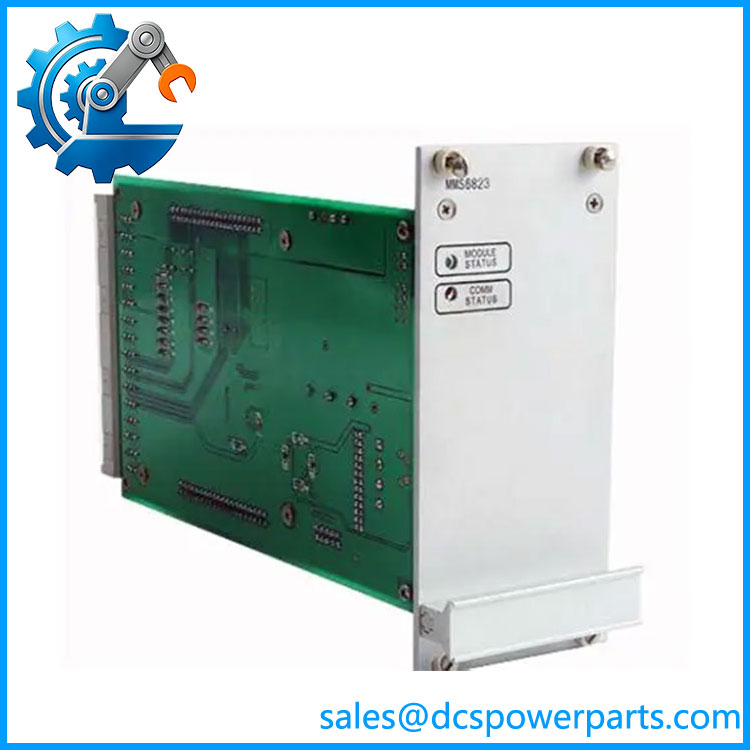
Description
Key Technical Specifications
| Parameter | Value |
|---|---|
| Model | MMS6823R |
| Ordering / Part Number | 9100-00001-06 |
| Manufacturer | EPRO |
| Product Series | MMS 6000 |
| Product Type | Machine monitoring / communication module |
| Form Factor | Standard 19-inch module |
| Serial Interfaces | 8 × RS-485 |
| Serial Protocol | Modbus RTU |
| Network Communication | TCP/IP over LAN |
| Communication Mode | Modbus and TCP/IP can operate in parallel |
Important: Publicly available technical references for this exact revision are limited. Voltage, environmental ratings, connector assignments, and detailed electrical specifications should be verified against the OEM documentation for 9100-00001-06 before installation. Do not substitute specifications from another MMS 6000 module simply because the front-panel format appears similar.
Product Introduction
What the MMS6823R Does
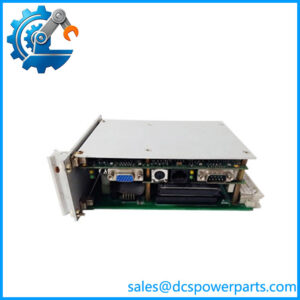
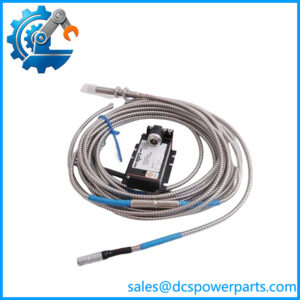
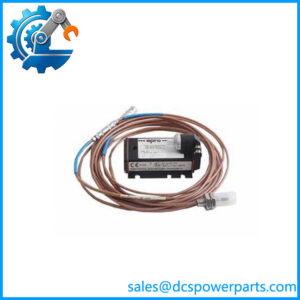
The EPRO MMS6823R 9100-00001-06 is a communication and monitoring-system interface module within the MMS 6000 machine monitoring family. Its primary role is to collect or expose monitoring data through multiple RS-485 connections and provide network-level access using Modbus RTU and TCP/IP. This makes it relevant to machinery monitoring architectures where several monitoring channels must be integrated with a supervisory or plant control network.
The eight RS-485 interfaces are the important hardware characteristic. For a plant maintaining an existing MMS 6000 installation, retaining the correct module revision can be more practical than modifying the entire monitoring architecture. Do not treat it as a generic serial gateway, however. Connector pinout, firmware, configuration, and the associated MMS modules need to be checked before replacement.
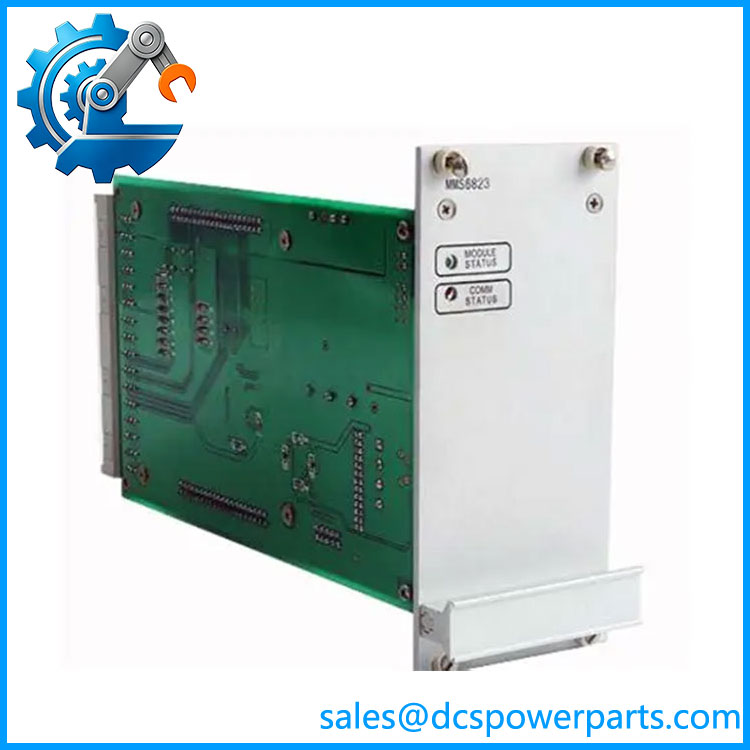
MMS6823R
Application Scenarios & Field Pitfalls
Engineering Pain Point
A common maintenance problem with older turbine and rotating-equipment monitoring systems is not the sensor itself. It is the communication layer. The monitoring hardware may still be functioning while the plant loses access to machine-condition data because of a failed interface module, damaged RS-485 wiring, incorrect addressing, or an incompatible replacement. The MMS6823R matters in this situation because it sits between the MMS monitoring architecture and higher-level data communication. Public technical listings associate the module with eight RS-485 ports and Modbus RTU/TCP-IP communication.
Typical Applications
- Power Generation — turbine and generator monitoring networks requiring centralized machine-condition data access.
- Oil & Gas — rotating machinery monitoring where MMS 6000 data must be transferred to plant-level systems.
- Petrochemical Processing — compressor, turbine, and other critical rotating-equipment monitoring architectures.
- Industrial Manufacturing — legacy machinery monitoring systems requiring RS-485 and Ethernet-based data communication.
Technical Pitfalls to Avoid
- Do not assume every MMS 6823 variant is interchangeable.
The supplied part number is 9100-00001-06. Check the complete ordering code, hardware revision, firmware, connector arrangement, and system configuration before swapping a module. A similar-looking MMS module is not automatically an electrical or functional replacement. - Check RS-485 network configuration before blaming the module.
RS-485 problems frequently originate in termination, grounding, shielding, addressing, or cable topology. Eight available serial ports do not eliminate those installation requirements. - Verify the host-side protocol configuration.
Modbus RTU and TCP/IP are not interchangeable merely because both carry monitoring data. Confirm baud rate, parity, slave addressing, register mapping, TCP/IP settings, and the plant DCS/SCADA configuration before commissioning. The available reference explicitly identifies Modbus RTU and TCP/IP as supported communication methods. - Preserve the existing configuration where possible.
On a running plant, record communication parameters and existing network connections before removing the old module. Replacing hardware first and reconstructing the configuration afterward is an avoidable commissioning risk.
Related Products
- MMS6823A — Related MMS 6000 data-acquisition/monitoring hardware. It should not be assumed to have identical communication functions to the MMS6823R; verify the exact application before substitution.
- MMS6210 — Dual-channel shaft displacement monitor in the MMS 6000 family. It performs measurement and monitoring rather than serving the same communication role as the MMS6823R.
- MMS6220 — MMS 6000 monitoring module associated with shaft eccentricity measurement. It is complementary to the communication layer rather than a direct replacement for the .
- MMS6312 — MMS 6000 monitoring hardware associated with speed/key-transducer applications. It belongs to the machine-monitoring measurement side of the system.
- MMS6410 — Dual-channel measuring amplifier for inductive displacement measurement. It serves the signal-conditioning/measurement function, making it functionally different from the communication module.
- MMS6110 — MMS 6000 module associated with shaft-vibration transducer applications. It is used for vibration measurement rather than network communication.
- MMS6120 — MMS 6000 monitoring module associated with bearing-vibration measurement. It complements the monitoring architecture but is not a direct replacement.
- MMS6140 — MMS 6000 hardware associated with absolute shaft-vibration sensing. Application differs from the ‘s communication function.