Description
Enterasys SSA-G1018-0652 | S150 Gigabit Ethernet Switch | Fiber Network Replacement
Key Technical Specifications
| Parameter | Specification |
|---|---|
| Product Model | SSA-G1018-0652 |
| Manufacturer | Enterasys / Extreme Networks |
| Product Family | S-Series S150 |
| Product Type | Stand-Alone managed Ethernet switch |
| 1000 Mbps Interfaces | 48 × 1000BASE-X SFP |
| 10 Gbps Interfaces | 4 × 10GBASE-X SFP+ |
| Port Media | Pluggable optical transceivers |
| Network Architecture | Managed Ethernet switching |
| Chassis Type | S-Series Stand-Alone |
| Software Family | S-Series EOS |
| Power Supplies | Not included with base SSA chassis |
| Related Platform | SSA-G8018-0652 |
| Original Status | S150 Class |
| EOS Announcement | October 1, 2015 |
| EOS Date | March 31, 2016 |
| EOL Date | March 31, 2021 |
Extreme Networks’ installation documentation explicitly identifies the SSA-G1018-0652 as an S-Series Stand-Alone model and specifies its interface arrangement as 48 1000BASE-X SFP ports plus four 10GBASE-X SFP+ ports.
A significant procurement point is that the base SSA-G1018-0652 does not include the power supplies; the original product documentation specifies that power supplies were ordered separately.
Product Introduction
The Enterasys SSA-G1018-0652 is an S-Series S150 Stand-Alone managed Ethernet switch designed for high-density fiber connectivity. Its 48 Gigabit optical interfaces provide access-layer or aggregation connectivity, while four 10GbE SFP+ interfaces provide higher-bandwidth uplinks.
This model is especially relevant when maintaining an existing S-Series network rather than replacing the entire switching architecture. The important engineering issue is not simply the port count; SFP/SFP+ transceiver compatibility, firmware, power configuration, network topology, and management software all need to be checked before a replacement is commissioned.
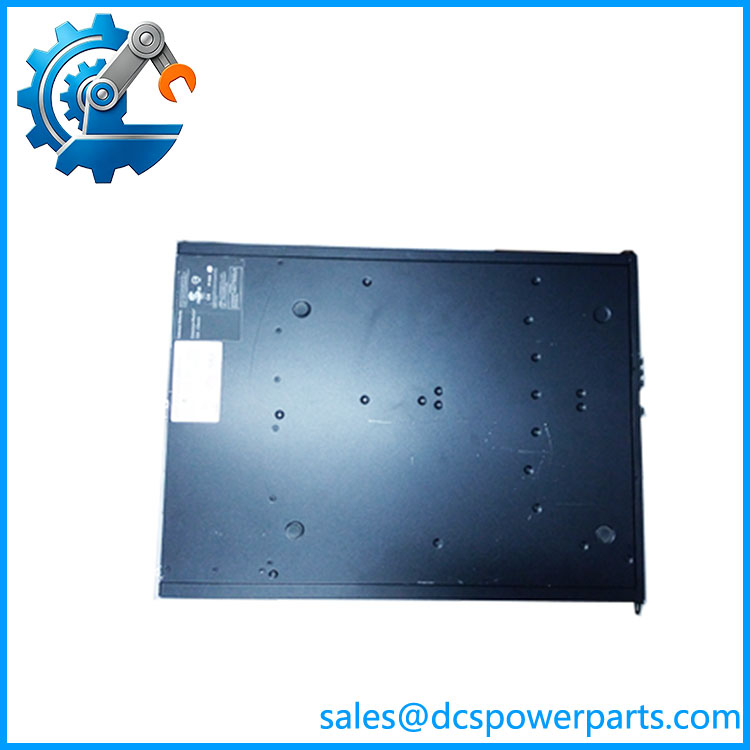
SSA-G1018-0652
Application Scenarios & Field Pitfalls — Engineer’s Perspective
Engineering Pain Point
A failed SSA-G1018-0652 can create a large number of apparent network faults because a single aggregation switch may serve many fiber-connected devices. Replacing the chassis without checking transceiver compatibility and firmware can turn a hardware replacement into a network-configuration problem.
Typical Applications
- Fiber aggregation: Concentrates multiple 1000BASE-X fiber connections into a managed switching platform.
- 10GbE backbone connections: Uses four SFP+ interfaces for higher-speed network uplinks.
- Enterprise and industrial Ethernet: Suitable for S-Series network architectures where optical connectivity is required.
- Legacy S-Series installations: Maintains existing S150 infrastructure where migration to a newer platform has not yet been completed.
Technical Pitfalls to Avoid
- Do not confuse the port configuration.
The official specification is 48 × 1000BASE-X SFP + 4 × 10GBASE-X SFP+. Listings claiming 48 copper RJ45 ports are describing a different S-Series model. - Check the optical transceivers separately.
The switch accepts pluggable SFP/SFP+ transceivers, so the chassis alone does not define the optical reach or wavelength. Match the installed transceiver type, fiber type, wavelength, and link budget. - Verify the power-supply arrangement.
The was supplied without power supplies in the base configuration. A replacement chassis therefore needs to be checked against the installed SSA power architecture rather than treated as a complete powered unit. - Firmware compatibility matters.
Extreme Networks’ current compatibility documentation still records the in its EOS software-support matrix, with historical software beginning at the 07.01.01.000X level and later compatibility extending to 08.62.04.0001. - Do not assume the replacement is a direct drop-in.
Extreme Networks designated SSA-G8018-0652 as the replacement for . The newer S180 platform has a similar 48-SFP + four-SFP+ port arrangement, but network software, firmware, management, and configuration behavior should be checked before migration.
Related Products
- SSA-G8018-0652 — S180-class successor platform with 48 × 1000BASE-X SFP and 4 × 10GBASE-X SFP+ interfaces. Officially designated as the replacement for .
- SSA-T1068-0652 — S150 Stand-Alone switch with 48 × 10/100/1000BASE-T copper ports and four 10GBASE-X interfaces.
- SSA-T1068-0652A — Later variant of the copper-port Stand-Alone platform.
- SSA-T4068-0252 — S130 Stand-Alone switch with 48 copper PoE ports and four 10GbE interfaces.
- S8-Chassis — Multislot S-Series chassis supporting compatible S-Series modules.
- S-Series modules — Related S-Series switching hardware sharing the EOS software family.
- SFP transceiver modules — Required to populate the ‘s Gigabit optical interfaces.
- SFP+ transceiver modules — Used for the four 10GbE uplink interfaces.
Procurement Note
For a replacement , specify the complete model number and confirm the 48-SFP + 4-SFP+ port architecture, installed transceiver types, power-supply configuration, firmware level, and existing S-Series management environment.
Because this model reached end of life in 2021, condition and firmware are more important than cosmetic appearance. For surplus inventory, inspect the SFP cages, optical connectors, fans, power interfaces, management/console ports, and chassis for evidence of thermal stress.
A replacement switch should be tested with the actual optical transceivers and representative network topology before being introduced into a production control or plant network.