Description
Product Introduction
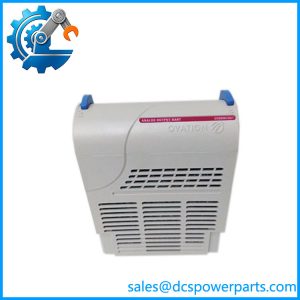
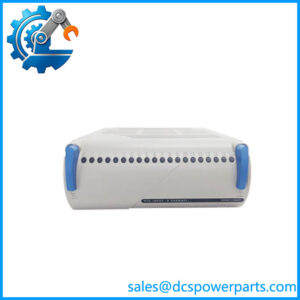
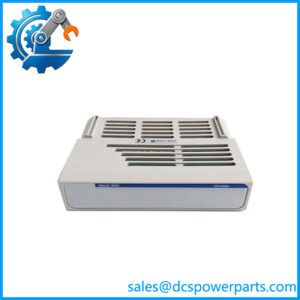
Expanding a distributed control system cabinet often requires placing I/O carriers beyond the immediate reach of the existing LocalBus connection. The Emerson KJ4010X1-BG1 provides the right-side LocalBus extension connection for compatible DeltaV hardware, carrying bus communication and power through the extender arrangement. Its role is infrastructure: it connects the I/O hardware rather than processing field signals itself.
For maintenance or cabinet expansion, confirm the extender orientation, matching carrier hardware, and total permitted bus length. Emerson’s installation instructions specify that the combined length of interconnected I/O carriers and LocalBus extenders must not exceed 6.5 meters. Power must be removed before disconnecting carriers or extender cables—a detail that should be included in the work permit and shutdown plan.
Key Technical Specifications
| Parameter | Specification |
|---|---|
| Model | KJ4010X1-BG1 |
| Part Number | 12P0830X062 |
| Manufacturer | Emerson |
| Product Family | DeltaV I/O |
| Product Type | Right LocalBus extender cable assembly |
| Primary Function | LocalBus extension and power distribution |
| LocalBus Power Rating | 12.6 VDC at 8 A |
| Maximum Combined Carrier/Extender Length | 6.5 m |
| Ambient Operating Temperature | −40 to +70°C |
| Storage Temperature | Verify against the applicable installation documentation |
| Relative Humidity | 5–95%, non-condensing |
| Ingress Protection | IP20 |
| Mechanical Shock | 10 g, half-sine wave, 11 ms |
| Vibration | 1 mm peak-to-peak from 5–16 Hz; 0.5 g from 16–150 Hz |
| Hazardous-Area Documentation | ATEX/Zone 2 instructions and other listed approvals apply to the specified installation conditions |
The technical values and installation limits above are drawn from the manufacturer’s instruction sheet. Confirm the exact part-number suffix and approval documentation on the physical nameplate before use in a hazardous area.
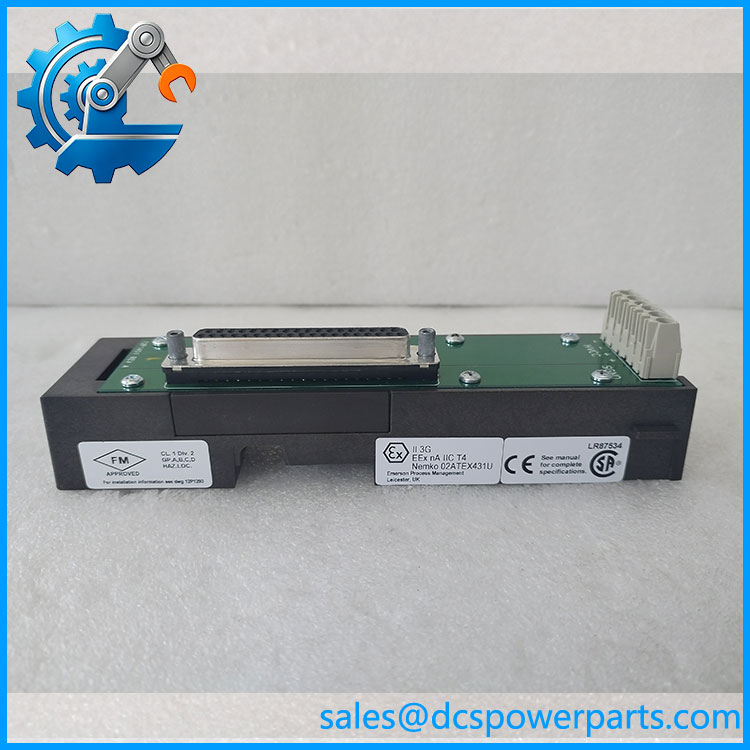
KJ4010X1-BG1
Application Scenarios & Pain Points
- DeltaV I/O cabinet expansion: Extends LocalBus connectivity when compatible I/O carriers need to be arranged across a larger cabinet layout.
- Distributed carrier installation: Supports bus interconnection where carrier placement requires an extender assembly rather than a direct adjacent connection.
- Spare-parts replacement: Helps restore a failed LocalBus interconnect without replacing unrelated I/O cards.
- Hazardous-area control cabinets: May be used only where the installed equipment, wiring method, enclosure, and applicable approvals satisfy the site’s area classification requirements.
Related Products
The following are relevant DeltaV hardware categories to check during maintenance. Confirm exact order codes against the installed system bill of materials before substituting components.
- KJ4010X1-BG1 — Right LocalBus extender cable assembly; the exact model requested.
- KJ4010X1-BC1 — Spare 250 V, 2 A fuse for the applicable fused termination-block configuration; not a LocalBus extender.
- DeltaV M-Series I/O carriers — Carrier hardware that hosts compatible I/O modules and connects to the LocalBus architecture.
- DeltaV M-Series analog input modules — Acquire analog field signals through compatible carrier and termination hardware.
- DeltaV M-Series analog output modules — Provide configured output signals to supported field devices.
- DeltaV M-Series digital input modules — Acquire discrete field status signals.
- DeltaV M-Series digital output modules — Drive supported discrete control loads through the appropriate termination arrangement.
These items have different functions; they are not direct replacements for KJ4010X1-BG1.
The Engineer’s Guide: Field Pitfalls to Avoid
Pitfall 1: Disconnecting the extender with power applied
The manufacturer explicitly prohibits insertion or removal while the system is energized. De-energize the relevant system before disconnecting the extender or associated carrier. Do not assume that a connector is hot-swappable.
Pitfall 2: Exceeding the total LocalBus length
The 6.5 m limit applies to the combined arrangement of I/O carriers and LocalBus extenders—not simply the length of one cable. Check the physical layout and the applicable installation drawing before adding another section.
Pitfall 3: Confusing similar part numbers
Confirm the full KJ4010X1-BG1 designation, right-side orientation, and associated part number on the label. Supplier descriptions can mix carrier modules, extender assemblies, and related order codes. For hazardous-area use, also verify that the equipment approval and installation method match the site’s requirements.
Frequently Asked Questions
Q1: What is the KJ4010X1-BG1 used for?
It is a right LocalBus extender cable assembly for compatible Emerson DeltaV I/O hardware. It provides the physical bus extension and carries LocalBus power.
Q2: Is an I/O signal card?
No. It is an interconnect assembly. It does not independently acquire analog or digital field signals.
Q3: What is its LocalBus power rating?
The manufacturer’s instruction sheet specifies 12.6 VDC at 8 A. The complete installation must still comply with the applicable system power and wiring requirements.
Q4: What is the maximum permitted LocalBus extension length?
The combined length of I/O carriers and LocalBus extenders must not exceed 6.5 m under the cited installation instructions. Check the applicable system manual before modifying the layout.
Q5: Can it be disconnected while the DeltaV system is running?
No. The cited manufacturer instructions require power to be de-energized before disconnecting carriers or LocalBus extender cables.
Q6: What should be checked when sourcing a replacement?
Verify the full model number, associated part number, connector condition, cable condition, right-side orientation, and required installation approvals. For used hardware, request label photographs and an inspection report.
Q7: What determines availability and delivery lead time?
Availability depends on the exact part number, unit condition, and inspection requirements. Confirm the label, physical condition, and included assembly components before accepting a replacement.