Description
Product Introduction
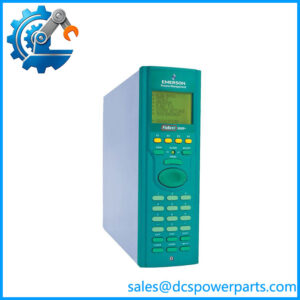
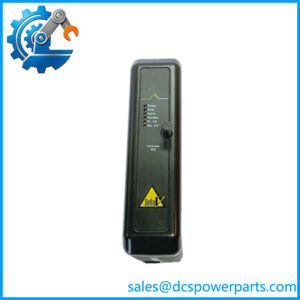
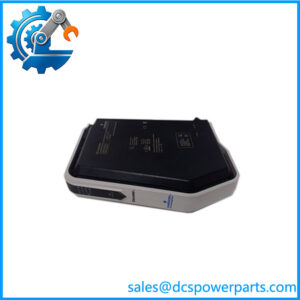
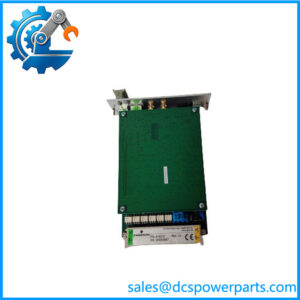
A controller processor fault can stop control execution or interrupt communication with connected I/O and supervisory systems. The Emerson 5X00241G02 belongs to the legacy Ovation OCR400 controller hardware family, where the processor module works with the associated I/O interface hardware. Historical controller training material identifies the OCR400 platform as using a 400 MHz processor, VxWorks, and memory expandable to 128 MB. These are platform-level details, not a verified specification sheet for every 5X00241G02 revision.
When sourcing this part, verify the controller model, processor revision, companion interface card, and installed software release. An OCR1100 processor card is not a safe substitute simply because it belongs to the same Ovation product family. Processor hardware and interface-card combinations must match the documented controller configuration.
Key Technical Specifications
| Parameter | Specification |
|---|---|
| Model | 5X00241G02 |
| Manufacturer | Emerson / Westinghouse |
| Product family | Ovation DCS |
| Product type | Processor module |
| Associated controller family | OCR400 |
| Processor speed | 400 MHz reported for the OCR400 platform |
| Memory | 128 MB maximum expandable DRAM reported for the OCR400 platform |
| Operating system | VxWorks reported for the OCR400 platform |
| Companion interface hardware | I/O interface card; verify exact revision |
| Control role | Controller processing and system communication |
| Mounting | Controller assembly; confirm the installed hardware arrangement |
| Input power | Verify the processor assembly’s electrical specification |
| Operating temperature | Verify the applicable controller hardware documentation |
| Condition | Confirm actual-unit status and test records |
The platform specifications are supported by historical controller-training material, while the exact part number is identified as a processor module in product listings. Detailed electrical and environmental ratings should not be inferred from unrelated Ovation controller generations.
Application Scenarios & Pain Points
- Legacy controller maintenance: Source the matching processor module when diagnostics and hardware inspection identify a processor-level failure.
- Controller spare-parts planning: Keep the exact G02 revision and its companion interface-card configuration in maintenance records.
- Control-system recovery: Verify controller startup, communications, application loading, and redundant-system status after replacement, following the approved site procedure.
- Obsolescence management: Establish whether a replacement is tested, repairable, or available only as used or surplus stock before planning a shutdown window.
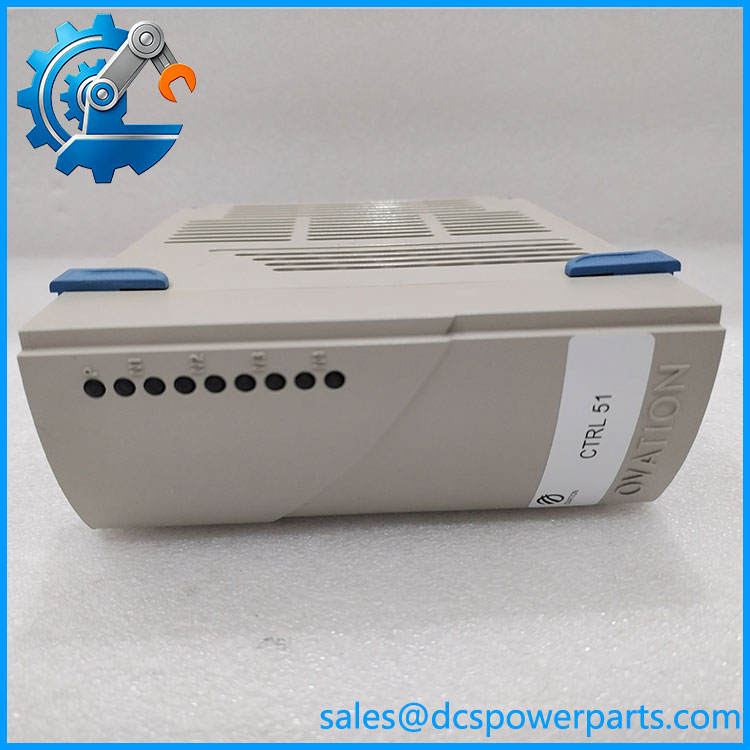
5X00241G02
Related Products
These parts belong to related Ovation controller hardware arrangements. They are not universal substitutes for the 5X00241G02.
- 5X00241G01 — Related processor-module version; confirm revision-specific differences before substitution.
- 5X00226G01 — I/O interface card variant identified in historical controller documentation.
- 5X00226G02 — Related I/O interface card variant; verify the controller and software configuration.
- 5X00481G01 — OCR1100 processor card for a different controller generation.
- 5X00481G04 — OCR1100 processor card variant associated with a different I/O interface-card pairing.
- 5X00105G14 — Processor module associated with the older OCR161 controller family.
- 5X00225G01 — Ovation controller base hardware; confirm the specific assembly requirement.
- 1C31203G01 — Ovation remote-node controller electronics module; a remote I/O subsystem component rather than a controller processor substitute.
Historical documentation identifies the 5X00241 and 5X00226 families, while later controller documentation distinguishes OCR1100 hardware combinations. Check the plant’s controlled parts list before selecting any related model.
The Engineer’s Guide: Field Pitfalls to Avoid
Pitfall 1 — Confusing and OCR1100 hardware
The processor families differ. Confirm the installed controller model and matching I/O interface card before ordering. A newer controller-family part number is not proof of backward compatibility.
Pitfall 2 — Overlooking software and configuration dependencies
A replacement processor may require the correct software release, controller database, network configuration, and redundancy arrangement. Coordinate the change with the site’s Ovation support procedure and ensure a validated recovery plan exists before removing the working processor.
Pitfall 3 — Treating a power-up test as a complete functional test
For used or repaired stock, ask whether the supplier tested the processor in a compatible assembly, checked communications, and documented the results. A visual inspection or simple power-on check does not prove that the module can execute the intended control application.
Q1: What is the Emerson 5X00241G02?
It is listed as an Ovation DCS processor module and is associated with the controller family.
Q2: Does it have 128 MB of memory?
Historical material reports DRAM expandable to 128 MB. This is a platform-level specification; confirm the memory configuration of the actual module and its revision before using it as a procurement acceptance criterion.
Q3: Can it replace an OCR1100 processor card?
Do not assume so. The uses a different processor-card family, including 5X00481-series parts, and the associated interface-card pairing must match the controller configuration.
Q4: What should I verify before installation?
Confirm the complete part number, revision, controller configuration, companion interface card, software compatibility, and approved replacement procedure. Back up the controller configuration and establish the site’s recovery plan before maintenance.
Q5: Is this part discontinued?
A parts listing reports the model as discontinued by the manufacturer. That does not establish whether Emerson-supported spare-parts services or tested secondary-market units are currently available; verify availability for the exact part number.
Q6: How should a refurbished unit be evaluated?
Request the serial or traceability details available, photographs of the actual unit, the repair history if applicable, the functional test scope, and written warranty terms. For critical service, prioritize evidence of testing in a compatible controller assembly.
Q7: What determines lead time?
Availability of the exact revision, repair requirements, test coverage, and stock condition all affect delivery. Obtain written confirmation of the specific unit’s condition, dispatch estimate, and warranty before committing to a maintenance schedule.