Description
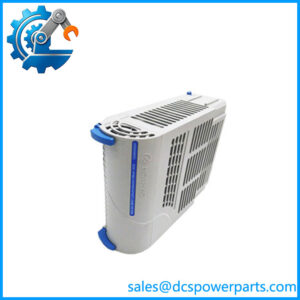
Emerson 2840A79G01 — Westinghouse Q-Line QBO Digital Output Card
Key Technical Specifications
| Parameter | Specification |
|---|---|
| Model | 2840A79G01 |
| Manufacturer lineage | Westinghouse / Emerson |
| Product family | Q-Line |
| Board designation | QBO G01 |
| Product type | Digital output card |
| Listed output voltage | 60 VDC |
| Listed maximum output current | 300 mA per output |
| Output channel count | Confirm from the applicable hardware manual |
| Output circuit type | Verify the specific board schematic |
| Overload protection | Not independently confirmed for this exact assembly |
| Output isolation | Verify from the applicable technical documentation |
| Rack compatibility | Confirm against the installed Q-Line hardware |
| Operating temperature | Verify from the original equipment documentation |
| Physical dimensions | Confirm against the board drawing |
| Lifecycle status | Reported discontinued; current OEM support unconfirmed |
Engineering note: Do not interpret the 60 VDC rating as permission to use any load up to that voltage and current. Check the output circuit, load type, inductive suppression, wiring arrangement, and applicable duty limits before commissioning.
Product Introduction
The Emerson / Westinghouse 2840A79G01 is a Q-Line QBO output card used in legacy industrial control architectures. It provides output switching or logic-output functionality for compatible control-system applications. Parts catalogs associate this model with a 60 VDC output rating and a maximum current of 300 mA per output. The precise function of each output and the applicable electrical limits should be established from the board documentation.
For maintenance engineers, the most important issue is matching the output characteristics to the existing field circuit. A card with a similar QBO designation may use a different voltage, current, or logic-output configuration. Confirm the full part number, assembly revision, load requirements, rack compatibility, and approved system configuration before installing a replacement.
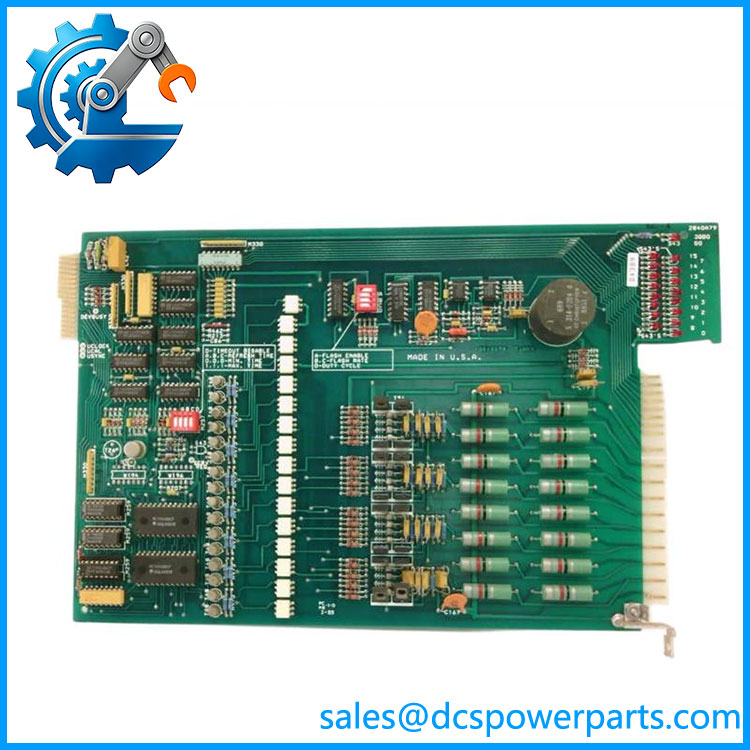
2840A79G01
Application Scenarios & Field Pitfalls — The Engineer’s Perspective
Engineering Pain Point
Legacy output cards can fail in ways that are not immediately obvious. A channel may stop switching, behave intermittently, or remain active unexpectedly. Replacing the card without checking field wiring, load current, external suppression, and control logic can leave the underlying fault unresolved.
Typical Applications
- Legacy DCS output control: Switching compatible external control circuits from a Q-Line control system.
- Power-generation control systems: Maintenance of installed WDPF or Ovation-related output hardware.
- Control-panel maintenance: Replacement of a confirmed faulty QBO card in an existing rack.
- Obsolescence management: Identification of an exact spare for legacy control equipment during planned outages.
These are typical applications inferred from the product classification and system family; confirm the original installed use from plant drawings.
Technical Pitfalls to Avoid
- Verify the actual output load. Check steady-state current, inrush, and inductive load characteristics against the applicable card specifications.
- Do not assume all QBO variants are interchangeable. Other suffixes can have different output ratings or logic functions. A shared family designation is not proof of equivalence.
- Inspect for stuck or intermittent outputs. Before replacing a card, check whether the fault follows the output channel, field wiring, external load, or controller command.
- Check inductive-load suppression. Relays, solenoids, and contactors can generate transients. Confirm that suppression components meet the original design requirements.
- Confirm the installed assembly revision. Catalogs associate the part number with several subversions. Check the actual board markings and approved replacement documentation.
- Verify rack and connector compatibility. Inspect the card edge connector, rack interface, and seating arrangement before installation.
- Do not assume a protection feature. Overload cutoff, short-circuit protection, and output isolation must be confirmed from the correct technical manual.
- Test the complete control path. Follow approved procedures to verify commanded state, output switching, field-device response, and alarm behavior after replacement.
Related Products
The following are related Westinghouse Q-Line products. They are reference models, not automatically approved substitutes.
- 2840A79G02 — QBO output-card variant; catalog descriptions indicate a filtered version. Verify its exact output ratings.
- 2840A79G03 — QBO logic-output variant; listed for a different low-current output configuration.
- 2840A79G04 — QBO logic-output variant with a listed 20 VDC, 16 mA rating; not equivalent based on ratings alone.
- 2840A79G05 — QBO logic-output variant with a catalog description referencing flashing and pull-up functions.
- 3A99162G01 — Related QBO G01 assembly number appearing in cross-reference catalogs; confirm revision and approved interchangeability.
- 2840A80G04 — QBI digital input card; a different input function, not a replacement for an output card.
- 2840A80G06 — QBI input-board variant; confirm the electrical specification for the installed application.
- 2840A75G01 — QSC speed-channel card; a different function within the Q-Line family.
Catalog cross-references can help identify candidates, but the original board documentation and plant-approved parts list should determine whether a substitution is acceptable.
Procurement Note
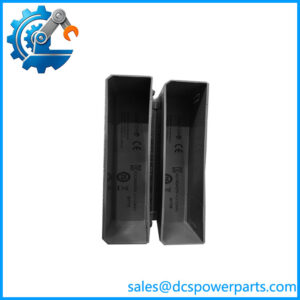
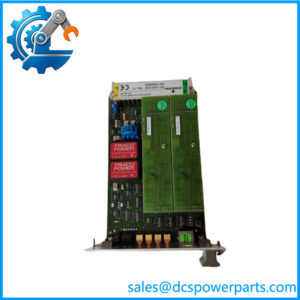
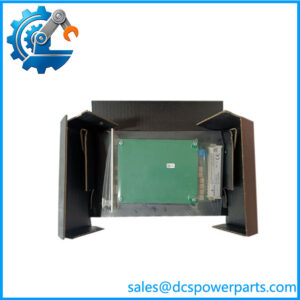
When sourcing Emerson / Westinghouse 2840A79G01, request a clear photograph of the board label, revision markings, connectors, and any subversion designation. Confirm whether the requirement is for the original assembly or an approved replacement.
Before installation, verify the output voltage and current requirements, load characteristics, rack compatibility, wiring, and controller configuration. Request condition details and available functional-test evidence for the actual unit supplied. Do not infer that a card is new, unused, refurbished, or tested solely from its part number.
For a discontinued card, any proposed substitute should be supported by documented electrical and mechanical compatibility, not just a catalog cross-reference.