Description
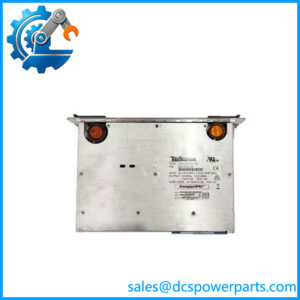
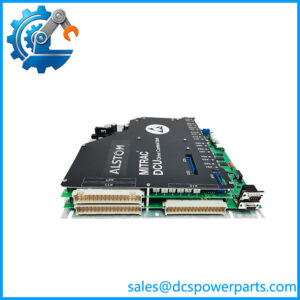
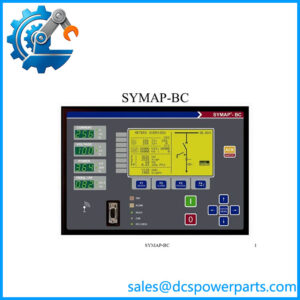
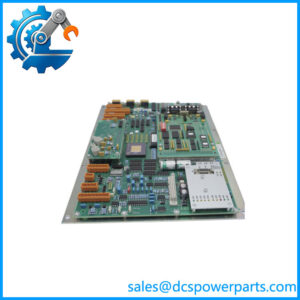
Cameron AAP3798102-00037 User Interface Module
Product Introduction
For a compressor control system, the operator interface is not just a display. It provides the local access point for monitoring operating conditions, alarms, and control functions while the underlying control logic continues to reside in the main controller. Cameron AAP3798102-00037 is identified as the User Interface Module (UIM) for the Maestro control family, with independent equipment-part references also describing it as an operator interface or HMI.
The part number is particularly important when maintaining older Cameron compressor controls. Bay Controls explicitly maps AAP3798102-00037 to its UIM category and distinguishes it from AAP3798102-00031, identified as the Main Logic Module. That separation is useful when troubleshooting: replacing the UIM is not equivalent to replacing the controller itself.
Key Technical Specifications
| Parameter | Specification |
|---|---|
| Product Model | AAP3798102-00037 |
| Manufacturer / OEM | Cameron |
| Product Family | Maestro |
| Product Type | User Interface Module (UIM) |
| Functional Category | Operator Interface / HMI |
| Primary Application | Compressor control system |
| System Role | Local operator monitoring and control interface |
| Related Main Logic Module | AAP3798102-00031 |
| Equipment Context | Cameron / Cooper compressor controls |
| Manufacturer Status | Reported discontinued |
| Replacement Approach | Exact part-number and interface matching required |
| Inventory Condition | Verify actual unit condition |
The UIM identification is supported by Bay Controls’ replacement-parts cross-reference, while Radwell independently identifies the exact part as an Operator Interface / HMI / Maestro Universal Control Module.
Important specification warning
Several secondary listings publish detailed values such as 7-inch color touchscreen, 24 VDC supply, RS-485, 0–55°C operating temperature, and various Ethernet/Modbus interfaces. These descriptions conflict with one another, and I could not establish those values from a sufficiently authoritative Cameron document. They should therefore not be treated as guaranteed specifications for AAP3798102-00037 without checking the actual unit or equipment documentation.
Application Scenarios & Pain Points
Maestro Compressor Operator Interface
The clearest application is the local operator interface within a Cameron Maestro compressor control system. The UIM provides the operator-facing portion of the control architecture, while the main logic module performs the underlying control functions.
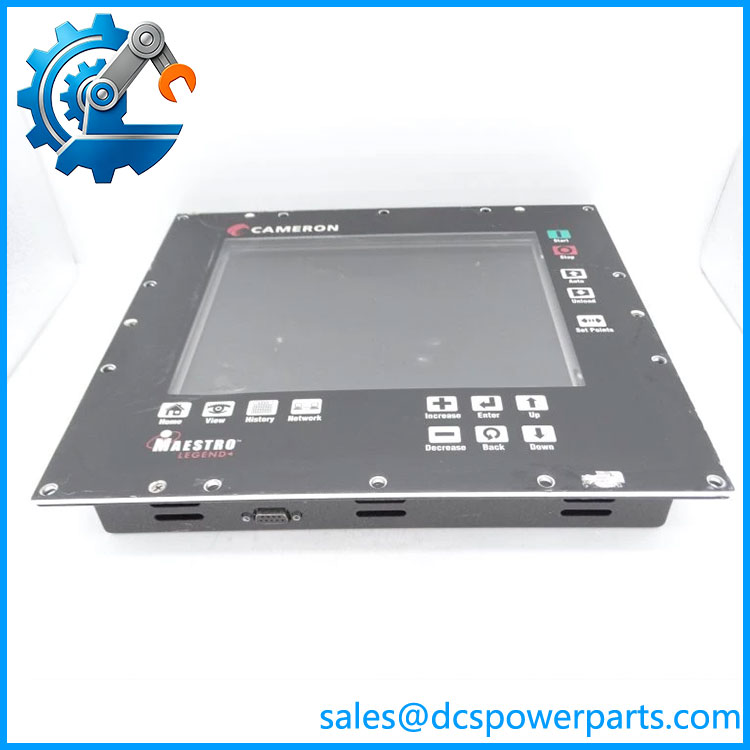
AAP3798102-00037
Legacy Compressor Control Maintenance
This part is particularly relevant when maintaining older compressor packages where the original HMI/UIM has failed or its display/interface has become unreliable. Since the exact part is reported discontinued, identifying the original hardware correctly is important before looking for a replacement.
HMI Replacement
A defective UIM can present as a blank display, failed touch/operator controls, loss of local monitoring, or inability to access normal control screens. Those symptoms do not necessarily indicate failure of the compressor controller itself.
Control-System Spare Procurement
For procurement, AAP3798102-00037 should be treated as a UIM rather than a generic PLC or analog-output module. This distinction prevents a common database error in which the part number gets assigned to an unrelated automation category simply because a supplier has copied an incorrect description. Bay Controls’ direct part-number mapping provides stronger evidence.
Related Products
- AAP3798102-00031 — Main Logic Module (MLM) associated with the same V-Series/Maestro control ecosystem; it performs a different system function from the UIM.
- AAP3798102-00036 — UIM backlight listed alongside the UIM in the Cameron replacement-parts cross-reference.
- Series 7 Controller — Bay Controls identifies its Series 7 controller as a newer replacement path for legacy V-Series controls, but this is an upgrade path rather than evidence of direct hardware interchangeability.
Do not describe any of these as a direct replacement for without checking the compressor package configuration and control-system revision.
Engineer’s Guide — Field Pitfalls to Avoid
1. Do not confuse the UIM with the Main Logic Module.
This is the most important distinction. , while AAP3798102-00031 is identified as the MLM. A failed operator interface does not automatically mean the controller logic board has failed.
2. Do not classify it as an ABB module.
Some secondary product indexes incorrectly associate this part number with ABB. The stronger part-number evidence identifies the component with Cameron and the Maestro control family.
3. Verify the actual display and interface hardware.
Supplier descriptions disagree about screen size, communications interfaces, and electrical specifications. If the replacement is intended for a production compressor, compare the physical connector arrangement and display assembly against the installed UIM.
4. Check whether the UIM is the actual failed component.
A communication fault between the UIM and main controller can produce symptoms that look like an HMI failure. Check controller diagnostics, cabling, power, and communication status before condemning the UIM.
5. Do not assume a newer control platform is a drop-in replacement.
Bay Controls describes its Series 7 controller as an upgrade path from legacy V-Series controls. That does not establish pin-level, software, or configuration compatibility with .
6. Verify condition separately from part identity.
The exact part is reported in new/unused and refurbished inventory categories by secondary suppliers, while manufacturer discontinuation is also reported. A correct part number does not tell you whether the display, touch interface, backlight, connectors, or internal electronics have been tested.
FAQ
What is Cameron ?
is a Cameron Maestro User Interface Module (UIM) used as an operator interface within the compressor control system. Bay Controls explicitly maps this part number to its UIM category.
Is an HMI?
Yes. The exact part is independently categorized as an Operator Interface / HMI for the Maestro control family.
What is the difference between and AAP3798102-00031?
The two parts serve different roles. is the User Interface Module, while AAP3798102-00031 is the Main Logic Module. They should not be treated as interchangeable boards.
Is discontinued?
Radwell’s product record identifies the exact Cameron part as “DISCONTINUED BY MANUFACTURER.” That is a useful procurement warning for legacy compressor systems, although the current manufacturer status should be reconfirmed if formal lifecycle documentation is required.
What voltage does use?
Some secondary listings state 24 VDC, but other listings provide conflicting system-level electrical descriptions. I would not put 24 VDC into a controlled engineering specification without verifying the actual UIM label, compressor-control documentation, or OEM drawing.
Does support RS-485 or Ethernet?
There are conflicting secondary claims about RS-485, Ethernet, Modbus TCP, USB, and other interfaces. These may describe a particular control-panel configuration rather than the UIM hardware itself. For procurement, verify the connector arrangement and communication architecture of the installed unit before specifying an interface.
What should procurement verify before buying ?
Verify the complete number, Maestro/V-Series system association, physical display and connector configuration, hardware revision, condition, and functional test scope. If buying a refurbished unit, request evidence that the display, operator controls, communications, and power-up sequence were actually tested.