Description
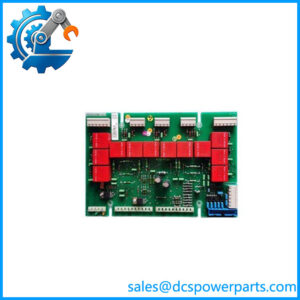
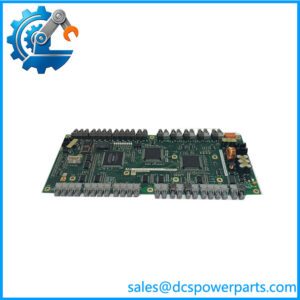
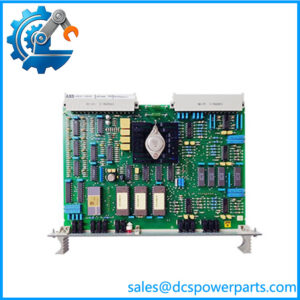
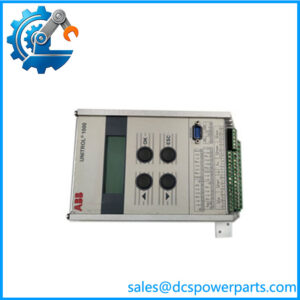
ABB 3BHE039724R0C3D PPD513AOC-100440 AC 800PEC Controller
Key Technical Specifications
| Parameter | Specification |
|---|---|
| Manufacturer | ABB |
| Part Number | 3BHE039724R0C3D |
| Model | PPD513AOC-100440 |
| Controller Family | AC 800PEC |
| Product Type | High-Speed Controller |
| Application Class | Power-Electronics Control |
| Typical Applications | Excitation, converters, rectifiers, drives |
| High-Speed I/O | Optical point-to-point architecture |
| Fast I/O Cycle | Typical 25 µs at the AC 800PEC system level |
| Ethernet | Supported by AC 800PEC controller architecture |
| Serial Interfaces | RS-232 / RS-422, depending on controller configuration |
| Optical Connectivity | Powerlink / optical ModuleBus architecture |
| Fieldbus Expansion | Anybus-S and CEX-based options, configuration dependent |
| Engineering Software | Control Builder M; MATLAB/Simulink integration |
| Memory | Flash-based program storage; exact capacity is revision dependent |
ABB describes the AC 800PEC as a modular high-speed control system with very fast analog and digital process I/O, typically achieving a 25 µs cycle time. Its architecture uses optical connections between the controller and process I/O, while Ethernet, RS-232/RS-422, CEX and optional fieldbus interfaces provide broader system connectivity.
Product Introduction
The is a controller associated with the ABB AC 800PEC high-performance control platform. It is intended for applications where the control task extends beyond conventional PLC scan processing, particularly power-electronics systems requiring rapid measurement handling, closed-loop calculations, control logic, and coordination with converter or excitation hardware. The AC 800PEC architecture was specifically developed to combine high-speed control with conventional process-control functions in one platform.
The ABB 3BHE039724R0C3D identification is important for procurement because PPD513 controllers exist under different ABB ordering references. The model name alone does not establish interchangeability. The installed application software, hardware revision, I/O configuration, optical links, communication modules, and associated AC 800PEC hardware should all be checked before a replacement is accepted.
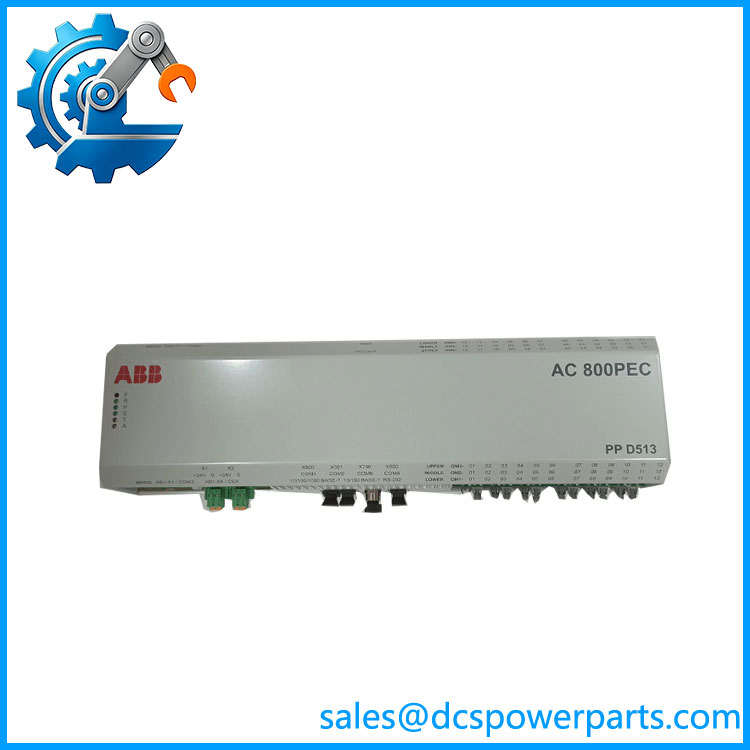
PPD513A0E110110 3BHE039724R0E41
Application Scenarios & Field Pitfalls — The Engineer’s Perspective
Engineering Pain Point
In excitation and power-conversion systems, the controller is part of a tightly coordinated control chain. A replacement controller that physically fits the cabinet may still fail commissioning if its application software, firmware, I/O configuration, or communication hardware does not correspond to the original system. With the , exact identification is therefore more important than simply matching the PPD513 name.
Typical Applications
- Generator excitation systems — High-speed regulation and coordination of excitation-related control functions.
- Power converters and rectifiers — Fast closed-loop control where electrical measurements must be processed rapidly.
- Industrial drives — AC 800PEC can be used for specialized drive and power-electronics control applications.
- High-speed industrial automation — Suitable where conventional process-control timing is insufficient for the application.
Technical Pitfalls
1. Do not classify this as a conventional S800 I/O module.
The PPD513 is a controller. The AC 800PEC architecture connects fast process I/O through optical links, while standard ABB S800 I/O can be used for slower process signals.
2. The 25 µs figure describes the AC 800PEC architecture, not necessarily every application task.
ABB specifies typical 25 µs cycle performance for very fast analog and digital process I/O. Actual application execution time depends on the programmed control functions, I/O configuration, communication load, and system architecture.
3. Do not assume every communication protocol is present on every PPD513.
The AC 800PEC platform supports Ethernet, serial communication, optical ModuleBus, CEX and Anybus-based fieldbus options. Specific interfaces and protocols depend on the installed hardware and configuration.
4. Optical connections require careful inspection.
AC 800PEC uses optical links extensively for high-speed process I/O and Powerlink connections. Before commissioning a replacement controller, inspect fiber routing, connectors, link assignments, and optical interface condition rather than treating the controller as an isolated CPU replacement.
5. Application software is a major replacement issue.
The controller hardware alone does not define the excitation or converter control algorithm. ABB identifies Control Builder M as the engineering environment, with MATLAB/Simulink integration available for AC 800PEC application development. A hardware replacement therefore needs to be evaluated together with the application’s software and configuration.
6. Match the complete part number.
Use , not simply “PPD513,” when sourcing a spare. Public references show multiple PPD513 ordering numbers, so model-family matching is insufficient for a controlled replacement.
Related Products
- — AC 800PEC controller family; individual ordering references must be checked.
- ABB PPD517A3011 3BHE041576R3011 — AC 800PEC controller variant with a different hardware/order reference.
- ABB UAD149 — AC 800PEC Combi I/O family for high-speed process signals.
- ABB UAD140 / PECMI — High-speed voltage and current measurement interface associated with AC 800PEC systems.
- ABB UAD155 — AC 800PEC signal/interface hardware used in applicable configurations.
- ABB PCD530 — AC 800PEC communication/control board family.
- ABB PPD113 — AC 800PEC controller family used in other system configurations.
- ABB S800 I/O — Standard ABB I/O architecture that can provide slower process I/O within the broader AC 800PEC system.
- ABB Control Builder M — Engineering environment used to configure and program AC 800PEC applications.
Procurement Note
For a replacement, record the complete part number, hardware revision, installed application software, controller configuration, optical connections, communication modules, and associated I/O before removing the original unit. For used or surplus hardware, functional testing is preferable to visual inspection alone.
A particularly important distinction is that should not be purchased merely as a generic “AC 800PEC CPU.” The correct replacement must correspond to the installed AC 800PEC architecture and application. This is especially important in generator excitation and power-converter systems, where an apparently compatible controller can still require application-specific configuration before the equipment can return to service.