Description
Basler DECS250-LN1CN1N
Product Overview
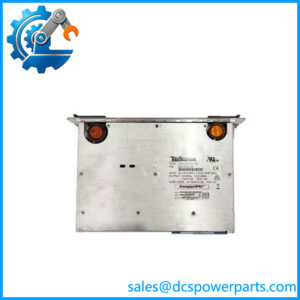
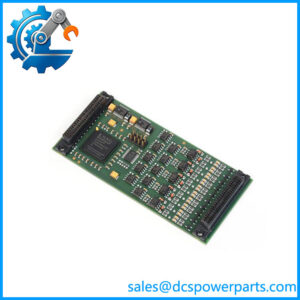
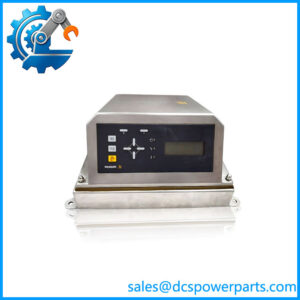
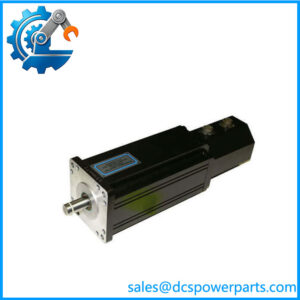
The Basler DECS250-LN1CN1N is a configured version of the DECS-250 digital excitation control system, intended to regulate and supervise excitation on synchronous generator applications. Unlike a standalone voltage regulator, the DECS-250 combines automatic voltage regulation with generator and excitation-system control, metering, programmable inputs and outputs, communication functions, and protective features. Basler describes the DECS-250 as a microprocessor-based excitation controller designed to control and protect both the generator and excitation system.
The Basler DECS250-LN1CN1N configuration is particularly identifiable from its ordering code. The L configuration uses a 24/48 VDC control-power arrangement; this exact style has internal autotracking only, no power system stabilizer, no automatic synchronizer, compression-type terminals, 100Base-T Ethernet with Modbus TCP, and no second communication protocol. These are not cosmetic suffix details. They define how the controller interfaces with the plant’s control and excitation architecture. A replacement should therefore match the complete ordering code rather than being selected simply because it carries the DECS-250 name.
From the excitation side, the DECS-250 provides a PWM power stage with selectable nominal excitation output arrangements. Published DECS-250 documentation identifies 32 VDC, 63 VDC, and 125 VDC excitation configurations, with generator current sensing available for 1 A or 5 A nominal CT inputs and generator/bus voltage sensing for several nominal voltage ranges. Exact excitation-power capability depends on the configured unit and application, so these figures should not be interpreted as saying every DECS250-LN1CN1N has the same field-output rating.
For procurement, the more important point is configuration matching. The exact DECS250-LN1CN1N has been assigned NSN 6110-01-669-2759 in U.S. government inventory records, with Basler Electric identified as the manufacturer. That record also explicitly identifies the 24/48 VDC power-supply configuration and 100Base-T Modbus TCP communication arrangement.
Product Introduction
A generator AVR replacement can look deceptively simple until the excitation wiring and control-power architecture are compared. The Basler DECS250-LN1CN1N is a complete digital excitation controller, not merely an analog voltage-regulator board. Its configuration combines 24/48 VDC control power, internal mode tracking, compression terminals, and Ethernet-based Modbus TCP communication.
For a legacy excitation-system replacement, the final ordering suffix matters. A with a different control-power, synchronizer, terminal, or communication configuration should not be assumed to be an equivalent substitute.
Key Technical Specifications
| Parameter | Specification |
|---|---|
| Product Model | |
| Manufacturer / Brand | Basler Electric |
| Product Series | Digital Excitation Control System |
| Product Type | Digital Excitation Control System / AVR |
| Control Power | 24/48 VDC configuration |
| Power System Stabilizer | None |
| Autotracking | Internal autotracking only |
| Synchronizer | None |
| Primary Communication | 100Base-T Ethernet |
| Ethernet Protocol | Modbus TCP |
| Second Communication Protocol | None |
| Terminal Type | Compression type |
| Generator Current Sensing | 1 Aac or 5 Aac nominal |
| Generator Voltage Sensing | 100/120, 200/240, 400/480, or 600 Vac nominal ranges, depending configuration |
| Excitation Output Architecture | 32, 63, or 125 VDC nominal configurations, depending configured power stage |
| Operating Frequency | 50/60 Hz for sensing; excitation operating-power stage supports a wider frequency range |
| Control System Type | Microprocessor-based digital excitation controller |
| Typical Application | AC synchronous generator excitation and voltage regulation |
The exact ordering-code information is directly supported by the government procurement record and Basler documentation. The broader electrical ratings are family-level specifications; the installed generator’s field voltage/current requirements must be checked before using them for application sizing.
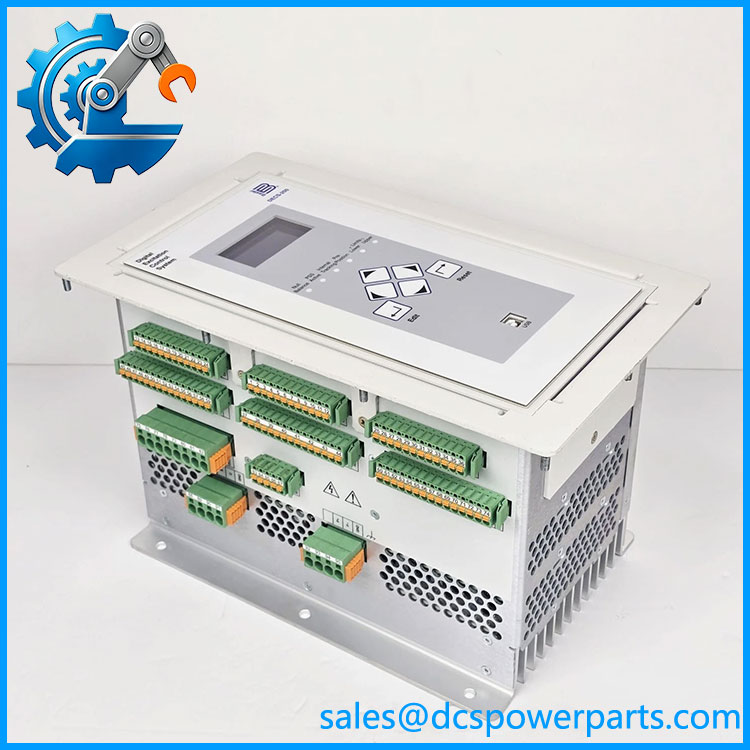
DECS-250-LN1CN1N
Major Features and Engineering Advantages
1. Complete Digital Excitation Control
The integrates automatic voltage regulation with excitation control, metering, programmable I/O, communications, and generator/excitation protection. That makes it a controller for the excitation system rather than a simple voltage-sensing regulator.
2. 24/48 VDC Control-Power Configuration
The L configuration is specifically associated with the low-voltage DC control-power option. Published documentation gives the L-style control-power range as 16 to 60 VDC, while the exact procurement description identifies the intended configuration as 24/48 VDC.
3. Internal Autotracking
This particular style provides internal autotracking only. That means the configuration is intended to coordinate its internal operating modes without the external autotracking option specified in other variants. For a replacement project, this distinction should be preserved rather than assuming all units have identical mode-transfer behavior.
4. 100Base-T Modbus TCP
Ethernet communication is built into this configuration using 100Base-T with Modbus TCP. The style has no second communication protocol. This can simplify integration with supervisory generator controls, but the actual Modbus register map and plant-side communications architecture still need to be checked during commissioning.
5. Compression-Type Terminations
The C terminal selection specifies compression-type terminals. Basler documentation notes that compression terminals are available for the CT inputs, operating-power input, and power-output connections. This is important when replacing a unit in an existing cabinet because terminal hardware is part of the physical interface, not merely a catalog option.
6. Generator and Bus Voltage Sensing
The supports generator and bus voltage sensing in single-phase or three-phase configurations, with documented nominal sensing ranges from 100/120 VAC through 600 VAC depending on the configuration. Generator current sensing supports 1 A or 5 A nominal CT inputs.
7. PWM Excitation Power Stage
The uses a pulse-width-modulated excitation power stage. Published documentation identifies nominal excitation configurations of 32 VDC, 63 VDC, and 125 VDC, with continuous current capability dependent on operating temperature and configuration. Do not select the field-output rating from the controller family name alone.
8. Industrial and Marine Deployment
The platform has been documented for generator excitation applications with environmental testing including salt fog, shock, and vibration. Basler documentation also lists marine classification recognition for applicable configurations. The exact certification status of an individual unit should still be verified from its nameplate and certification documentation.
Configuration-Specific Compatibility
For , four details deserve particular attention:
- Control power: 24/48 VDC configuration.
- Communication: 100Base-T Ethernet / Modbus TCP.
- Mode tracking: internal autotracking only.
- Options: no PSS, no automatic synchronizer, no second communication protocol.
Those characteristics distinguish this exact style from other configurations. A replacement with the same base model but a different style code can have different power-supply, communication, terminal, synchronizer, or autotracking arrangements.
Related Products
- — Same digital excitation-control platform; individual ordering styles differ in control power, terminals, communications, synchronizer, autotracking, and PSS options.
- DECS-250N — Newer DECS-250N digital excitation-control platform with updated specification set and communications options. It should not automatically be treated as a drop-in replacement for every installation.
- DECS-450 — Basler digital excitation control system for generator excitation applications with expanded control and protection functionality.
- BE1-11g — Basler generator protection system commonly used alongside excitation-control equipment for generator protection.
- DGC-2020 — Basler digital genset controller for generator control applications.
- DGC-2020HD — Higher-capability genset controller for complex generator paralleling and load-sharing applications.
- MVC — Manual voltage controller used as a backup excitation control source where the system design calls for manual excitation operation.
- CEM-2020 — Contact expansion module for applications requiring additional contact I/O.
- AEM-2020 — Analog expansion module for additional analog metering and control interfaces.
FAQ
What is the Basler used for?
It is a digital excitation control system / AVR used to regulate and control the excitation of AC synchronous generators. It also provides metering, programmable I/O, communications, and generator/excitation protection functions.
What does the LN1CN1N suffix mean?
For this exact style, the documented configuration is:
- L: 24/48 VDC control-power configuration
- N: No power system stabilizer
- 1: Internal autotracking only
- C: Compression-type terminals
- N: No automatic synchronizer
- 1: 100Base-T Ethernet / Modbus TCP
- N: No second communication protocol
The complete style is therefore important when sourcing a replacement.
Can I hot-sw?
Do not assume so. This equipment controls generator excitation and connects to potentially hazardous control-power, CT, VT, and field-power circuits. Replacement should follow the generator manufacturer’s shutdown and isolation procedure. CT circuits in particular require correct handling before disconnecting current-sensing connections.
support firmware v3.1?
A firmware version of v3.1 should not be treated as a verified identifying characteristic of this exact part number. For procurement, identify the complete style, hardware revision, firmware/application revision, and site configuration separately.
Can this unit communicate through Modbus TCP?
Yes. The exact style is documented with 100Base-T Ethernet using Modbus TCP as its primary communication protocol and no second communication protocol.
Does it have an automatic synchronizer?
No. The exact configuration is specified with no synchronizer. Do not assume that another ordering style has the same option set.
suitable as a generic PLC replacement?
No. It is a generator excitation controller with a dedicated control architecture. Although it has programmable I/O and industrial communications, its application logic and control functions are specific to excitation and generator systems. Replacing it with a generic PLC would require a complete control-system engineering project rather than a component substitution.
What should I verify when buying a New S?
Verify the complete part number, nameplate, hardware revision, terminal configuration, control-power range, communication ports, and actual electrical test condition. For an installed generator, also confirm the excitation field voltage/current requirements, CT/VT ratios, control-power source, application settings, and any external protection or synchronizing equipment. “New surplus” describes condition; it does not by itself establish factory-fresh provenance or guarantee that stored electronics will perform correctly after years of shelf time.