Description
Product Overview
The Basler Electric DECS-100-B11 is a microprocessor-based digital excitation control system designed to regulate the field excitation of synchronous generators. By adjusting field current in response to sensed generator voltage, the controller helps maintain terminal voltage as electrical load changes. The DECS-100 platform supports automatic voltage regulation, manual field-current regulation, reactive power and power-factor control options, excitation protection, and configurable operating functions. It is used in industrial generator sets and other synchronous-generation systems where excitation control must be coordinated with the generator, sensing transformers, and field circuit.
The style designation is essential when specifying a Basler Electric DECS-100-B11. Basler’s DECS-100 documentation defines the style code as a combination of letters and numbers that identify operating features and electrical options. The documented style chart distinguishes VAR/power-factor capability, voltage matching, and current-sensing ratings. For this reason, a unit labeled only “DECS-100” is not necessarily equivalent to a B11. Confirm the full rear-panel designation and the applicable manual revision before connecting current transformers, enabling reactive-power control, or configuring voltage matching.
The DECS-100 family accepts 88–250 VAC operating power at 50–400 Hz and supports one- or three-phase line-to-line supply arrangements. Generator-voltage sensing is available across selectable ranges, while the current-sensing input depends on the ordered style. The controller also provides a rear-panel RS-232 communications port for configuration and monitoring using supported Basler software. During replacement, verify the supply, generator sensing, CT ratio and secondary rating, field-output requirements, wiring, and saved settings. Do not assume that a physically identical controller has the same option set or that its existing configuration can be transferred without validation.
Product Introduction
The Basler Electric -B11 provides digital excitation regulation for synchronous generator applications. Its specific style code identifies option differences that can affect voltage matching, reactive-power control, and current-sensing connections.
The family supports 88–250 VAC operating power and PC-based setup through its documented RS-232 interface. Confirm the exact B11 options, generator field requirements, and software compatibility before installation.
Key Technical Specifications
| Parameter | Specification |
|---|---|
| Manufacturer | Basler Electric |
| Model | -B11 |
| Product family | |
| Product type | Digital excitation control system / AVR |
| Primary application | Synchronous generator excitation control |
| Operating-power voltage | 88–250 VAC |
| Operating-power phases | Single-phase or three-phase line-to-line |
| Operating frequency | 50–400 Hz |
| Generator voltage sensing | Single-phase or three-phase; selectable ranges |
| Current sensing | Style-dependent; confirm the B11 chart and nameplate |
| Regulation modes | AVR and manual field-current regulation |
| Reactive-power control | Option-dependent; verify exact B11 feature configuration |
| Voltage matching | Style-dependent; verify exact configuration |
| Communication interface | RS-232, rear-panel DB-9 |
| Setup software | Basler BESTCOMS for ; verify version compatibility |
| Mounting | Panel-mounted |
| Field output | Depends on generator field requirements and controller operating conditions |
| Operating temperature | Verify in the applicable manual |
| Condition | Supplier-specific; verify before purchase |
Specifications describe the family unless stated otherwise. Confirm the exact style-code interpretation and all electrical ratings from the controller label and applicable instruction manual before wiring.
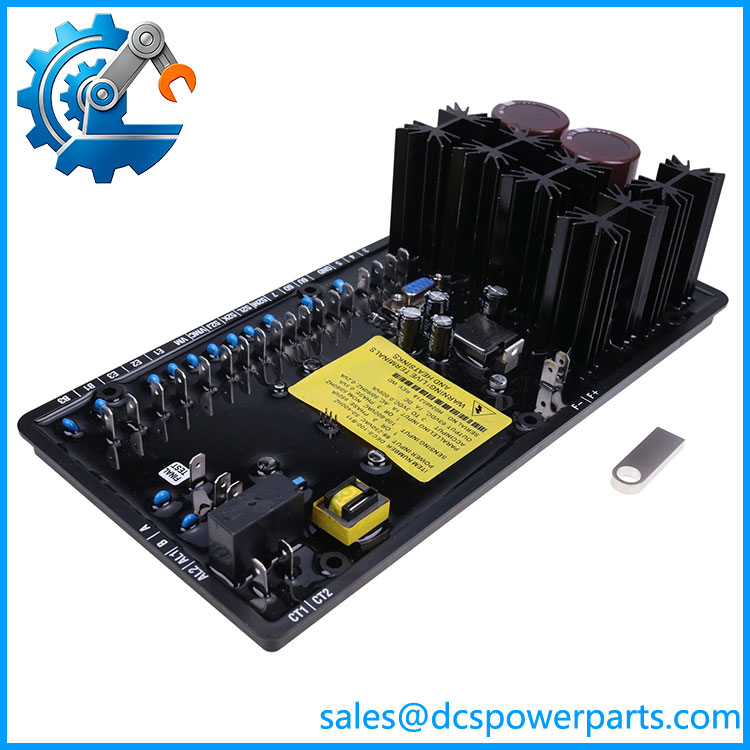
DECS-100-B11
Related Products
These Basler products serve related generator-control functions, but they should not be considered direct replacements without an engineering compatibility review.
- Basler — Same excitation-control family; match the complete style code and hardware revision.
- Basler DECS-150 — A separate digital excitation-control platform with its own configuration and interface requirements.
- Basler DECS-200 — Digital excitation controller for generator applications; verify supply, field-output, and control features before retrofit.
- Basler DECS-250 — Another excitation-control platform; migration requires review of wiring, functions, and commissioning requirements.
- Basler DECS-250N — Related excitation-control model; confirm its application and option configuration before considering substitution.
- Basler DECS-400 — Excitation-control family for generator systems; not automatically interchangeable with the .
- Basler DGC-2020 — Generator controller for monitoring and control, rather than a direct AVR substitute.
- Basler BE2000E — Digital voltage regulator for applications where its operating characteristics match the generator system.
Frequently Asked Questions
1. Can I hot-swap the -B11?
Do not assume hot-swap capability. Removing the excitation controller during operation can affect generator voltage regulation and protective functions. Follow the generator manufacturer’s shutdown and isolation procedure before removal.
2. What does the B11 style code mean?
Basler uses the style code to distinguish functional and electrical options. The letter and digits correspond to options such as VAR/power-factor control, voltage matching, and current sensing. Verify the exact B11 interpretation against the applicable official style chart rather than relying on a generic seller description.
3. Can this replace another model?
Only if the complete style options and electrical requirements match. Compare the control functions, current-transformer secondary rating, sensing connections, operating power, and field-output requirements. The family name alone is insufficient to establish compatibility.
4. Does firmware or software affect compatibility?
Yes. Verify the controller revision and the supported BESTCOMS software version. Back up existing settings when possible, then validate regulation parameters, protection settings, and optional functions during commissioning.
5. Can I transfer the existing settings and logic?
Do not assume a configuration transfer will work unchanged. Check software compatibility and verify voltage setpoints, stability parameters, sensing ratios, reactive-power settings, and protection functions. Perform controlled commissioning tests before returning the generator to service.
6. How can I verify a new-surplus unit?
Request photographs of the full model/style label, serial number, connectors, and enclosure. Ask for traceable sourcing and documented functional testing. A new-surplus description does not establish that the controller has been tested or is ready for installation.
7. What should be confirmed before purchase?
Confirm the exact -B11 designation, operating-power supply, sensing configuration, CT secondary rating, required regulation features, field-output requirements, and hardware revision. Obtain written warranty terms and ask what tests were performed on the actual unit.