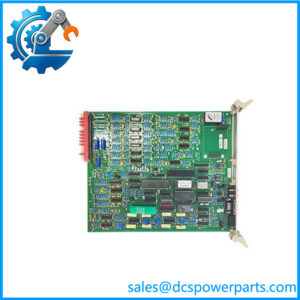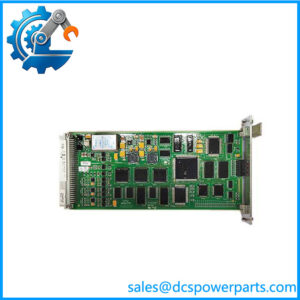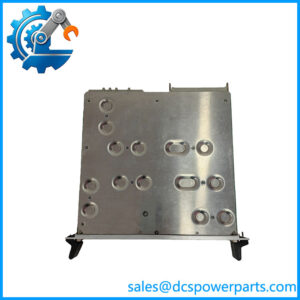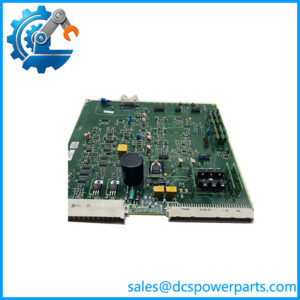
Description
Key Technical Specifications
| Parameter | Specification |
|---|---|
| Product Model | N897164610L |
| Manufacturer | ALSTOM |
| Product Type | Tx-Rx Board / Signaling Interface Board |
| System | SDTC |
| Channel Assignment | F7 |
| Group Assignment | Group 7 |
| Functional Description | TX-RX SDTC Gruppo 7 |
| Hardware Configuration | SCH.VERNICIATE |
| Application | Railway signaling and control |
| Installation | Dedicated SDTC rack/cabinet |
| Architecture | Legacy ALSTOM proprietary system |
| Compatibility | System-, channel-, and revision-dependent |
| Replacement Basis | Exact part number, board revision, rack position |
| Condition | New Surplus or Fully Tested Refurbished |
The strongest available application-specific evidence identifies N897164610L as “Tx-Rx Board (F7)” with the description “TX-RX_SDTC Gruppo 7_SCH.VERNICIATE.” A Chilean Metro procurement record independently identifies the same part as an F7 Tx/Rx card for an SDTC cabinet, used by signaling maintenance personnel.
Technical caution: Public documentation does not establish reliable values for supply voltage, connector pinout, transmission frequency, output level, channel current, or environmental ratings. Those specifications should be taken from the applicable ALSTOM system drawings and board documentation rather than inferred from the model number.
Application Scenarios & Pain Points
Rail signaling maintenance has a particular headache: a communication-card failure can present itself as a system-level signaling fault. Replacing the wrong channel board may restore power and still leave the actual problem untouched.
- Metro signaling: N897164610L has been procured specifically as an F7 Tx/Rx card for an SDTC cabinet in metro signaling maintenance.
- SDTC communication: The board provides the transmit/receive function assigned to Group 7, rather than acting as a generic PLC communication module.
- Legacy railway control: Useful where an existing ALSTOM SDTC installation remains in service and the original board-level architecture must be preserved.
- Maintenance spares: A correctly identified F7 board can reduce recovery time when a signaling cabinet develops a channel-specific fault.
Field note: Keep the adjacent cards in view when documenting the failed board. N897164610L, N897164611M, and N897164612N correspond to F7, F8, and F9 respectively. That sequence is not something I would ignore during an emergency replacement.
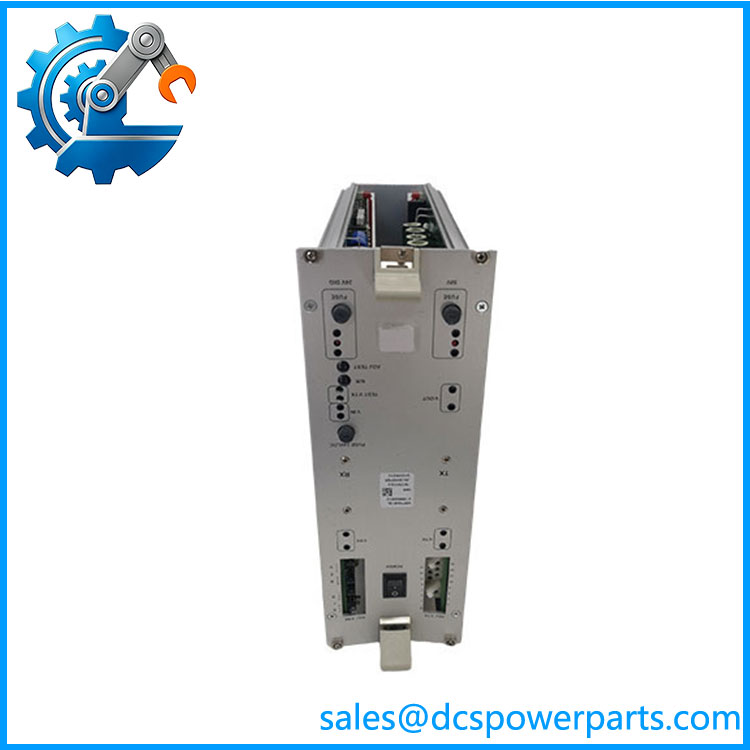
N897164610L
Related Products
- N897164611M — SDTC F8 Tx-Rx Board. Same general Tx-Rx family, but assigned to Group 8. It is not a blind replacement for the F7 board.
- N897164612N — SDTC F9 Tx-Rx Board. Functionally related to N897164610L but assigned to F9. Useful for F9 positions, not F7 substitution.
- N897164614Q — SDTC F11 Tx-Rx Board. Same signaling-card family with a different channel/group assignment.
- N897164615R — SDTC F12 Tx-Rx Board. Intended for the F12 channel configuration.
- N897164616S — SDTC F13 Tx-Rx Board. Related transmit/receive hardware for F13.
- N897164617T — SDTC F14 Tx-Rx Board. Same family, different signaling-group assignment.
- N897164627D — SDTC F14L/F12 switching board. It handles a specific channel-switching arrangement rather than the direct F7 Tx-Rx function.
- N897120117Y — TU Board F7/F11. A related SDTC interface board associated with F7/F11 transmission paths; it supports the architecture but does not replace the N897164610L.
- N897120118Z — TU Board F7/F13. Used for another F7-related channel combination and should be considered complementary rather than equivalent.
- N897120135T — TU Board F8/F11. Supports a different channel pairing and is relevant when troubleshooting the broader SDTC communication path.
The Engineer’s Guide: Field Pitfalls to Avoid
Warning 1 — Do not substitute another N8971646xx board simply because it fits.
The documented sequence assigns individual boards to specific signaling groups: F7, F8, F9, F11, F12, F13, and F14.
How to avoid it: Match against the cabinet drawing and the failed board before installation.
Warning 2 — Do not confuse with a generic I/O card.
Some secondary descriptions call it an input/output or pulse-output module. The stronger railway-specific documentation identifies it as the F7 Tx-Rx Board.
How to avoid it: Use the actual board label, rack position, system documentation, and channel assignment as the primary identification criteria.
Warning 3 — A basic power-up test proves very little.
A Tx-Rx board can power normally while the actual transmit or receive path is degraded.
How to avoid it: For a refurbished spare, request functional testing of the communication paths in an appropriate SDTC test setup. Inspect edge contacts and connectors closely for oxidation or mechanical wear before installation.
Frequently Asked Questions (FAQ)
What is ALSTOM ?
is an ALSTOM SDTC Tx-Rx board assigned to F7 / Group 7. A railway signaling specification explicitly identifies it as “Tx-Rx Board (F7)” and describes it as an SDTC Group 7 board.
Is the same type of board as N897164611M?
Yes, they belong to the same documented SDTC Tx-Rx board family, but they have different channel assignments. is F7, while N897164611M is F8.
That difference is significant. I would not approve an F8 board as an F7 replacement without system-level engineering confirmation.
What does F7 mean on ?
F7 identifies the signaling group/channel associated with the board. The procurement documentation explicitly maps to Group 7, N897164611M to Group 8, and N897164612N to Group 9.
Is used in metro railway systems?
Yes. A Chilean Metro procurement record identifies as an F7 Tx/Rx card for an SDTC cabinet, specifically associated with signaling maintenance on Lines 4 and 4A.
How should I test a refurbished ?
A sensible acceptance test should include:
- Verify the exact marking.
- Confirm F7/channel assignment.
- Record PCB revision and serial number.
- Inspect connectors and board contacts.
- Perform controlled power-up testing.
- Test transmit functionality.
- Test receive functionality.
- Verify operation within the appropriate SDTC test environment.
- Document the test results and warranty.
For this type of railway board, a bench test that only confirms power consumption is not enough.
What should I provide when purchasing this replacement?
Provide the complete identification:
ALSTOM — SDTC — Tx-Rx Board F7 — Group 7
Include photographs of the front label, PCB markings, connectors, installed rack position, and adjacent cards. If the cabinet drawing or equipment model is available, include that too.
What is the biggest procurement risk with this part?
Channel mismatch. The related N8971646xx cards look like members of one family, but the documented architecture assigns them to different signaling groups.
For a live railway installation, I would verify part number + F7 assignment + board revision + rack position + SDTC configuration before approving the spare.