Description
Product Overview
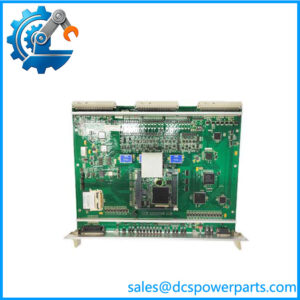
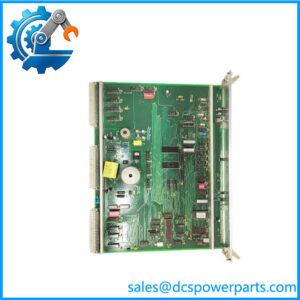
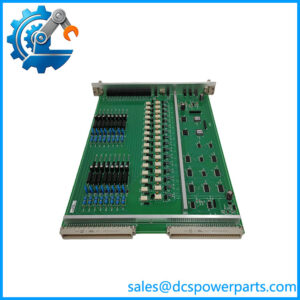
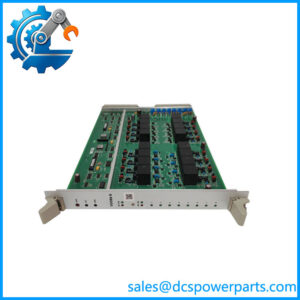
The ALSTOM N897163510Q N897163050Q MODEM N897163100U is a legacy ALSTOM communication interface assembly identified by the functional designation MODEM. The four identifiers are important when sourcing a replacement because they appear together in ALSTOM product indexes and technical listings. Rather than functioning as a conventional PLC CPU or field I/O card, this hardware belongs to the communication layer of the control system.
At system level, the ALSTOM N897163510Q provides a communications path for exchanging information with compatible external equipment. Depending on the host architecture, this can include control-system data, equipment status, diagnostic information, or supervisory communications. One technical listing describes the assembly as a modem interface board, while another describes the group as a communication interface unit. That distinction matters: the exact physical interface and protocol should be established from the installed system rather than inferred from the generic word “modem.”
The ALSTOM N897163050Q MODEM is the most useful functional identifier in the group, while N897163100U and N897163510Q should be retained as associated assembly references. Public technical data is inconsistent. One listing claims RS-232/RS-485/TTL interfaces, 300 bps to 921.6 kbps transmission, and TCP/IP/UDP/FTP support, while another source assigns the hardware to railway communication equipment and gives different power information. Those claims should not be treated as confirmed specifications without the original ALSTOM documentation.
Key Technical Specifications
| Parameter | Value |
|---|---|
| Manufacturer | ALSTOM |
| Primary Part Number | N897163510Q |
| Associated Part Number | N897163050Q |
| Functional Designation | MODEM |
| Additional Assembly Number | N897163100U |
| Product Type | Modem / Communication Interface Board |
| Primary Function | Control-system communication and data transfer |
| Application | ALSTOM legacy control / communication systems |
| Interface Type | System dependent |
| Communication Protocol | System dependent; exact protocol requires verification |
| Host Interface | System/rack dependent |
| Transmission Speed | Not reliably confirmed |
| Supply Voltage | Not reliably confirmed |
| Power Consumption | Not reliably confirmed |
| Serial Interfaces | Not reliably confirmed |
| Ethernet/IP Support | Not reliably confirmed |
| Firmware | System dependent |
| Mounting | Rack/cabinet dependent |
| Operating Temperature | Not reliably confirmed |
| Condition | New Surplus, subject to inspection and functional testing |
A secondary listing claims DC 5–36 V, RS-232/RS-485/TTL, 300 bps–921.6 kbps, and TCP/IP/UDP/FTP support. Another listing instead describes N897163510Q and N897163050Q in a railway communication context and assigns different power characteristics. Because these specifications conflict, they should be regarded as unverified rather than published as guaranteed ratings.
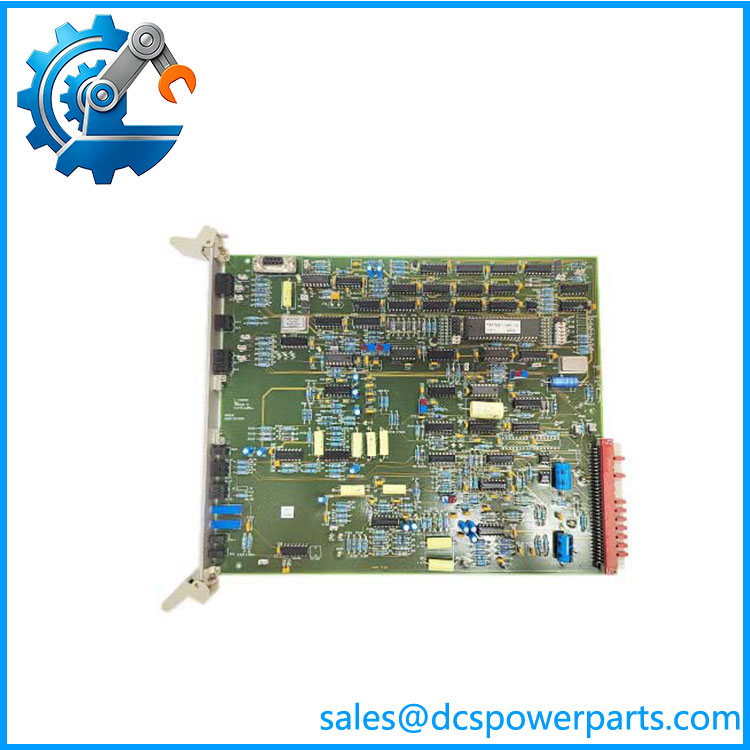
N897163510Q
Related Products
- ALSTOM N895600512D / N895600051C / ECPU_1 / N895600200Q — Central processing hardware. It generates and coordinates application-level control functions, while the MODEM assembly handles the associated communication path.
- ALSTOM N895609510K / N895609010R / E32OUT / N895609100P — Digital-output module. It converts control commands into discrete field outputs and is functionally separate from the communication interface.
- ALSTOM N897066510E / N897066010M / AOVD / N897066000A — Analog-output hardware. It provides analog signals to field equipment rather than network communication.
- ALSTOM N897093511D / N897093051D / DIAGNOSTICA / N897093400H — Diagnostic module. It focuses on monitoring and fault information, while the MODEM provides the communication path.
- ALSTOM MLU VER.A01 — Main Logic Unit. It provides central logic functions in a related legacy ALSTOM architecture and should not be substituted for the MODEM.
- ALSTOM 730475-D / ELEMENTS-F2 — Dedicated turbine controller with its own application-specific processing and operator interface. It is a control device rather than a generic communication replacement.
- ALSTOM N897164610L — Pulse-output module from the related N89716x hardware group. Its function is field pulse generation rather than communications.
- ALSTOM N897164611M — Related pulse-output module. It can belong to the same broader hardware ecosystem but has a substantially different function from the MODEM.
Frequently Asked Questions
1. What is ALSTOM N897163050Q MODEM N897163100U used for?
It is a communication/modem assembly used within compatible ALSTOM control equipment. The MODEM designation and the complete four-part identification are repeatedly associated in available product references.
Its purpose is to provide a communication path for control, monitoring, or diagnostic data.
2. Are , , and N897163100U interchangeable?
Do not assume that they are independent interchangeable part numbers.
They are commonly listed together as one product identification. They may represent different board, assembly, or manufacturing-level references.
When ordering, provide all three numbers plus the MODEM designation and compare the physical labels on the installed unit.
3. Does the support RS-232 and RS-485?
One secondary technical listing claims RS-232, RS-485, and TTL interfaces.
That information is not sufficiently corroborated to treat all three interfaces as guaranteed on every configuration. Verify the actual connector pinout and communication drawing for the host system before wiring a replacement.
4. Does it support TCP/IP, UDP, or FTP?
A secondary description claims support for TCP/IP, UDP, and FTP, with transmission rates from 300 bps to 921.6 kbps.
I would not use those values as a procurement specification without primary ALSTOM documentation. Legacy ALSTOM communication hardware can be highly configuration-specific.
5. Can I hot-swap the MODEM?
Do not assume hot-swap capability.
Although some secondary listings make broad claims about hot replacement for related railway communication equipment, that does not establish hot-swap approval for this exact assembly.
Before removal:
- Identify the active communication path.
- Put the affected equipment into its approved maintenance state.
- Isolate power if required.
- Record connector and configuration information.
- Install the matching replacement.
- Verify communications before returning the system to normal operation.
6. Will replacing the MODEM erase my PLC/DCS logic?
Normally, the modem is not the primary application-logic processor. The ECPU_1 and MLU families have separate central-processing/logic functions in the broader ALSTOM product ecosystem.
The replacement risk is instead associated with communication configuration, such as addressing, interface parameters, protocol settings, and host-side communication mapping.
7. How should I verify a New Surplus before installation?
For quality control, verify the complete identification:
- MODEM
Then inspect:
- PCB revision
- Connector condition
- Component condition
- Storage damage or corrosion
- Interface type
- Jumper/switch configuration, if fitted
- Firmware/configuration
- Host-rack compatibility
- Communication parameters
- Power-up diagnostics
- End-to-end communication
Procurement judgment: The available evidence supports identifying this assembly as an ALSTOM MODEM / communication interface board, but detailed electrical and protocol specifications are inconsistent across secondary sources. For a critical legacy system, specify the complete / / MODEM / identification and require functional communication testing before field deployment.