Description
Technical Specifications
| Parameter | Specification |
|---|---|
| Manufacturer | ALSTOM |
| Model | AM164 |
| Product Type | System Rack / Rack Assembly |
| Platform | ALSPA / legacy ALSTOM control systems |
| Primary Function | Module housing and system interconnection |
| Backplane | System-specific |
| Power Distribution | Rack/system dependent |
| Module Compatibility | Determined by installed ALSTOM architecture |
| Mounting | Control cabinet / rack |
| Communication | Determined by installed modules |
| I/O Capacity | System/rack configuration dependent |
| Operating Temperature | Verify from equipment documentation |
| Dimensions | Configuration dependent |
| Application | Industrial and power-generation control systems |
A related ALSTOM power-conversion reference lists AM163, AM164, and AM166 as compatible rack types for the AL129A power-conversion module, with an FB178 backplane interface. This supports treating AM164 as rack infrastructure rather than as an independent PLC I/O card.
Product Introduction
The ALSTOM AM164 is a legacy system rack used within ALSTOM industrial control equipment. Its primary purpose is to provide the physical mounting, power distribution, and backplane interconnection required by the control modules installed in the rack. Current parts references consistently identify the AM164 as a system rack.
The ALSTOM AM164 is part of a family of rack hardware that includes the AM163 and AM166. A related ALSTOM power-conversion reference specifically identifies these racks as compatible with the AL129A CD101152 power-conversion module and references an FB178 backplane interface.
This distinction is important when evaluating replacement requirements. The itself does not perform the application logic, signal processing, or field I/O functions of the installed modules. Its electrical role is determined by the rack backplane and the modules populated in the assembly.
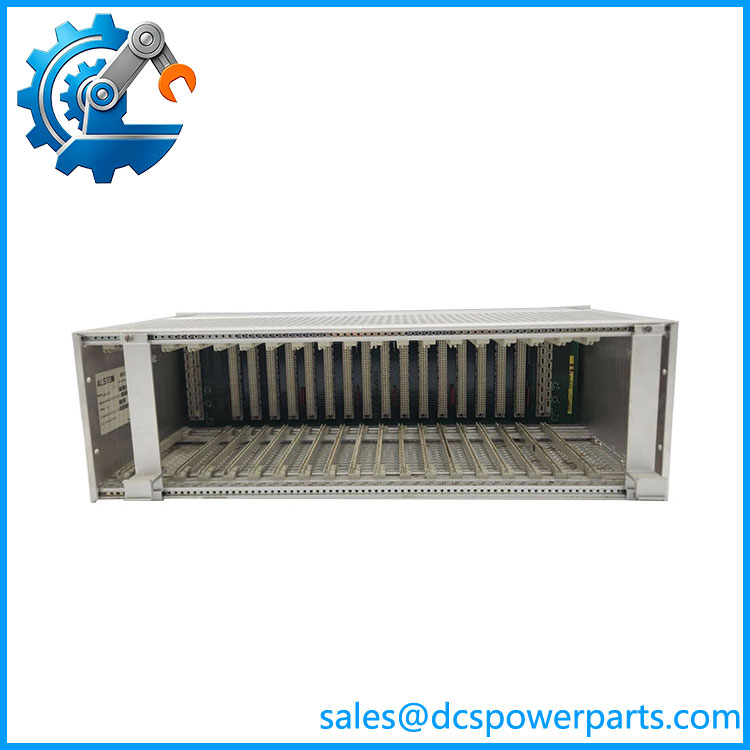
AM164
Main Features & Field Considerations
Rack-level infrastructure
The provides the physical platform for associated ALSTOM control modules. It should therefore be evaluated together with the installed cards, power supplies, and backplane.
Module integration
The rack can form part of a larger control architecture containing processor, communication, power-conversion, and I/O hardware. The exact module population determines the actual system capabilities.
Backplane compatibility
The backplane is critical. A rack that physically accepts a module does not necessarily provide the same power or signal distribution as another rack in the AM16x family.
Legacy equipment
Because is associated with older ALSTOM control architectures, replacement should focus on exact mechanical and electrical compatibility rather than treating it as a generic 19-inch rack.
Replacement Checks
Before replacing an , verify:
- Exact rack designation:
- Installed modules
- Backplane identification
- Power-supply arrangement
- Rack connector configuration
- Mechanical dimensions
- Mounting arrangement
- Associated ALSTOM controller/platform
- System wiring
- Any rack-specific jumpers or configuration components
If the rack contains power-conversion or control modules, document the existing slot arrangement before dismantling it.
Engineering Note
I would not classify as a remote-access controller, 16-channel digital-output module, or Triconex SIS module. Those descriptions appear in some secondary listings but conflict with other references that identify as an ALSTOM system rack.
Likewise, I would not publish definitive rack dimensions, slot count, input voltage, or communication protocol without the exact rack drawing or nameplate. These parameters depend on the particular rack/backplane configuration.
Procurement Note
For , the safest procurement description is:
ALSTOM — System Rack / Rack Assembly for Legacy ALSTOM Industrial Control Systems
When sourcing a replacement, request photographs of the front, rear/backplane, connectors, and nameplate and confirm the modules installed in the rack. The is infrastructure hardware, so matching only the model designation without checking the backplane and populated modules can result in an electrically incompatible replacement.