Description
Technical Specifications
| Parameter | Specification |
|---|---|
| Manufacturer | ALSTOM |
| Model | AB121 |
| Product Type | Control System Board / Control Module |
| Application | Power and industrial control systems |
| System Integration | ALSTOM proprietary control architecture |
| Signal Processing | System-dependent |
| Digital I/O | Configuration-dependent; verify before ordering |
| Communication | System-dependent |
| Power Supply | Verify from nameplate/system documentation |
| Mounting | Rack/backplane dependent |
| Firmware | System-dependent |
| Hardware Revision | Verify from module label |
| Operating Temperature | Verify from original documentation |
Product Introduction
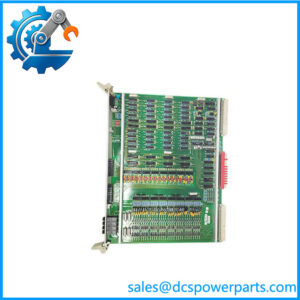
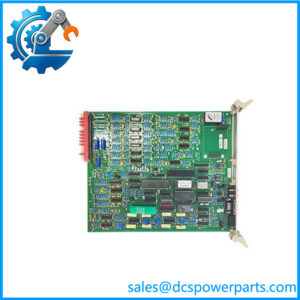
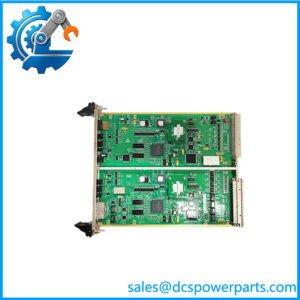
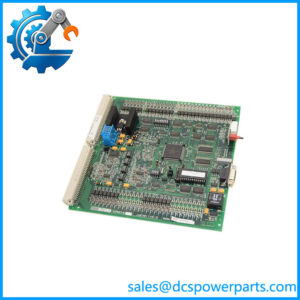
The ALSTOM AB121 is a legacy ALSTOM control-system board used in industrial and power-generation automation environments. Available parts references identify the AB121 as an ALSTOM control board/control-system module, with applications associated with power-plant control systems.
The exact function of the ALSTOM AB121 is less certain than the basic product identification. Some secondary documentation describes it as a control board responsible for signal processing, data conversion, and communication interfaces, while another listing classifies it as a composite digital I/O module. These descriptions should not be treated as equivalent without the original ALSTOM hardware documentation.
For engineering and procurement purposes, the safest classification is therefore ALSTOM AB121 Control System Board / Control Module. The exact I/O configuration, electrical ratings, communications, and host-system compatibility should be verified from the installed module’s complete identification.
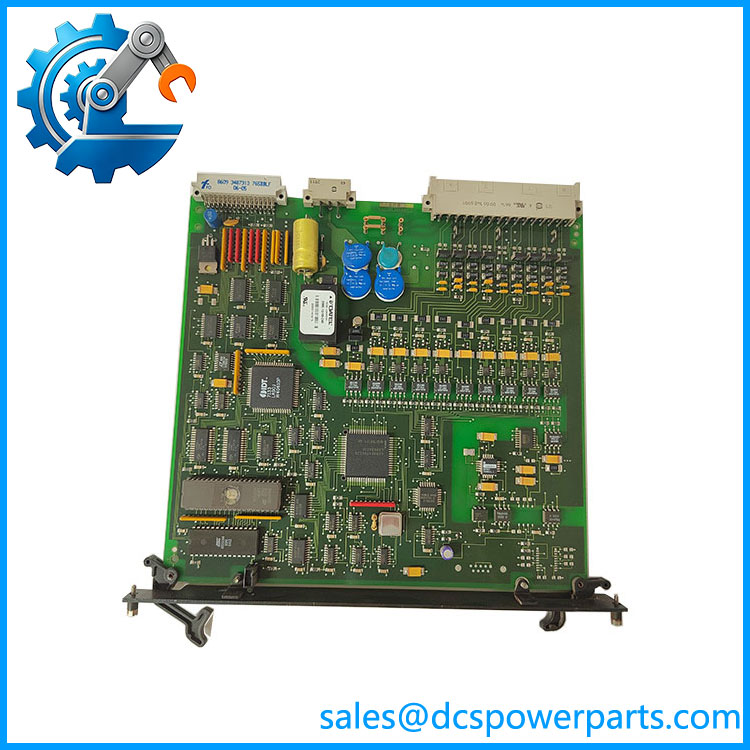
AB121
Main Features & Field Considerations
Control-system integration
The AB121 is intended as part of an ALSTOM control architecture rather than as a generic standalone PLC module. Its actual role depends on the host rack and the other installed ALSTOM boards.
Power-generation applications
Several parts references associate the with ALSTOM power-plant control equipment.
Do not rely on generic I/O specifications
One online listing claims 16 digital inputs, 16 relay outputs, 24 VDC input, 250 VAC/30 VDC relay contacts, Modbus TCP/RTU and Profibus-DP. Those detailed specifications are not corroborated by a primary ALSTOM document in the available evidence, so I would not publish them as confirmed specifications for .
Exact system identification matters
Before sourcing a replacement, capture the complete board label, revision, connector arrangement, and host-system/rack information. This is particularly important because is described inconsistently across secondary sources.
Replacement Checks
Before replacing an , verify:
- Exact model:
- Full nameplate and additional part number
- Hardware revision
- Host ALSTOM system
- Rack and slot position
- Backplane type
- Connector arrangement
- Power-supply requirements
- Connected field wiring
- I/O configuration
- Communication configuration
- Firmware/application configuration, if applicable
For a running power-control installation, document the existing wiring and configuration before removing the board.
Important Specification Caution
I would avoid publishing claims that the contains an Intel processor, 8 GB DDR3 memory, a 128 GB SSD, Windows IoT, 1250 kW output power, or 110–220 kV operating capability. Those specifications appear in a secondary listing but are not credible specifications for a control board of this type.
There is also conflicting evidence concerning whether is primarily a controller board or a digital I/O module. Until an original ALSTOM manual or a clear nameplate is available, the technically responsible description is ALSTOM Control System Board / Control Module.
Procurement Note
For procurement, use:
ALSTOM — Control System Board / Industrial Control Module
Include a photograph of the front label, rear connectors, and PCB markings when requesting a replacement. That information would allow the exact hardware variant and its actual I/O or control function to be distinguished from the conflicting descriptions found in secondary catalogs.