Description
Alstom CEA232.1 029.353 243
Product Introduction
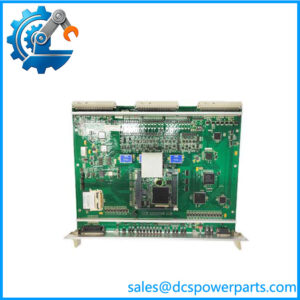
In an aging Alstom control cabinet, the difficult part is often not finding a board that physically fits—it is confirming that the board number, revision, and system position actually match. The Alstom CEA232.1 029.353 243 is identified in current industrial references as a CEA232.1 board, specifically revision E:02.
For procurement, the complete designation matters. The 029.353 243 number should be matched against the installed board and documentation rather than treating every 232-series PCB as interchangeable. Public listings also associate CEA232.1 with serial communication functionality, but this description is not supported by sufficiently detailed primary documentation, so interface type, electrical ratings, and protocol should be confirmed before engineering substitution.
Key Technical Specifications
| Parameter | Specification |
|---|---|
| Product Model | CEA232.1 |
| Manufacturer | Alstom |
| Part Number | 029.353 243 |
| Revision | E:02 |
| Product Type | Electronic board / interface board |
| Product Family | Alstom 232 series |
| Functional Description | Board; some secondary references describe it as a serial communication adapter |
| Installation | System/rack mounted as designed by the original equipment |
| Communication Interface | Verify from system documentation |
| Communication Protocol | Verify from system documentation |
| Operating Voltage | Not verified from reliable public documentation |
| Operating Temperature | Not verified from reliable public documentation |
| Protection Rating | Not verified; board-level IP rating should not be assumed |
| Replacement Requirement | Match complete part number and revision |
The exact public identification supports CEA232.1 / 029.353 243 / E:02, but it does not provide enough reliable engineering data to state a voltage, connector pinout, communications protocol, or environmental rating. That distinction matters when purchasing legacy control hardware.
Major Features / Advantages
Exact Part-Number Control
The primary procurement advantage of the .1 is that its identity can be tied to a specific Alstom part number and revision rather than relying on a generic description. Current industrial references consistently list 029.353 243 with and E:02.
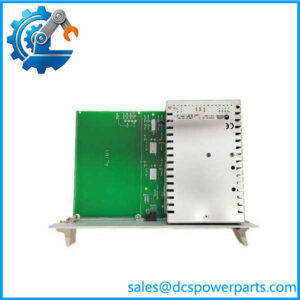
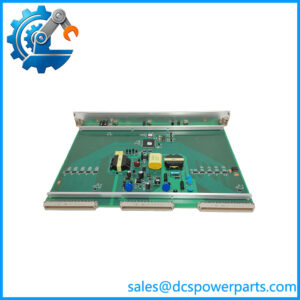
For an installed legacy system, that level of identification is important. A board from the same Alstom 232 family may have a similar physical format while performing a completely different function. The neighboring 232-series references include central processors, CAN interfaces, digital I/O boards, configuration-management modules, and drive-control hardware. They should not be treated as interchangeable simply because the family designation is similar.
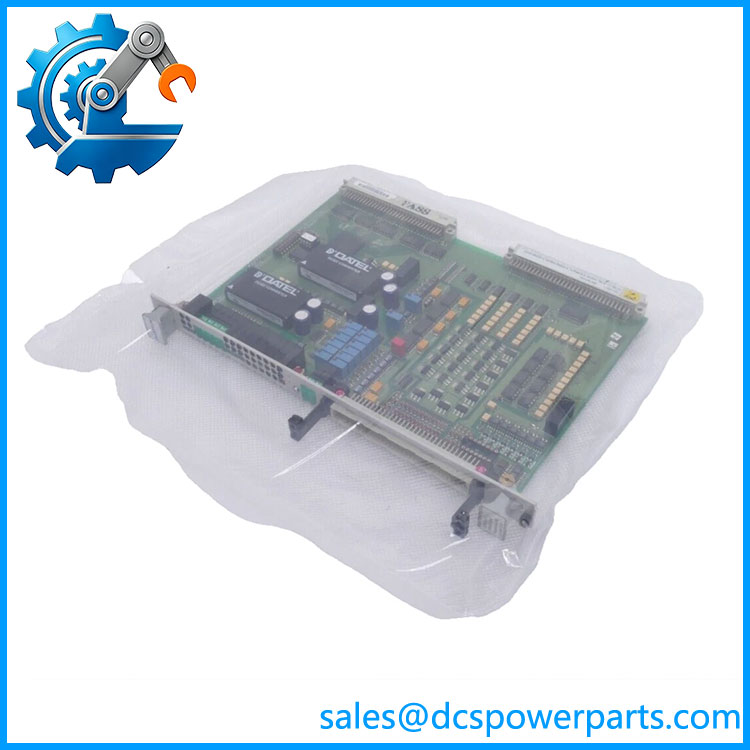
CEA232.1 029.353 243
Revision Awareness
The E:02 revision should be recorded as part of the purchasing specification. Revision information can matter when a legacy controller has accumulated firmware, wiring, or configuration changes over years of operation. If an incoming board carries a different revision, engineering should verify the applicable hardware documentation before installation.
Appropriate for Legacy-System Procurement
.1 is the kind of component that requires disciplined sourcing rather than specification guessing. Public information on this exact board is limited. That means procurement should request photographs of the board label, PCB identification, revision marking, connector arrangement, and any associated assembly number when the physical unit is being sourced.
This is especially important if the board is being purchased for an outage-critical repair. A visually similar board with an incomplete or altered identification label can create a much larger commissioning problem than the original hardware failure.
Communication Function Requires Verification
Some secondary catalog data describes the .1 as a serial communication adapter module. That description is useful as a procurement lead, but it should not be converted into a hard specification for protocol, baud rate, electrical interface, or connector pinout without supporting documentation.
That is the practical distinction between identifying a legacy spare and engineering a replacement. If the board is part of a communication path, confirm the system drawing and installed configuration before assuming that another communication board from the Alstom 232 family can substitute for it.
Application Scenarios & Pain Points
Legacy Alstom Control-System Maintenance
The .1 can be relevant when maintaining older Alstom control hardware where original boards are no longer routinely available through normal production channels. Exact part-number matching becomes especially important when the control system cannot tolerate extended commissioning work.
Communication-Interface Troubleshooting
Where the board is documented by the equipment configuration as part of a serial communication path, troubleshooting should begin with the complete signal chain rather than replacing the PCB immediately. Check the upstream controller, downstream device, cabling, termination, configuration, and board revision together.
Planned Shutdown Spares
For planned maintenance, recording .1 / 029.353 243 / E:02 as the complete spare description reduces the risk of receiving an incorrectly identified 232-series board. The procurement record should include the installed revision and clear photographs where possible.
Obsolete-System Replacement
If the objective is a modernization project rather than like-for-like repair, do not assume that .1 is a suitable modern replacement simply because it performs a communication-related function. A migration assessment should establish the original system architecture, electrical interfaces, data requirements, and required protocol conversion.
Related Alstom 232-Series Products
- Alstom CAN232.1 029.217856 — identified as a central unit with four CAN Master interfaces and VME A24/D16,D8; it should not be treated as a direct substitute for .1.
- Alstom COP232.1 029.210 156 — VME A32/D32 central unit, revision 15.
- Alstom COP232.2 029.232 446 — VME A32/D32 central unit, revision 04.
- Alstom VCM232.2 029.359 088 — VME configuration-manager master module, revision 00.
- Alstom DIZ232.1 029.223 004 — identified as a DIZ232.1 module, revision 04.
- Alstom SRE232.1 029.228 675 — identified as a drive-control module, revision 07.
- Alstom BIO232 029.209 132 — identified as BIO232, revision 07.
- Alstom DEP232.1 029.223 003 — identified in current references as a DEP232.1 board, revision 05.
These are related family references, not automatic replacement recommendations.
Engineer’s Guide: Field Pitfalls to Avoid
1. Do not order by “232 series” alone.
The Alstom 232 family contains several different functional boards. The complete 029.353 243 number and E:02 revision should remain on the purchase order.
2. Do not assume communication specifications.
A secondary source describes .1 as a serial communication adapter, but publicly available evidence does not establish the exact protocol, baud rate, electrical standard, or connector pinout. Verify these items against the system drawings before commissioning.
3. Check the physical identification.
For legacy hardware, request a clear photograph of the PCB label and revision marking. This is particularly useful when multiple Alstom boards have similar mechanical construction.
4. Do not treat revision E:02 as optional information.
If the existing board is E:02, record that revision during procurement. A different hardware revision should be checked against the applicable equipment documentation before installation.
5. Verify the system position before powering the board.
A PCB can be correctly identified by part number yet still be installed in the wrong system position. Confirm the rack location, connector assignment, associated boards, and system drawings before energization.
6. Separate repair from modernization.
If the plant objective is to keep an obsolete control system operational, a like-for-like .1 replacement may be the appropriate engineering path. If the objective is migration, evaluate the complete communication architecture instead of assuming that an equivalent-looking modern interface board is a drop-in replacement.
FAQ
What is the Alstom .1 029.353 243?
It is an Alstom 232-series electronic board identified by the complete designation .1 / 029.353 243, with public industrial references identifying the unit as revision E:02.
Is 029.353 243 the same part as .1?
Yes. Current industrial references directly associate with 029.353 243 and identify revision E:02.
Is .1 a communication module?
Some secondary product data describes the .1 as a serial communication adapter module. However, the available public evidence does not provide enough detailed technical documentation to verify the exact communication protocol or electrical interface. Those parameters should be confirmed from the equipment documentation before replacement.
Can another Alstom 232-series board replace .1?
Do not assume so. The 232 family includes central units, CAN interfaces, digital I/O, drive-control boards, and configuration-management modules with different functions. Physical compatibility alone is not sufficient.
What should procurement verify before purchasing?
At minimum, verify the .1 designation, 029.353 243 part number, E:02 revision, board labeling, physical connector arrangement, and installed system position. If possible, obtain photographs of the actual board being supplied.
How should the condition of a replacement unit be described?
Condition should be stated from the supplier’s actual inspection record—new, used, refurbished, or otherwise. Do not assume a particular condition from an online listing. For a used legacy board, request inspection/test information where available and verify the actual inventory condition before purchase.
Is .1 suitable for a modern PLC/DCS migration?
That cannot be determined from the board number alone. For migration work, first establish what function .1 performs in the existing Alstom architecture, then identify the required electrical and communication interfaces. A modern replacement should be selected from the system requirements rather than from the board’s physical appearance.