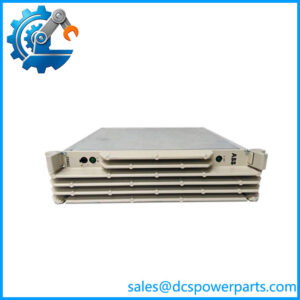
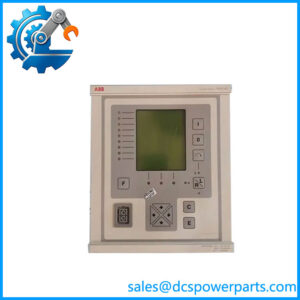
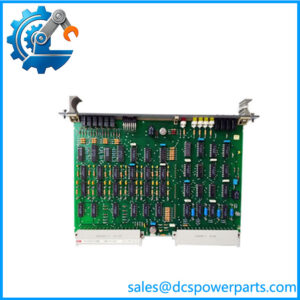
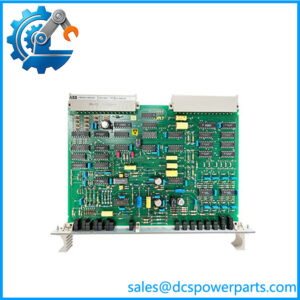
Description
Key Technical Specifications
| Parameter | Specification |
|---|---|
| Manufacturer | ABB |
| Product Series | UNITROL 1000 |
| Model | UNITROL 1005-0011 ECO |
| ABB Order Code | 3BHE043576R0011 |
| Product Type | Automatic Voltage Regulator / Excitation Controller |
| Excitation Current | 5 A continuous |
| Ceiling Current | 10 A at 70°C ambient |
| Excitation Input | 16–250 VAC / 18–300 VDC nominal range |
| Minimum Start Voltage | 6 VAC / 16 VDC |
| Auxiliary Controller Supply | 18–30 VDC |
| Machine Voltage Measurement | Up to 500 VAC, 1-, 2-, or 3-phase |
| Machine Current Measurement | 1-phase, 1–5 A AC |
| Network Voltage Measurement | Up to 500 VAC |
| Frequency Range | 10–150 Hz |
| Voltage Regulation Accuracy | ±1% over specified temperature range; 0.1% at 25°C |
| AVR Response Time | <20 ms, 3-phase measurement; <50 ms, 1-phase |
| Digital Inputs | 8 |
| Digital Outputs | 4 |
| Digital I/O Voltage | 24 V |
| Analog Inputs | 2 |
| Analog I/O Range | ±10 V / 0–20 mA |
| Analog Outputs | None |
| Ethernet | 10/100 Mbit/s |
| USB | USB 1.0/1.1/2.0 |
| CAN | Not supported on UNITROL 1005 |
| Protection Rating | IP20 |
| Operating Temperature | Approximately −40°C to +70°C, depending on operating condition |
| Mounting | Panel / DIN-rail compatible installation arrangement |
| Cooling | Natural convection; no fan cooling |
| Certifications | CE, DNV/GL, Traction |
ABB’s own UNITROL 1000 documentation identifies 3BHE043576R0011 specifically as the UNITROL 1005-0011 ECO order code. It also distinguishes the 1005 from the larger 1010 and 1020 hardware by excitation-current rating, I/O architecture, communications, and auxiliary-power arrangements.
The UNITROL 1005 installation guide specifies 16–250 VAC or 18–300 VDC nominal excitation input, 8 A continuous current at 55°C in its technical-data table, while ABB’s hardware overview gives the 1005 family rating as 5 A continuous and 10 A ceiling at 70°C. Use the applicable operating-condition rating from the installation documentation when sizing the unit.
Application Scenarios & Pain Points
Excitation equipment is not the place to make a casual part-number substitution. A generator can start, build voltage, and appear healthy while the AVR configuration is still wrong for the field circuit. That is where replacement jobs become expensive.
- Small synchronous generators: UNITROL 1005 is the smallest member of the UNITROL 1000 hardware family, intended for excitation applications up to its 5 A continuous current class.
- Industrial power generation: Suitable for generator excitation control where compact AVR hardware and basic voltage-regulation functions are sufficient.
- Marine and traction applications: ABB lists UNITROL 1000 products for marine propulsion and rail traction applications, with the 1005 carrying relevant certifications.
- Generator control retrofits: Useful where an older analog AVR or excitation controller is being replaced and the field-current requirements remain within the UNITROL 1005 envelope.
Field note: Pay particular attention to the excitation source. ABB’s installation guide shows that excitation power can be derived from a shunt transformer, PMG, auxiliary stator winding, or battery arrangement. These are not interchangeable wiring exercises. The input voltage, starting behavior, grounding, and inrush characteristics must be checked before commissioning.
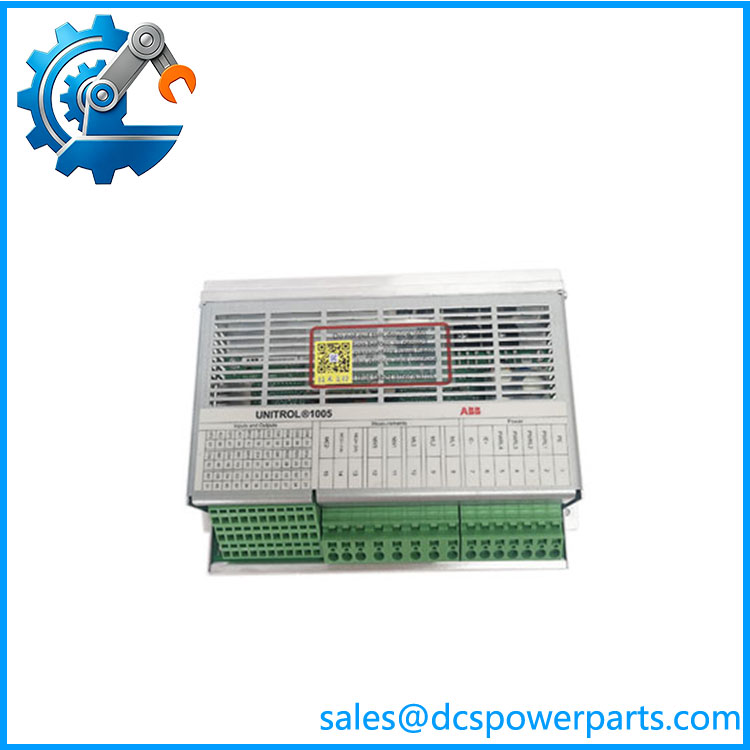
UNITROL 1005
Related Products
- UNITROL 1005-0011 ECO — 3BHE043576R0011 — The subject AVR. Basic ECO configuration with 5 A continuous excitation capability; suited to lower-current generator excitation applications.
- UNITROL 1005-0012 LIGHT — 3BHE043576R0012 — Same UNITROL 1005 hardware family with the LIGHT software/function configuration. It should not be treated as identical to the ECO version when project functionality or parameter sets matter.
- UNITROL 1010-0002 LIGHT — 3BHE035301R0002 — Higher-current UNITROL 1000 hardware with 10 A continuous excitation capability and additional communication/I/O options. Useful when the 1005 current or interface envelope is insufficient.
- UNITROL 1010-0003 BASIC — 3BHE035301R0003 — 10 A-class AVR with a broader functional configuration than the 1005 ECO. Consider it when generator control requirements exceed the basic 1005 feature set.
- UNITROL 1020-0003 BASIC — 3BHE030579R0003 — 20 A-class hardware with additional I/O and communications. Better suited to applications requiring greater excitation-current capacity.
- UNITROL 1020-0006 FULL — 3BHE030579R0006 — Higher-capacity UNITROL 1000 configuration with the FULL software package. Appropriate when the application needs functionality beyond the 1005 ECO configuration.
- UNITROL 1020-0007 FULL + PSS — 3BHE030579R0007 — Adds PSS functionality to the 1020 platform. This is an application-level alternative, not a physical drop-in replacement for the 1005.
- CMT1000 — ABB’s commissioning and configuration environment for UNITROL 1000 systems. It is important for parameter management, diagnostics, and commissioning rather than being a hardware replacement.
- UNITROL 6000 — A separate ABB excitation-system family intended for larger and more demanding excitation applications. It belongs to a different system class and should be considered for substantially higher excitation-current requirements.
The Engineer’s Guide: Field Pitfalls to Avoid
WARNING 1 — Do not confuse 1005-0011 ECO with 1005-0012 LIGHT.
Both belong to the UNITROL 1005 hardware family, but ABB assigns different material numbers and software/function configurations. 3BHE043576R0011 is specifically the ECO version.
How to avoid it: Match the complete order code and preserve the existing parameter/configuration backup before changing the AVR.
WARNING 2 — Do not size the AVR from generator kVA alone.
The critical electrical value is the required field/excitation current and voltage, along with the excitation-source characteristics.
How to avoid it: Check the generator field-current nameplate, exciter/field winding data, maximum field current, ceiling requirements, and excitation-source voltage. The UNITROL 1005 hardware overview gives a 5 A continuous / 10 A ceiling rating at 70°C.
WARNING 3 — Control wiring and excitation wiring need physical separation.
ABB explicitly warns that control/I/O cables should be separated from excitation power and measurement cables to reduce electromagnetic interference.
How to avoid it: Maintain the specified cable routing and grounding practices. Keep the protective-earth connection short and properly sized; ABB’s quick-installation guide specifies a 4 mm² grounding connection at the PE terminal.
Frequently Asked Questions (FAQ)
What is ABB UNITROL 1005-0011 ECO 3BHE043576R0011?
It is an ABB UNITROL 1000 automatic voltage regulator and excitation controller, specifically the UNITROL 1005-0011 ECO configuration. ABB assigns 3BHE043576R0011 as its material/order code.
Its primary job is controlling generator excitation so the AVR can regulate generator terminal voltage according to the configured operating mode.
What is the excitation-current rating of UNITROL 1005?
The UNITROL 1005 hardware family is rated for 5 A continuous excitation current, with a 10 A ceiling at 70°C ambient temperature according to ABB’s UNITROL 1000 hardware overview.
Do not interpret the 5 A figure as the generator’s output current. It refers to the excitation/field circuit handled by the AVR.
Does UNITROL 1005-0011 support Ethernet communication?
Yes. ABB specifies Ethernet and USB interfaces for the UNITROL 1005. The 1005 does not provide the RS485/CAN interfaces listed for UNITROL 1010 and 1020.
That matters when replacing an older AVR connected to a plant PLC or DCS. Check the actual communication architecture rather than assuming the higher-model interfaces are available.
Can UNITROL 1005-0011 be used as a direct replacement for UNITROL 1010?
Usually, not as a simple hardware swap.
UNITROL 1010 has a higher excitation-current class and a different I/O and communication arrangement. ABB lists 10 A continuous/25 A ceiling for the 1010 versus 5 A continuous/10 A ceiling for the 1005 under their respective specified conditions.
A replacement review should cover field current, field voltage, excitation source, I/O, communications, mechanical installation, and software configuration.
What is the difference between UNITROL 1005 ECO and LIGHT?
The two are different functional configurations of the UNITROL 1005 platform. ABB identifies:
- 3BHE043576R0011: UNITROL 1005-0011 ECO
- 3BHE043576R0012: UNITROL 1005-0012 LIGHT
Do not substitute one merely because the physical housing looks identical. Confirm the required software functions and existing configuration before commissioning.
How is a new or refurbished UNITROL 1005-0011 verified?
For a critical generator application, I would verify at minimum:
- Exact 3BHE043576R0011 nameplate identification.
- Hardware revision.
- Software/firmware revision.
- Stored configuration and parameter compatibility.
- Excitation input voltage range.
- Field-current measurement.
- Machine-voltage measurement.
- Digital and analog I/O operation.
- Ethernet/USB communications.
- AVR response and voltage regulation under controlled conditions.
ABB’s installation documentation also includes a supplied special red USB cable for powering and connecting the AVR during setup, so accessory completeness should be checked when purchasing a new-surplus or replacement unit.
What should I check before replacing an installed UNITROL 1005?
Start with the field circuit, not the AVR catalog.
Confirm the generator’s field voltage/current requirements, excitation source, machine-voltage sensing arrangement, CT/PT ratios, grounding, I/O wiring, and existing parameter file. Then compare the old and replacement unit’s complete material number and revision.
One especially important detail: ABB specifies an internal DC capacitor with potentially high inrush current and requires the inrush current to remain below 100 A for 10 ms under the stated installation conditions. The supply arrangement therefore needs to be checked during replacement—not just the steady-state voltage.