Description
Key Technical Specifications
| Parameter | Specification |
|---|---|
| Manufacturer | ABB / Woodhead SST |
| Model | SST-DN3-PCI-2 |
| ABB Model | DSQC658 |
| ABB Part Number | 3HAC025779-001 |
| PCB Variant | 3HAC025779-001/01 |
| Product Type | Dual-Channel DeviceNet Interface Card |
| Host Interface | PCI |
| DeviceNet Channels | 2 independent channels |
| Network Protocol | DeviceNet |
| Operating Modes | Master/Scanner and Slave/Adapter |
| Supported Baud Rates | 125, 250, 500 kbps |
| Primary Application | ABB IRC5 robot controllers |
| Typical Use | Robot I/O, peripheral devices, distributed DeviceNet networks |
| Configuration | ABB robot system configuration / EIO configuration |
| Product Status | Legacy / discontinued |
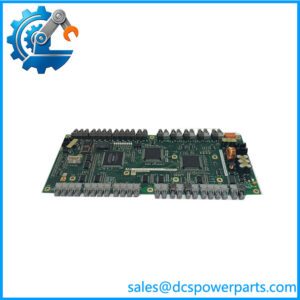
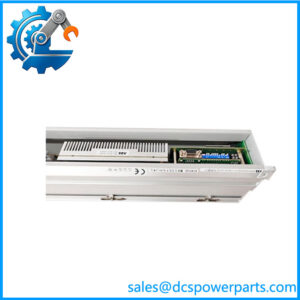
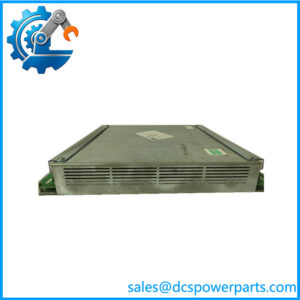
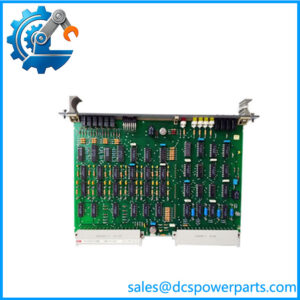
Available technical references identify the SST-DN3-PCI-2 as a two-channel DeviceNet interface card and associate it with ABB DSQC658. One source identifies the ABB part number as 3HAC025779-001, while another physical-board listing shows 3HAC025779-001/01. That suffix should be checked against the installed board before procurement.
The documented DeviceNet rates are 125, 250, and 500 kbps. The card can operate as a DeviceNet master/scanner or slave/adapter depending on the application.
Application Scenarios & Pain Points
A DeviceNet fault in an ABB robot cell often presents as a collection of seemingly unrelated problems: gripper status missing, remote I/O unavailable, safety-related signals not updating, or an entire peripheral network dropping offline. The interface card is one of the first components worth isolating.
- ABB IRC5 robot controllers: DSQC658 provides DeviceNet communication for compatible IRC5 configurations, allowing the robot controller to communicate with distributed field devices.
- End-of-arm tooling: Useful for DeviceNet-connected grippers, valves, sensors, and tooling I/O where the robot controller needs deterministic access to peripheral status and commands.
- Automotive production cells: Two DeviceNet channels can support separate network segments where the robot cell contains a substantial amount of distributed I/O.
- Legacy robot-cell maintenance: A practical spare for facilities maintaining older ABB IRC5 installations rather than redesigning an established DeviceNet architecture.
Field note: If one channel works and the other does not, do not immediately condemn the PCI board. Check the DeviceNet trunk power, cable shield, node power, termination, MAC ID duplication, and channel configuration first. A damaged field cable can make a healthy DSQC658 look dead.
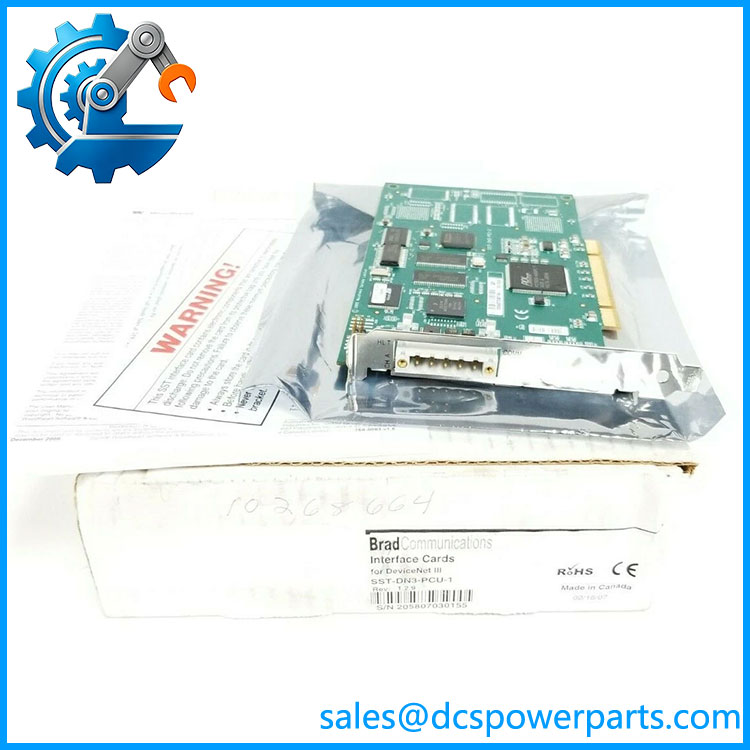
SST-DN3-PCI-2
Related Products
- ABB DSQC658 / SST-DN3-PCI-2 — Exact two-channel DeviceNet interface requested here. It is the appropriate reference point when matching the installed robot controller hardware.
- ABB DSQC658 3HAC025779-001/01 — Board-level variant associated with the same SST-DN3-PCI-2 hardware. Verify the complete suffix against the physical PCB before ordering.
- SST-DN3-PCI-1 — Single-channel member of the SST-DN3 PCI DeviceNet family. It may be suitable where only one DeviceNet network is required, but it is not a direct two-channel replacement for DSQC658.
- SST-DN3-PC104 — Compact embedded version of the family. Its host-bus format differs from the PCI version, so it should not be selected simply because the DeviceNet functionality is similar.
- ABB DSQC613 — Older ABB DeviceNet interface hardware. It is useful for tracing legacy robot configurations, but its architecture and compatibility must be verified before substitution.
- SST 5136-DNP-PCI — Earlier SST DeviceNet PCI interface generation. Relevant for historical system identification, not an automatic replacement for the .
- ABB IRC5 Main Computer Unit — The host environment in which compatible hardware may be installed. The exact IRC5 controller generation and RobotWare configuration should be confirmed before replacement.
- DeviceNet remote I/O modules — Complementary field devices connected through the network. They are network endpoints rather than substitutes for the interface card.
The Engineer’s Guide: Field Pitfalls to Avoid
⚠️ Do not order by “” alone.
The available board-level evidence shows 3HAC025779-001 and 3HAC025779-001/01 references.
How to avoid it: Photograph the installed PCB label and compare the complete ABB part number, revision, connector arrangement, and board markings before purchasing.
⚠️ Do not blame the card before checking DeviceNet power and termination.
DeviceNet depends on correct network power and physical-layer wiring. A missing trunk supply, poor shield connection, incorrect termination, or duplicate node address can create communication failures that resemble a bad interface board.
How to avoid it: Check network voltage, termination resistance, node addresses, cable condition, and channel LEDs before removing the PCI card.
⚠️ Do not replace the board without checking the robot configuration.
The physical replacement may be correct while the robot controller’s I/O configuration still expects a different DeviceNet arrangement.
How to avoid it: Preserve the existing robot system configuration, including DeviceNet node definitions and I/O mapping, before taking the controller offline.
Frequently Asked Questions (FAQ)
What is ABB ?
is the ABB identification associated with the SST-DN3-PCI-2, a dual-channel DeviceNet interface card used in compatible ABB robot-controller applications. The available references associate it with ABB systems.
What is the ABB part number for -PCI-2?
The commonly referenced ABB part number is 3HAC025779-001. A board-level listing identifies the physical PCB as 3HAC025779-001/01, so the exact suffix should be verified from the installed hardware.
How many DeviceNet networks can handle?
The is a dual-channel DeviceNet interface, providing two independent DeviceNet channels. This can be useful when a robot cell has separate field-device networks.
What DeviceNet baud rates are supported?
The documented standard rates are:
- 125 kbps
- 250 kbps
- 500 kbps
The correct rate must match the devices and configuration on the connected DeviceNet network.
Can communicate with DeviceNet I/O as a master?
Yes. Available technical information identifies support for DeviceNet Master/Scanner and Slave/Adapter operation. The actual role depends on the robot-system configuration.
Is a general-purpose PLC communication card?
No. It is a DeviceNet PCI interface, with the designation associated with ABB robot-controller applications. Treating it as a generic PCI communication card can lead to an incorrect replacement decision.
What should I verify when buying a replacement ?
Check:
- model marking.
- identification.
- 3HAC025779-001 or exact installed suffix.
- PCB revision.
- Number and type of DeviceNet connectors.
- ABB controller generation.
- RobotWare version and configuration.
- DeviceNet baud rate.
- Node/MAC ID configuration.
- Functional test of both DeviceNet channels.