Description
Product Overview
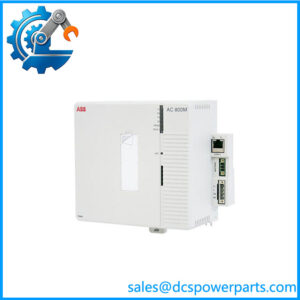
The ABB SPASI23 is a 16-channel analog input module for the Symphony Plus Harmony Rack I/O architecture. It interfaces isolated field signals from thermocouples, millivolt sources, RTDs, and high-level analog transmitters to the DCS controller. ABB specifies a dedicated 24-bit analog-to-digital converter for each channel, rather than sharing one converter across the complete input bank. Each channel can be independently configured for the required input type, while onboard processing handles calibration, point-value calculations, lead-wire resistance adjustment, cold-junction compensation, gain and offset correction, and engineering-unit conversion.
For ABB SPASI23, the signal flexibility is particularly useful in mixed process-instrumentation applications. The module accepts high-level voltage ranges including 1–5 VDC, 0–5 VDC, 0–10 VDC, and -10 to +10 VDC, plus millivolt inputs up to ±100 mV. Supported thermocouple types include B, E, J, K, L, N, R, S, T, U, as well as specified Chinese E and S types. Three-wire RTD configurations include 100-ohm platinum, 120-ohm nickel, 10-ohm copper, and other documented standards. ABB specifies +5 VDC ±5% at 500 mA typical and an operating ambient range of 0–70°C.
The ABB SPASI23 is part of the Harmony Rack I/O family and represents the later Symphony Plus version of the ASI23 architecture. ABB documentation states that it can serve as a direct functional replacement for earlier SPASI03 or SPASI13 modules with configuration changes required for the different resolution characteristics. This makes the module relevant for maintaining established ABB Bailey DCS installations while retaining existing field instrumentation.
Product Introduction
Mixed temperature and process-signal wiring becomes difficult to manage when several transmitter technologies share one DCS rack. SPASI23 addresses that arrangement with 16 independently configured analog inputs and a dedicated 24-bit ADC for each channel.
For an ABB Symphony Plus DCS system upgrade or legacy IMASI23 replacement, the key checks are channel configuration, terminal assembly, power-supply capacity, and the controller’s I/O database—not simply the SPASI23 catalog number.
Key Technical Specifications
| Parameter | Value |
|---|---|
| Manufacturer | ABB Bailey |
| Model | SPASI23 |
| Product Family | Symphony Plus |
| I/O Architecture | Harmony Rack I/O |
| Product Type | Analog Input Module |
| Input Channels | 16 independently configured channels |
| A/D Resolution | 24 bits per channel |
| High-Level Voltage | 1–5 VDC, 0–5 VDC, 0–10 VDC, -10 to +10 VDC |
| User-Specified Voltage | Within -10 to +10 VDC |
| Millivolt Input | -100 to +100 mV; 0–100 mV |
| Thermocouples | B, E, J, K, L, N, R, S, T, U |
| RTD | 3-wire, including 100 Ω platinum, 120 Ω nickel, 10 Ω copper |
| Power Requirement | +5 VDC ±5%, 500 mA typical |
| Operating Temperature | 0–70°C / 32–158°F |
| Channel Configuration | Independent |
| Isolation | Isolated field inputs |
| Signal Processing | Calibration, CJC, lead-wire compensation, gain/offset correction |
| Application | Process measurement and DCS control |
| Related Legacy Module | IMASI23 |
ABB’s current Symphony Plus product catalog is the primary reference for the channel count, signal ranges, resolution, power requirement, and temperature rating.
Related Products
- IMASI23 — Earlier ABB Bailey/Infi 90 version of the ASI23 analog input architecture. is the later Symphony Plus designation, making IMASI23 particularly relevant when maintaining an older installation.
- SPASI03 — Earlier analog input module that can replace in appropriate configurations. The migration requires attention to function-code resolution settings.
- SPASI13 — Another predecessor identified by ABB documentation as a possible replacement target for , subject to configuration and power-consumption checks.
- SPFEC12 — Symphony Plus analog input module with 15 channels. It is intended for conventional analog signals and has a different channel and resolution architecture, so it is not a direct substitute for .
- SPQRS22 — Associated Harmony Rack I/O family component used within the same broader Symphony Plus I/O ecosystem. Application and signal function differ from the analog input module.
- terminal board/cable assembly — The field termination hardware should be matched to the installed assembly. A correct electronics module with an incompatible terminal arrangement can still create commissioning problems.
- ABB Harmony Rack I/O controller interface — Provides the system-level connection between the I/O assembly and controller. The itself performs field signal acquisition; control logic remains in the DCS controller.
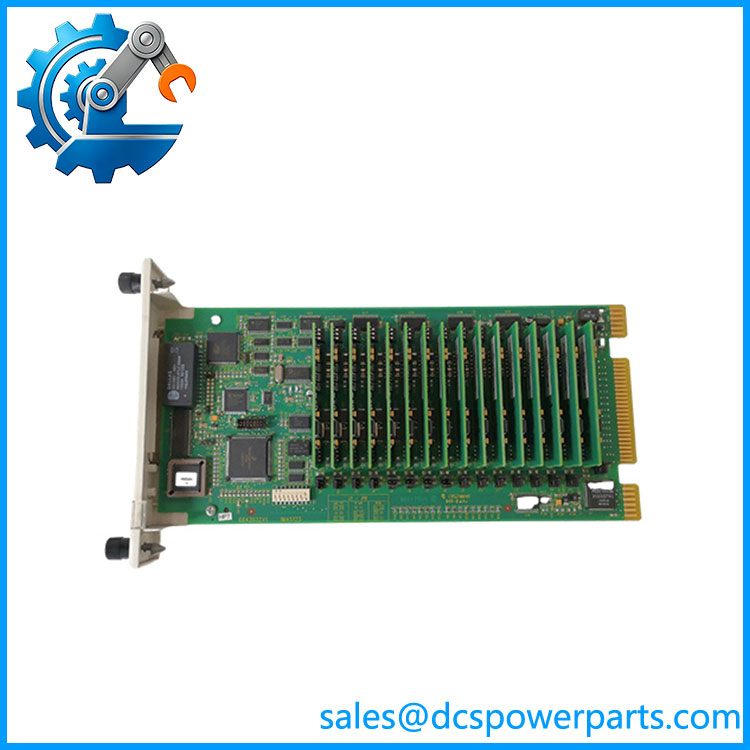
SPASI23
Frequently Asked Questions
What is ABB used for?
is a 16-channel analog input module used in ABB Symphony Plus Harmony Rack DCS systems.
It acquires process signals such as:
- Thermocouples
- RTDs
- Millivolt sensors
- High-level voltage signals
Each input has its own ADC and can be configured independently.
Does support 4–20 mA signals?
The ABB documentation for does not list 4–20 mA as one of its native input ranges. Its documented high-level inputs are voltage-based, while its other supported signal categories include thermocouple, millivolt, and RTD inputs.
That distinction matters when replacing a conventional transmitter-input module. Do not order simply because the existing DCS point is described generically as an “analog input.”
Is the same as IMASI23?
They belong to the same ASI23 architecture, but they represent different ABB system generations.
IMASI23 is associated with the earlier ABB Bailey Infi 90 platform, while is the Symphony Plus/Harmony Rack designation. ABB-related documentation identifies as the later version of the established architecture.
For a replacement project, verify the installed controller, rack, module revision, and configuration before treating the two as interchangeable.
Can replace SPASI03 or SPASI13?
Yes, under the documented migration conditions.
ABB documentation states that can serve as a direct replacement for SPASI03 or SPASI13, but configuration changes are required because of differences in resolution choices. Power-supply sizing should also be checked because module power consumption can differ.
Does use 24-bit resolution?
Yes. Each of the 16 channels has a dedicated 24-bit ADC.
That is an important specification because the module performs channel-level signal conversion rather than relying on a single shared ADC architecture.
Can I hot-swap ?
Do not assume hot replacement is permissible simply because the module is part of a DCS I/O system.
Before removal, check the specific Harmony Rack configuration, I/O redundancy arrangement, plant maintenance procedure, and the process consequences of losing the affected measurement points. A temperature or pressure input may be part of an active control or protection loop.
How should a New Surplus be tested?
A meaningful acceptance test should reproduce the actual signal types used by the plant.
Recommended sequence:
- Verify the complete marking and hardware revision.
- Inspect the card edge connector and terminal interface.
- Confirm the associated cable and terminal assembly.
- Install the module in a compatible Harmony Rack test environment.
- Verify controller recognition and module status.
- Configure representative thermocouple, RTD, mV, and voltage channels.
- Apply calibrated input signals.
- Compare displayed values against the reference source.
- Verify cold-junction compensation where applicable.
- Check lead-wire compensation for RTD channels.
- Exercise several channels simultaneously.
- Record diagnostic status and measured deviations.
For procurement, do not accept a based solely on an illuminated status indicator. The module’s value is in accurate multi-type signal acquisition, so representative signal testing provides much stronger evidence of serviceability.