Description
ABB SCC-C 23070-0-101112100000 Sample Gas Cooler
Product Overview
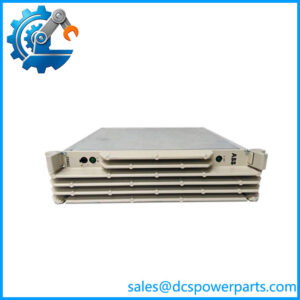
The ABB SCC-C 23070-0-101112100000 is a compressor-based sample gas cooler used in ABB analytical systems and other industrial gas-analysis installations where extracted process gas must be conditioned before entering the analyzer. Its purpose is straightforward but critical: cool the sample gas to a controlled low temperature so water vapor condenses in the conditioning system rather than inside downstream analytical equipment. ABB specifies the SCC-C for emission-monitoring measurement systems and describes it as part of a modular sample-gas-conditioning architecture.
The exact order number is useful here because it tells us considerably more than the generic SCC-C model designation. ABB’s ordering table decodes 23070-0-101112100000 as a surface-mounted housing, no metering device, glass heat exchanger, one 250 L/h gas path, one condensate hose pump, digital display with limit-value signaling and Pt100, 230 V/50–60 Hz power, and CE approval. The glass heat exchanger provides a corrosion-resistant gas path, while the SCC-C’s refrigeration circuit maintains a factory-set sample-gas outlet temperature of approximately 3°C. ABB specifies dew-point stability of ±0.3°C for the stated temperature and flow changes.
For CEMS engineers, the cooler is not an accessory that can be selected purely by cabinet dimensions. Sample flow, gas composition, pressure, heat-exchanger material, condensate handling, and analyzer requirements all affect the conditioning result. ABB specifies a maximum standard-design sample-gas inlet temperature of 140°C and a sample-gas flow of 1 × 250 L/h for the WT250 configuration.
The ABB SCC-C 23070-0-101112100000 therefore belongs in the sample-conditioning section of an analytical system, upstream of the gas analyzer. It is not a DCS I/O module, process controller, or generic industrial refrigeration unit.
Product Introduction
Moisture reaching a gas analyzer can cause more than a wet sample line. It can change gas composition measurements, create cross-sensitivity, and eventually contaminate analyzer components. The SCC-C addresses this problem by refrigerating the extracted sample and maintaining a controlled outlet dew point.
This particular configuration uses a glass heat exchanger, 250 L/h single gas path, condensate hose pump, Pt100-equipped temperature monitoring, and 230 V AC supply. Those details should be preserved when selecting a legacy replacement.
Key Technical Specifications
| Parameter | Specification |
|---|---|
| Product Model | SCC-C |
| Full Part Number | 23070-0-101112100000 |
| Manufacturer | ABB Measurement & Analytics |
| Product Type | Compressor sample gas cooler |
| Application | Sample gas conditioning / CEMS |
| Housing | Surface-mounted, 1/2 19-inch, 6 HU |
| Preparation | Without metering device |
| Heat Exchanger | Glass |
| Gas Paths | 1 |
| Sample Gas Flow | 250 L/h |
| Condensate Discharge | 1 hose pump |
| Display | Digital temperature display and limit-value signaling |
| Temperature Sensor Option | Pt100 |
| Sample Gas Outlet Temperature | Factory set to 3°C |
| Dew-Point Stability | ±0.3°C per 10°C temperature change; ±0.3°C per 10 L/h flow change |
| Cooling Capacity | 40 W at 10–45°C ambient |
| Sample Gas Inlet Temperature | Maximum 140°C, standard version |
| Sample Gas Pressure, Glass Heat Exchanger | 50–200 kPa absolute without hose pump; 50–150 kPa with hose pump |
| Sample Gas Inlet Dew Point | Maximum 70°C |
| Pressure Loss, WT250 | Approximately 1 hPa / 1 mbar |
| Heat Exchanger Dead Volume, WT250 Glass | Approximately 140 mL |
| Seal Integrity | 5 × 10⁻⁶ hPa·L/s |
| Power Supply | 230 V AC, 50/60 Hz |
| Power Consumption | Maximum 200 VA |
| Starting Current | 2.5 A at 230 V AC |
| Status Contacts | 2 potential-free changeover contacts |
| Status Switching Point | <0°C or >6°C |
| Status Contact Rating | 250 V AC, 2 A; 500 VA / 50 W |
| Ambient Operating Temperature | 5 to 45°C |
| Storage / Transport Temperature | -25 to +60°C |
| Relative Humidity | ≤80%, non-condensing |
| Protection Rating | IP20 |
| Refrigerant | R134a |
| Refrigerant Charge | 150 g |
| Mounting | Wall or 19-inch cabinet/rack using supplied brackets |
| Safety Standard | EN 61010-1 |
| Certification Configuration | CE |
The configuration-specific items above are decoded from ABB’s SCC-C ordering information; the performance values come from ABB’s SCC-C technical data.
Major Features / Practical Advantages
1. Compressor refrigeration for controlled sample conditioning
The SCC-C uses a compressor refrigeration circuit rather than simply relying on ambient cooling. ABB specifies a factory-set sample-gas outlet temperature of 3°C, providing a controlled basis for removing moisture before the sample reaches the analyzer.
That matters in CEMS applications because the gas-conditioning temperature directly affects condensation behavior. The objective is not simply to make the gas colder; it is to create a stable, predictable dew point.
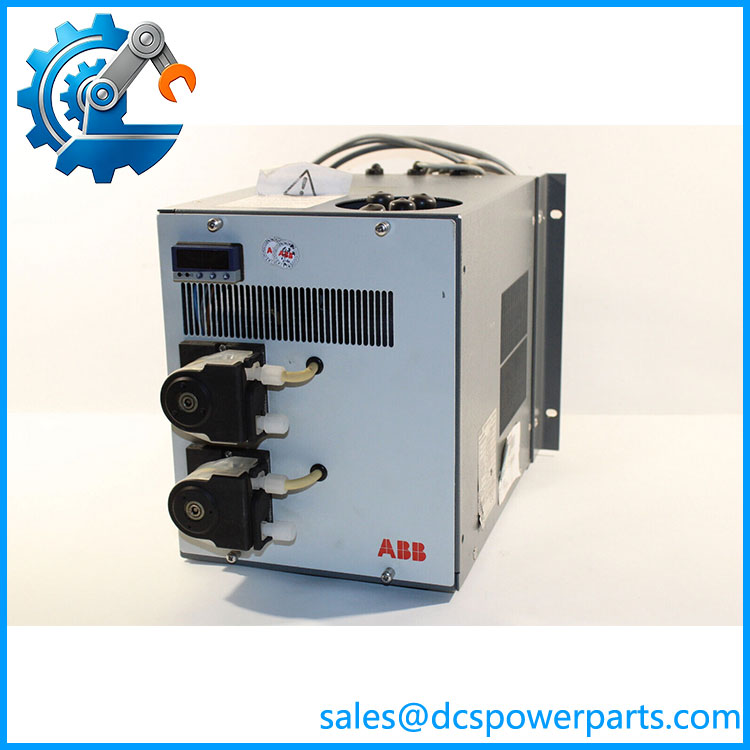
SCC-C 23070-0-101112100000
2. Exact 250 L/h single-path configuration
The requested part number specifies one 250 L/h gas path. ABB lists WT250 as the 250 L/h heat-exchanger configuration and states that flow figures are based on 1 bar absolute pressure and 25°C.
Do not substitute a 125 L/h version merely because its cabinet and cooling principle look similar. Flow capacity is part of the sample-conditioning design.
3. Glass heat exchanger
The 1 heat-exchanger code in this order number specifies the glass version. ABB describes the glass gas path as corrosion-resistant and provides separate pressure limits for glass, PVDF, and stainless-steel configurations.
For aggressive process gases, this is not a cosmetic option. Material compatibility should be checked against the actual gas composition, contaminants, pressure, and cleaning procedure.
4. Integrated condensate removal
This configuration includes one hose pump for condensate discharge. ABB specifies approximately 300 mL/h feed performance for the condensate pump option and identifies PVDF/Novoprene materials in the pump arrangement.
A refrigeration cooler without effective condensate removal can simply move the moisture problem downstream. The pump therefore forms part of the practical conditioning function.
5. Digital temperature indication and limit monitoring
The order code specifies the version with digital temperature display, limit-value signaling, and Pt100. ABB states that the temperature controller provides a status signal when the temperature falls below 0°C or rises above 6°C.
Two potential-free changeover contacts provide this status information. The documented contact rating is up to 250 VAC/2 A, with 500 VA/50 W capacity.
This allows the CEMS control system to detect abnormal cooler temperature instead of relying only on analyzer-side symptoms.
6. Stable dew-point performance
ABB specifies dew-point stability of ±0.3°C for a 10°C ambient-temperature change or a 10 L/h sample-flow change.
That figure is particularly relevant when evaluating a cooler for continuous monitoring. A stable outlet condition reduces one source of measurement variability before the sample reaches the analyzer.
7. High-temperature sample-gas handling
The standard SCC-C configuration accepts sample gas at up to 140°C. ABB lists lower maximum inlet temperatures for CSA Class I Division 2 and ATEX Zone 2 configurations.
The important qualification is that the 140°C value applies to the documented standard configuration. Hazardous-area variants have their own limits and certification conditions.
8. 230 V AC configuration
The requested order code uses power-supply option 1, which ABB defines as 230 V, 50/60 Hz; the same code position is used for 240 V, 50/60 Hz in the CSA version.
ABB specifies maximum power of 200 VA and a starting current of 2.5 A at 230 V AC.
This is important when replacing the unit in a CEMS cabinet because the cooler is a compressor-driven load, not a low-power instrument module.
9. Compact 19-inch mounting arrangement
The SCC-C uses a surface-mounted housing approximately half the width of a 19-inch rack and 6 HU high. ABB allows mounting on a wall or in a 19-inch cabinet/rack using the supplied brackets.
The physical mounting format makes it suitable for centralized sample-conditioning cabinets where the cooler sits alongside pumps, filters, analyzers, and sample distribution hardware.
10. Replaceable heat exchanger
ABB states that the heat exchanger can be replaced without tools.
That is useful in long-running CEMS installations where contamination or material degradation can eventually require maintenance of the sample-contacting section rather than replacement of the complete refrigeration assembly.
Related Products
- ABB SCC-C WT125 — 125 L/h SCC-C heat-exchanger configuration; lower flow capacity than the requested WT250 configuration.
- ABB SCC-C two-path version — Provides 2 × 125 L/h gas paths for systems requiring separate sample streams.
- ABB SCC-F — Sample gas feeder unit designed to work with SCC-C conditioning systems.
- ABB AO2000 — ABB gas analyzer platform for which ABB notes that the WT125 SCC-C configuration is used.
- ABB EL3000 Series — ABB continuous gas-analysis platform that can be integrated with sample-conditioning equipment.
- ABB EL3020 — Continuous gas analyzer used in CEMS and process-gas applications; requires appropriate upstream sample conditioning.
- ABB PFE2 — ABB extraction probe used in sample-gas systems upstream of the conditioning section.
- ABB TBL01-S — Heated sample-gas line component used to maintain sample temperature before the conditioning stage.
- ABB sample-gas filters — Upstream particulate-removal components used to protect the cooler and downstream analyzer.
The exact related hardware depends on the complete sample-conditioning architecture rather than the SCC-C alone. ABB specifically describes SCC-C as part of a modular sample-gas-conditioning system and documents its use with the SCC-F feeder unit and AO2000-related applications.
FAQ
What is ABB SCC-C 23070-0-101112100000?
It is a configured ABB SCC-C compressor sample gas cooler used to cool and dehumidify extracted process-gas samples before they enter an analytical instrument. The exact order code specifies a glass heat exchanger and one 250 L/h gas path.
Is SCC-C a PLC or DCS module?
No. It is a sample-gas-conditioning device. It contains refrigeration, heat-exchange, temperature-control, and condensate-management hardware. Its status contacts can interface with a PLC, DCS, or analyzer system, but the SCC-C itself is not a controller or I/O card.
What does 23070-0-101112100000 specify?
ABB’s ordering table decodes the configuration as:
1— surface-mounted housing0— without metering device1— glass heat exchanger1— one 250 L/h gas path1— one condensate hose pump2— digital display, limit signaling and Pt1001— 230 V, 50/60 Hz0— CE configuration
The remaining four zeros are the fixed order-code ending shown in ABB’s current ordering table.
What is the sample-gas outlet temperature?
ABB specifies the SCC-C sample-gas outlet temperature as factory set to 3°C. Dew-point stability is specified at ±0.3°C for the stated temperature and flow changes.
What is the maximum sample-gas flow?
This exact configuration is the WT250 / 1 × 250 L/h version. ABB also offers 125 L/h and dual 125 L/h configurations, so the flow designation must be checked when selecting a replacement.
What heat exchanger does this version use?
The 1 heat-exchanger code specifies a glass heat exchanger. ABB also offers PVDF and stainless-steel versions. The choice affects pressure limits and chemical compatibility.
What happens if the cooler temperature goes outside its normal range?
The temperature controller provides a status signal when the temperature falls below 0°C or rises above 6°C. Two potential-free changeover contacts are provided for this status function.
Does this SCC-C have a Pt100?
Yes. The exact order code uses the display option that includes digital temperature display, limit-value signaling, and Pt100.
Can I hot-swap the SCC-C?
No. This is a mains-powered compressor/refrigeration assembly with permanently connected electrical wiring and process-gas connections. Power must be isolated and the sample system made safe before maintenance. The operator documentation should be followed for gas isolation, condensate handling, and electrical disconnection.
Is the 230 V rating interchangeable with the 120 V SCC-C?
No. ABB’s ordering system distinguishes the 230/240 V and 120 V configurations. A 120 V unit should not be treated as an electrical substitute for the requested 230 V version without confirming the complete ordering code and cabinet supply.
Can I replace the glass heat exchanger with PVDF or stainless steel?
Not simply because the replacement physically fits. ABB provides separate heat-exchanger options with different sample-gas pressure limits and material properties. The replacement material should be selected against the process-gas chemistry, pressure, temperature, and analyzer requirements.
What should I check before purchasing a replacement?
Confirm the complete 23070-0-101112100000 order number, heat-exchanger material, 250 L/h flow path, condensate-pump arrangement, Pt100 option, 230 V supply, status-contact configuration, and cabinet mounting arrangement. For a used or surplus unit, also inspect the compressor, condenser, refrigeration circuit, heat exchanger, hose pump, temperature controller, and electrical terminals.
Procurement Note
The most important point for ABB SCC-C 23070-0-101112100000 is that the long part number is a configuration code, not simply an inventory identifier. ABB’s own ordering table allows the SCC-C to be configured with different heat-exchanger materials, gas-path capacities, condensate pumps, displays, supply voltages, and certifications.
For this specific unit, the configuration is:
SCC-C / 23070-0 / surface-mounted / no metering device / glass heat exchanger / 1 × 250 L/h / one condensate hose pump / digital display + limit signaling + Pt100 / 230 V 50–60 Hz / CE.
That configuration should be preserved when sourcing a replacement. A generic SCC-C with a different heat exchanger, 125 L/h path, 120 V supply, or different condensate arrangement is not automatically equivalent.
For CEMS service, inspect the refrigeration performance and sample-gas path, not just the electrical condition. Check whether the cooler reaches its approximately 3°C operating temperature, whether the condensate pump evacuates properly, whether the heat exchanger leaks, and whether the temperature alarm contacts change state at the specified limits.
The SCC-C is also a process-contacting instrument component. Glass, PVDF, and stainless-steel heat exchangers have different pressure and chemical-resistance characteristics. ABB specifies the glass version at 50–200 kPa absolute without a hose pump and 50–150 kPa with a hose pump, so the sample-system pressure should be checked before commissioning.
If supplied as New Surplus, do not treat the description as proof of refrigeration-system health. Compressor equipment can sit unused for long periods and still require inspection of the refrigeration circuit, seals, pump tubing, electrical components, and temperature-control performance.
For a legacy CEMS installation, the correct replacement is the unit that matches the complete SCC-C configuration code and the existing sample-conditioning design, not merely another ABB SCC-C enclosure.