Description
Product Overview
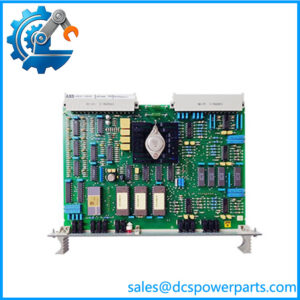
The ABB FI820F 3BDH000031R1 is a dual-channel serial fieldbus module used in the ABB AC 800F controller platform for connecting serial field devices to a Freelance control system. ABB identifies the FI820F as a serial fieldbus module with two communication channels, supporting selectable RS232, RS422, and RS485 physical interfaces. Its standard protocol is Modbus, with configurable transmission rates up to 38.4 kBd.
For ABB FI820F 3BDH000031R1, the interface selection is handled through the connection and Control Builder F configuration rather than by treating the module as three separate hardware variants. ABB documentation specifies that the signals for RS232, RS422, and RS485 are presented through the 26-pin connector, while the required interface is selected through the appropriate cabling and configuration. Both serial channels are electrically isolated from one another and from the system, which is useful when interfacing field equipment with different grounding conditions.
The ABB FI820F 3BDH000031R1 is intended for use with PM 802F or PM 803F in the AC 800F architecture. ABB’s product documentation lists the module at approximately 125 mm depth, 155 mm height, and 28 mm width, with a net weight of about 0.145 kg. A particularly useful service feature is that the module can be inserted or removed while the AC 800F is operating, according to the AC 800F hardware documentation. That does not mean every plant should perform a live replacement; the controller’s redundancy arrangement and the site’s maintenance procedure still determine whether this is acceptable.
Product Introduction
When an older AC 800F installation needs to exchange data with serial instruments, replacing the entire controller is often unnecessary. ABB FI820F 3BDH000031R1 provides two isolated serial channels, with RS232, RS422, and RS485 available and transmission rates reaching 38.4 kBd.
For an AC 800F legacy replacement, the communication protocol and physical layer must be checked separately. Modbus may be the standard configuration, but the field device, cable, termination, and Control Builder F configuration all have to agree.
Key Technical Specifications
| Parameter | Value |
|---|---|
| Manufacturer | ABB |
| Model | FI820F |
| Product ID | 3BDH000031R1 |
| Product Type | Serial Fieldbus Communication Module |
| System Platform | ABB AC 800F / Freelance |
| Compatible Controllers | PM 802F / PM 803F |
| Serial Channels | 2 |
| Interface Types | RS232 / RS422 / RS485 |
| Standard Protocol | Modbus |
| Transmission Rate | Up to 38.4 kBd, configurable |
| Electrical Isolation | Yes; channels isolated from each other and system |
| Connector | 26-pin high-density Sub-D |
| Field Connection | TB 870F / appropriate cable assembly |
| Module Supply | 5 V ±3% from basic unit |
| Module Power Consumption | Approx. 2.6 W maximum |
| Channel Supply | 5 V ±10% |
| Mounting | AC 800F fieldbus-module slot |
| Dimensions | Approx. 125 × 155 × 28 mm |
| Weight | Approx. 0.145 kg |
| Online Replacement | Hardware documentation permits insertion/removal during operation |
| Redundancy | Supported with redundant AC 800F configuration |
The electrical interface, protocol, channel isolation, transmission rate, and controller compatibility are documented in ABB AC 800F material.
Procurement note: Do not confuse with FI830F. The is the serial module, while FI830F is the PROFIBUS module. The two occupy the same general AC 800F fieldbus-module architecture but perform different communication functions.
Related Products
- ABB FI810F — CAN fieldbus module for the AC 800F platform. It is appropriate for CAN-based communication rather than the serial interfaces provided by .
- ABB FI830F — PROFIBUS fieldbus module. Use it when the field network requires PROFIBUS rather than Modbus/RS232/RS422/RS485 serial communication.
- ABB FI840F — High-speed Ethernet fieldbus module for FF/HSE applications. Its communication architecture is fundamentally different from the serial .
- ABB PM 802F — AC 800F processor/controller compatible with . The relies on the AC 800F basic unit rather than functioning as an independent controller.
- ABB PM 803F — Higher-capacity AC 800F processor compatible with the serial module.
- ABB TB 870F — Terminal block used for field cabling associated with serial communications. It simplifies the transition from the module’s 26-pin connector to field wiring.
- ABB AC 800F — Controller platform in which is installed. The module occupies one of the controller’s fieldbus slots.
- ABB Freelance Control Builder F — Engineering environment used to configure the AC 800F hardware and communication parameters. The interface type is configured within the system configuration rather than through a physical jumper arrangement.
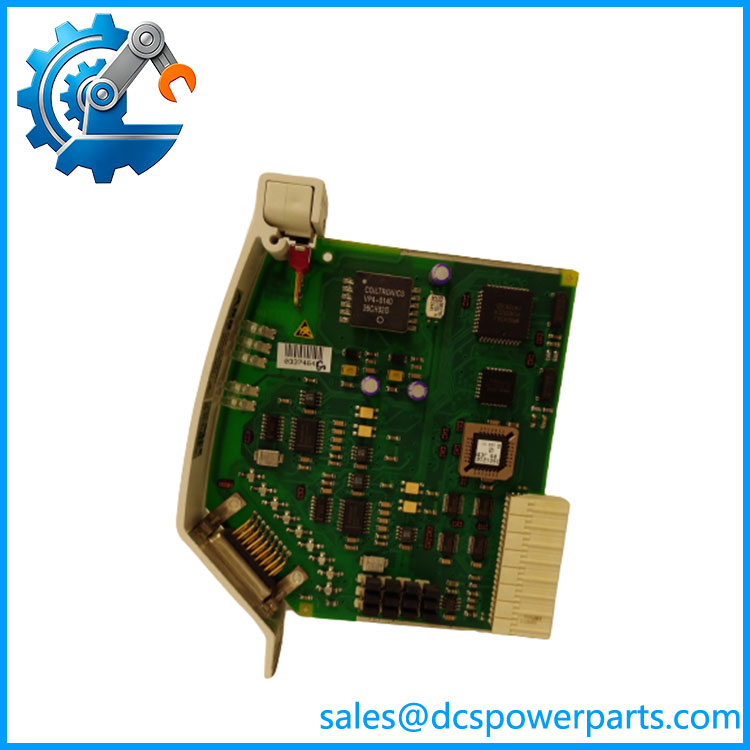
FI820F
Frequently Asked Questions
What is ABB 3BDH000031R1 used for?
The is a two-channel serial communication module for ABB AC 800F controllers.
It connects serial field equipment to the Freelance control system using:
- RS232
- RS422
- RS485
- Modbus as the standard protocol
Each channel is electrically isolated, which is important when field instruments have different electrical environments or grounding arrangements.
Can communicate with , , and devices?
Yes. Both serial channels can be configured for , , or operation.
The physical interface is selected through the appropriate cabling and Control Builder F configuration. No hardware jumper is required to select between those three interface types according to the AC 800F installation documentation.
One practical warning: and are not interchangeable at the wiring level. Verify differential polarity, termination, topology, and signal direction before commissioning.
Can I hot-swap the ABB ?
The AC 800F hardware documentation supports insertion and removal of the while the system is running. The module incorporates an isolator specifically allowing this operation.
That does not automatically make every replacement a zero-risk live procedure.
Before removing the module, determine:
- Whether the AC 800F is redundant.
- Whether the affected serial devices can tolerate communication loss.
- Whether the Modbus devices have timeout or fail-safe behavior.
- Whether the plant maintenance procedure permits online replacement.
- Whether the replacement module has the correct configuration.
Does support firmware v3.1?
The more important compatibility check is the AC 800F hardware and Control Builder F environment.
is a communication module rather than an independent PLC CPU. The module’s behavior is closely tied to the AC 800F controller and its configured fieldbus setup.
For an older installation, record:
- part number
- Hardware revision
- AC 800F CPU type
- Control Builder F version
- Configured protocol
- Baud rate
- /422/485 selection
- Existing serial cable and terminal block
Do not assume a later module revision is automatically interchangeable without checking the existing project configuration.
Will replacing erase my PLC or DCS logic?
Replacing the physical does not normally erase the application program stored in the AC 800F controller.
The important risk is communication configuration. If the replacement has different hardware identification or the project is not correctly configured, the controller may fail to recognize the module or the serial devices may stop communicating.
Before replacement, save the current hardware configuration and record the module’s slot position and communication parameters.
What is the difference between and FI830F?
The distinction is straightforward:
| Module | Primary Function |
|---|---|
| Serial communication; //, Modbus | |
| FI830F | PROFIBUS communication |
| FI840F | FF/HSE high-speed Ethernet fieldbus |
The modules serve different network architectures. A PROFIBUS requirement cannot be solved by substituting an simply because both modules fit into the AC 800F fieldbus section.
How should I verify a New Surplus before installation?
For a surplus communication module, I would verify more than the front label.
Recommended inspection:
- Confirm / 3BDH000031R1 identification.
- Record hardware revision and serial number.
- Inspect the 26-pin connector.
- Check the slide lock and mounting hardware.
- Power the module through a compatible AC 800F basic unit.
- Confirm module identification in Control Builder F.
- Test both serial channels independently.
- Verify // operation.
- Test Modbus communication at the required baud rate.
- Check channel isolation where required.
- Confirm the associated TB 870F/cable assembly and termination.
The module’s two serial channels have separate interface signals on the 26-pin connector, and ABB specifies optional bus termination for /. For a legacy system, incorrect termination or a mismatched cable can easily look like a defective , so the field wiring should be tested before rejecting the module.