Description
Product Overview
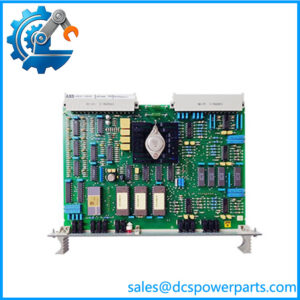
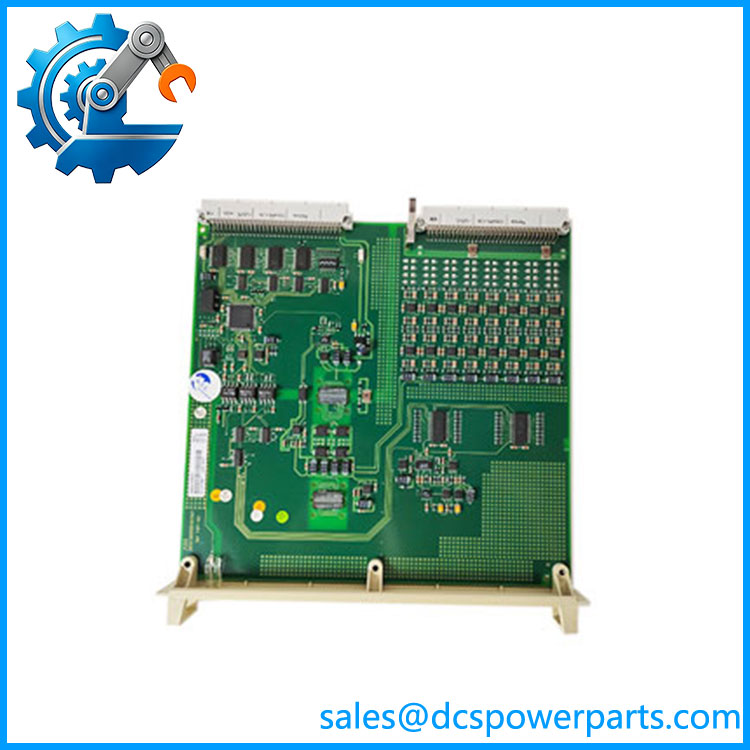
The ABB DSAI133A 3BSE018290R1 is a 32-channel analog input board used for high-density process signal acquisition in ABB control-system architectures. ABB’s current product-detail information identifies the exact part number as DSAI 133A, with the catalog description “Analog Input Board 32 Channels” and product type I-O_Module. The board’s physical dimensions are approximately 324 × 225 × 22.5 mm, with a net weight of about 0.29 kg.
For ABB DSAI133A 3BSE018290R1, the system context matters. Available automation references place this hardware within the ABB Advant OCS S100 I/O family, rather than treating it as a modern AC 800M plug-in I/O module. That distinction is important when planning a legacy-system replacement: the board’s physical interface, I/O carrier, controller generation, and engineering configuration must all match the installed system. It is intended to acquire continuous process measurements and feed those values into the control application, making it suitable for temperature, pressure, flow, level, and other analog process variables when the connected signal type is supported by the particular system configuration.
The strongest confirmed specification for ABB DSAI133A 3BSE018290R1 is the 32-channel analog-input architecture. Public secondary sources disagree on input ranges, resolution, isolation, and even whether the board should be described as 16-channel or 32-channel. Since ABB’s own product-detail record explicitly states 32 channels, I would use that figure and avoid publishing unsupported electrical ranges as fixed specifications without the relevant S100 I/O documentation.
Product Introduction
A legacy control cabinet can have plenty of spare rack capacity yet still depend on a single high-density analog board for dozens of process measurements. ABB DSAI133A 3BSE018290R1 provides 32 analog input channels, making it suited to concentrated process-signal acquisition.
The board belongs to the older Advant OCS S100 I/O ecosystem, so a DCS system upgrade should not assume direct compatibility with newer ABB I/O families. Match the carrier, controller, signal conditioning, and engineering configuration before approving a replacement.
Key Technical Specifications
| Parameter | Value |
|---|---|
| Manufacturer | ABB |
| ABB Type Designation | DSAI 133A |
| Product ID | 3BSE018290R1 |
| Product Type | I/O Module / Analog Input Board |
| Analog Input Channels | 32 |
| I/O Family | Advant OCS S100 I/O |
| Primary Function | Analog process signal acquisition |
| Dimensions | 324 × 225 × 22.5 mm |
| Net Weight | Approx. 0.29 kg |
| RoHS Status | ABB product record indicates exemption / not RoHS compliant |
| WEEE Category | 5 |
| Battery | None |
| Condition | New Surplus, subject to inspection and testing |
ABB’s current product-detail record confirms the 32-channel designation, product type, dimensions, weight, and environmental classification.
Specification caution: Several secondary listings claim 12-bit or 16-bit resolution and provide different voltage/current ranges. Those figures conflict with one another. I would not treat them as confirmed specifications for procurement without the applicable ABB S100 I/O manual.
Related Products
- DSAI 130A — Related ABB S100 analog-input board. It belongs to the same general analog acquisition family but has a different hardware configuration; verify channel count and signal characteristics before substitution.
- DSAI 130D — 3BSE003127R1 — Another analog input board. It can be relevant when maintaining an Advant OCS installation, but the complete I/O configuration must be compared.
- DSAI 133 — Base DSAI 133 family designation. Useful for identifying the product family, but the exact
DSAI133A / 3BSE018290R1revision should be matched. - DSDI 131 — Related ABB digital-input hardware. It handles discrete signals rather than continuous analog measurements.
- DSDO 131 — Related digital-output hardware. It complements analog input boards where the same Advant OCS installation requires discrete control outputs.
- DSAO 130 — Related ABB analog-output family. It performs the opposite signal direction, sending analog commands from the control system toward field devices.
- DSAI 146 — Related ABB analog-input hardware used in ABB control architectures. It should be evaluated as an alternative only after checking the specific rack and signal requirements.
- Advant OCS I/O — The system family in which DSAI133A is identified. This is the relevant architecture for legacy replacement planning, rather than treating the board as a generic modern S800 module.

- 3BSE018290R1
Frequently Asked Questions
What is ABB 3BSE018290R1 used for?
The is a 32-channel analog input board. Its job is to collect analog process measurements for an ABB control system. ABB’s product record explicitly identifies it as a 32-channel analog input board.
Typical signal applications can include:
- Process temperature
- Pressure transmitters
- Flow measurements
- Level measurements
- Other continuous analog process variables
The exact input signal range must be checked against the installed system documentation.
Is part of ABB S800 I/O?
I would not classify it as an S800 module.
Available references identify / 3BSE018290R1 with the ABB Advant OCS I/O family. This matters because and S800 use different hardware architectures and replacement procedures.
A salesperson’s statement that “both are ABB analog input modules” is not enough to establish interchangeability.
How many analog inputs does have?
32 analog input channels.
This is one of the specifications directly confirmed by ABB’s product-detail record.
Some secondary listings incorrectly state 16 channels, so the 32-channel figure should be used for the exact 3BSE018290R1 identification.
What input signal ranges does support?
This is one area where I would be careful.
Secondary sources variously list current and voltage ranges such as 0–20 mA, 4–20 mA, 0–10 V, ±10 V, and other ranges. However, these sources disagree on the complete electrical specification.
For a replacement purchase, verify the actual system I/O configuration and applicable ABB manual rather than assuming every listed range is available on every channel.
Can I hot-swap the ?
Do not assume that it is hot-swappable.
The belongs to an older Advant OCS I/O architecture. The fact that it is a plug-in board does not, by itself, establish energized insertion/removal as an approved maintenance procedure.
Before replacement:
- Follow the plant isolation procedure.
- Record the original board position.
- Document field wiring.
- Verify the replacement part number.
- Install the board.
- Check I/O diagnostics.
- Verify representative analog values.
- Confirm scaling and alarm behavior.
Will replacing erase my PLC/DCS logic?
The board is an I/O module, not the primary controller executing the complete application program. Replacing it should therefore not be treated as replacing the controller’s application memory.
The real commissioning risk is I/O configuration. After replacement, verify channel assignment, signal type, scaling, engineering units, alarm limits, and diagnostic status.
For a critical process, compare the replacement channel readings against a calibrated field source before returning the loop to automatic control.
How should I verify a New Surplus before purchasing?
For a legacy board, I would request more than a photograph showing an ABB label.
Recommended inspection and test:
- Confirm DSAI 133A marking.
- Confirm 3BSE018290R1 part number.
- Record hardware/PCB revision.
- Inspect edge connectors and board contacts.
- Check for corrosion or contamination.
- Inspect the PCB for previous repair work.
- Verify compatibility with the carrier.
- Power the board using the appropriate test environment.
- Verify module recognition.
- Test representative analog channels.
- Apply known input signals.
- Compare measured values with expected values.
- Check diagnostic indications.
- Record the test results.
One point deserves emphasis: ABB’s current product record is much stronger evidence for the 32-channel designation than the numerous secondary listings that provide conflicting channel counts and electrical specifications. For procurement, I would treat the exact ABB part number and system compatibility as the first two acceptance criteria.