Description
Key Technical Specifications
| Parameter | Specification |
|---|---|
| Product Model | DSAI 130D |
| Part Number | 3BSE003127R1 |
| Manufacturer | ABB |
| Product Type | Analog Input Board |
| I/O Platform | Advant S100 I/O |
| Analog Input Channels | 16 |
| Input Configuration | Differential |
| Voltage Input Range | ±10 V |
| Current Input Range | ±10 mA |
| Resolution | 12 bit |
| Accuracy | 0.03% |
| Filter Settings | 10 Hz / 30 Hz / 100 Hz / 300 Hz |
| Conversion Time | 20 ms |
| Filter Sets | 4 |
| Typical Application | Process analog signal acquisition |
| Supported Migration Interface | CI856 S100 I/O interface |
ABB’s current product-detail information identifies 3BSE003127R1 as DSAI 130D and specifies 16 inputs, four filter-time sets, 12-bit resolution, differential ±10 V / ±10 mA inputs, 0.03% accuracy, 20 ms conversion time, and 10/30/100/300 Hz cutoff frequencies.
ABB documentation also identifies DSAI 130D as a supported I/O board for the CI856 interface used when integrating existing I/O with AC 800M-based Advant Master architectures.
Product Introduction
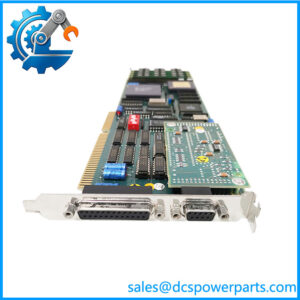
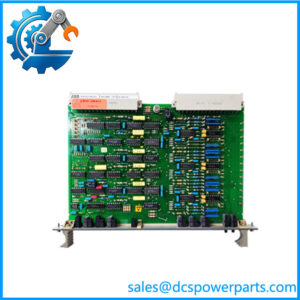
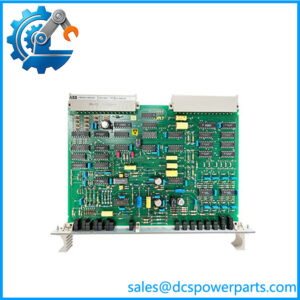
The ABB DSAI130D 3BSE003127R1 is a 16-channel differential analog input board for the ABB Advant I/O platform. It converts ±10 V or ±10 mA field signals into digital values for process control and monitoring, with four selectable filter-time configurations that allow the input response to be matched to relatively slow process signals or faster measurement requirements.
The main engineering advantage of the ABB DSAI130D 3BSE003127R1 is its combination of 16 differential channels and selectable 10, 30, 100, and 300 Hz filtering. That makes it particularly useful in existing Advant installations where the I/O architecture must remain in service, including systems being interfaced to newer AC 800M controllers through ABB’s CI856 I/O interface.
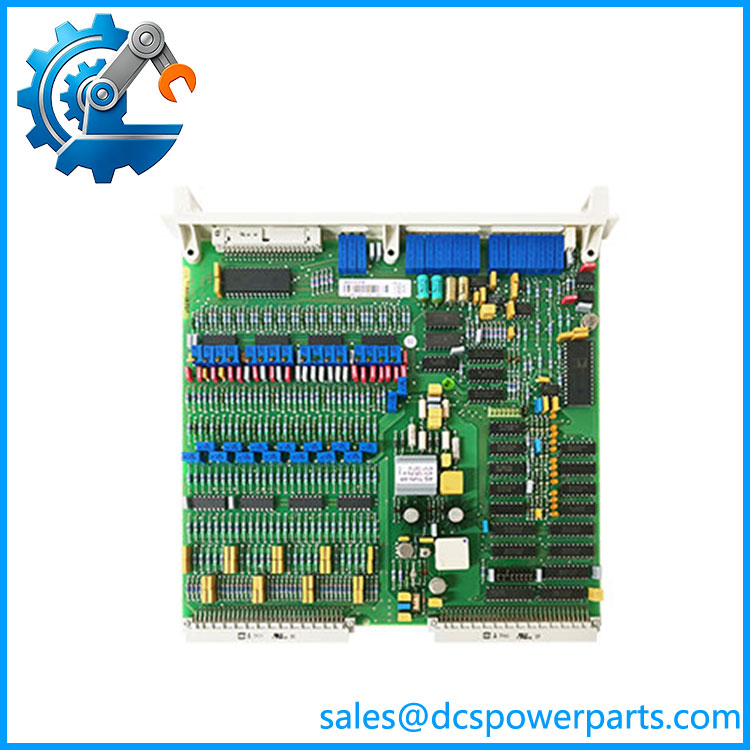
DSAI130D 3BSE003127R1
DSAI130D 3BSE003127R1
Application Scenarios & Field Pitfalls — The Engineer’s Perspective
Engineering Pain Point
A common replacement mistake with DSAI 130D is treating it as a generic 16-channel analog input card. It is an I/O board with a defined signal architecture, filtering behavior, conversion characteristics, and system interface. Replacing it with a superficially similar analog input module can change both the signal response and the controller-side I/O configuration.
The four filter selections are particularly important. A 10 Hz setting and a 300 Hz setting do not produce the same measurement response, even when the connected transmitter and engineering range remain unchanged. For a plant replacement, record the original channel configuration before removing the failed board.
Typical Applications
- Process instrumentation: Acquisition of analog signals from pressure, flow, level, and temperature transmitters.
- Power and utility systems: Monitoring analog process and electrical measurements within legacy Advant control architectures.
- Chemical and petrochemical plants: High-density analog acquisition where 16 differential channels are required within an I/O rack.
- Industrial machinery: Measurement of slower machine-process variables where selectable input filtering helps suppress unwanted signal variation.
- Advant system migration: Retaining installed I/O while interfacing the existing rack to an AC 800M controller through CI856. ABB specifically lists DSAI 130D among the supported I/O boards for this migration architecture.
Technical Pitfalls to Avoid
1. Verify the filter setting channel by channel.
The four available cutoff frequencies—10, 30, 100, and 300 Hz—are one of the defining characteristics of DSAI 130D. A replacement configured differently can alter process response and noise behavior.
2. Do not confuse DSAI 130D with DSAI 130 or DSAI 130A.
ABB lists DSAI 130/130A separately from DSAI 130D. The CI856 documentation identifies DSAI 130D specifically as the 16-channel analog input board with four sets of filter times.
3. Check the input wiring before commissioning.
The documented input configuration is differential. Do not assume that a field wiring arrangement designed around another analog input board can be transferred without checking the connection-unit and channel configuration.
4. Verify current-loop scaling.
The published DSAI 130D specification lists a ±10 mA input range. If the field transmitter is configured as a conventional 4–20 mA instrument, confirm the exact termination and signal-conditioning arrangement rather than assuming direct compatibility from the words “current input.”
5. Consider CI856 loading during migration.
ABB’s AC 800M documentation assigns DSAI 130D a specific base load and channel load for calculations. This matters when a legacy rack is being integrated into a newer AC 800M system and many I/O channels are being scanned at short update intervals.
6. Match the complete part number.
The requested unit is 3BSE003127R1, not merely “DSAI 130D.” For a legacy DCS spare, the product designation, part number, board revision, and existing I/O configuration should all be compared before installation.
Related Products
- DSAI 130 — 57120001-P — 16-channel analog input board in the same general family, but with different documented characteristics from DSAI 130D.
- DSAI 130A — Related 16-channel analog input variant; verify the exact system configuration before treating it as a substitute.
- DSAI 133 — 32-channel analog input board for applications requiring greater channel density.
- DSAI 133A — Related 32-channel analog input variant.
- DSAI 146 — 3BSE007949R1 — Another analog input family member for applications with different signal requirements.
- DSAX 110 / DSAX 110A — Combined analog input/output boards, useful where both AI and AO functions are required.
- DSAO 110 — Four-channel analog output board; complementary to DSAI 130D when both analog acquisition and control outputs are required.
- DSAO 120 — Eight-channel analog output board for higher analog-output density.
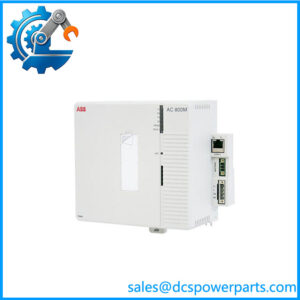
- — AC 800M I/O interface used for integrating supported I/O racks into newer Advant Master architectures. ABB explicitly lists DSAI 130D among its supported boards.
- DSBC 174 / DSBC 176 — I/O bus-extender components documented in the migration architecture.
Procurement Note
For an ABB DSAI130D 3BSE003127R1 replacement, verify the board’s complete part number, installed rack, connection unit, channel wiring, input signal type, and filter configuration before installation. The most important distinction is that DSAI 130D is a 16-channel differential analog input board with four selectable filter-time groups, not a generic analog input card.
For an Advant migration project, also confirm the firmware/software environment and calculate the expected I/O load. ABB’s documentation specifically accounts for DSAI 130D in performance calculations, making this relevant when several racks are being retained under an AC 800M controller.