Description
Product Overview
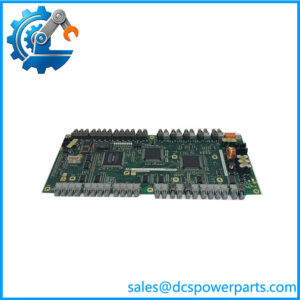
The ABB 560AIR01 R0001 is an eight-channel analog input module designed for the RTU560 remote terminal unit platform within ABB’s RTU500 product family. Its primary function is to acquire analog measurements from field instruments and convert them into digital values for use by the remote terminal unit. Typical measurement points in a substation or industrial installation include current, voltage, and other instrument signals that fall within the module’s supported input ranges. The ABB 560AIR01 R0001 1KGT036500R0001 is therefore an I/O component for measurement and supervisory functions, not a standalone controller or communications gateway.
The module supports eight analog inputs and configurable current ranges of ±2 mA, ±5 mA, ±10 mA, ±20 mA, and ±40 mA, as well as ±2 V DC and 0–20 V DC ranges. Its 16-bit A/D converter provides the digitization stage needed for the RTU to process measured values. Effective engineering ranges and live-zero handling can depend on configuration and conversion performed by the communication unit, so an engineer should confirm the configured channel ranges before connecting field wiring. A familiar transmitter output such as 4–20 mA should not be treated as a separate native range without checking how it is configured within the RTU system.
For replacement planning, the exact order number matters. Confirm the installed module marking, rack and RTU560 configuration, channel assignments, wiring arrangement, and measurement scaling before commissioning a replacement. ABB documentation identifies the 560AIR01 as a successor to the 23AE23 and describes it as a 1:1 replacement for that specific module; this does not establish universal compatibility with every RTU560 analog input card. The ABB 560AIR01 R0001 should be evaluated against the existing hardware and application configuration rather than selected by family name alone.
Product Introduction
The ABB 560AIR01 R0001 (1KGT036500R0001) is an RTU560 analog input card used to collect field measurements for remote monitoring and substation automation. It accepts supported current and voltage signals across eight channels and digitizes them for processing by the RTU system.
For maintenance and procurement teams, the key checks are the full part number, input range, existing RTU configuration, and physical condition. Verify these details before installation, particularly when replacing an older card or integrating the module into an established measurement scheme.
Key Technical Specifications
| Specification | Details |
|---|---|
| Manufacturer | ABB |
| Model | 560AIR01 R0001 |
| Order number | 1KGT036500R0001 |
| Product type | Analog input module |
| Product family | RTU500 / RTU560 |
| Number of channels | 8 analog inputs |
| A/D converter resolution | 16 bit |
| Supported current ranges | ±2 mA, ±5 mA, ±10 mA, ±20 mA, ±40 mA |
| Supported voltage ranges | ±2 V DC, 0–20 V DC |
| Power supply | RTU560 backplane; documented consumption is 75 mA at 5 V DC |
| Installation method | modular rack |
| Net weight | Approximately 0.125 kg |
| Net dimensions | Approximately 140 × 205 × 38 mm |
| Operating temperature | Confirm against the applicable hardware datasheet |
| Protection rating | Not verified in the available product documentation |
| Condition | Confirm actual condition with supplier |
Engineering note: Published catalog entries are not fully consistent about conversion resolution; the RTU500 product catalog specifies 16 bit, while some distributor listings describe 12 bit plus sign. Use the applicable ABB technical datasheet and installed hardware revision as the controlling reference.
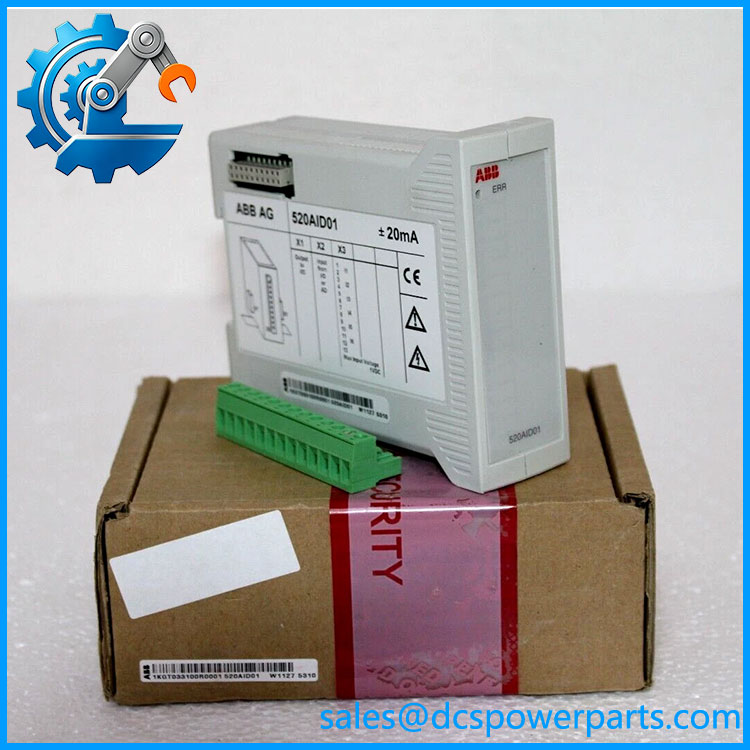
560AIR01R0001 1KGT036500R0001
Related Products
These are related RTU500 components or neighboring models for identification and system planning. Their inclusion does not guarantee interchangeability.
| Model | Description |
|---|---|
| ABB 560AIR02 | Eight-channel analog input module; check its supported signal ranges and configuration before substitution. |
| ABB 560BIR01 | Related I/O family component; verify its exact input function and application. |
| ABB 560BOR01 | Related I/O family component; verify output function and wiring requirements. |
| ABB 560CMU01 | RTU500/ communication-unit family component; confirm system architecture and interface requirements. |
| ABB 23AE23 | Earlier analog input module identified in ABB documentation as the predecessor for which 560AIR01 is a 1:1 replacement. |
Frequently Asked Questions
Q1: What does the ABB 560AIR01 R0001 do?
It acquires analog current and voltage measurements through eight input channels and converts them into digital values for processing by an system.
Q2: Does it support standard 4–20 mA transmitters?
The documented current ranges include ±20 mA, but 4–20 mA operation depends on channel configuration and system scaling. Verify the configuration and signal wiring before connecting a transmitter.
Q3: Is the 560AIR01 a direct replacement for the 23AE23?
ABB documentation identifies the 560AIR01 as a successor and a 1:1 replacement for the 23AE23. Confirm the exact installed part number and system configuration before replacement. This documented relationship should not be generalized to other I/O modules.
Q4: Can the module be replaced while the is running?
Do not assume hot-swapping is permitted. Check the applicable hardware and maintenance documentation, site isolation procedures, and process consequences before removing the module.
Q5: Will replacement require channel reconfiguration?
That depends on the existing configuration, wiring, measurement ranges, and how the RTU communication unit processes the values. Record the current configuration and verify the readings after replacement.
Q6: What should procurement verify before ordering?
Confirm the complete order number 1KGT036500R0001, model marking 560AIR01 , physical condition, included accessories, and any available inspection or test records. Confirm actual condition with supplier rather than assuming the item is new or tested.
Q7: What information should be checked during commissioning?
Verify each channel’s signal type and range, polarity and wiring, scaling, expected engineering values, and alarm thresholds. Compare the RTU readings against a known signal source or trusted field measurement before returning the measurement points to service.