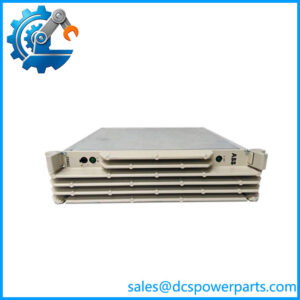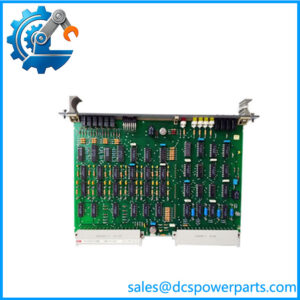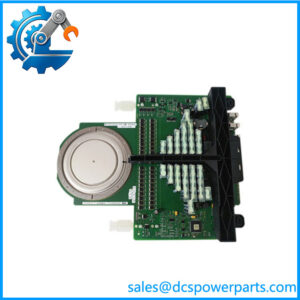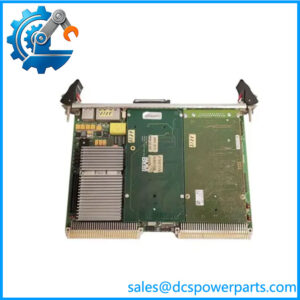
Description
Technical Specifications
| Parameter | Specification |
|---|---|
| Manufacturer | ABB |
| Model | 500TRM02 |
| Ordering Number | 1MRB150011R1 |
| Product Type | Terminal / Interface Module |
| Product Family | ABB 500 Series |
| Main Function | Signal termination / system interfacing |
| Signal Type | System-dependent |
| Interface | ABB 500-series architecture |
| Mounting | Rack / cabinet dependent |
| Power Supply | System-dependent |
| Communication | System-dependent |
| Operating Temperature | Verify from original documentation |
| Channel Count | Verify against exact system configuration |
| Hardware Revision | R1 |
| Application | Legacy ABB industrial control systems |
Important specification note: I would not publish the frequently repeated claims that this exact 1MRB150011R1 is a 2-channel RTD/thermocouple input module or a 24 VDC PROFIBUS coupler. Current sources directly contradict one another. One source calls it a termination module, another describes it as a communication/coupler board, while another claims it is a temperature-input module.
Product Introduction
The ABB 500TRM02 1MRB150011R1 is a legacy ABB 500-series hardware component used for signal interfacing and termination within the associated control-system architecture. ABB’s indexed documentation explicitly lists 500TRM02 1MRB150011R1 alongside other 500-series components, including the 500CPU03, 500SCM01, and 500BOM01.
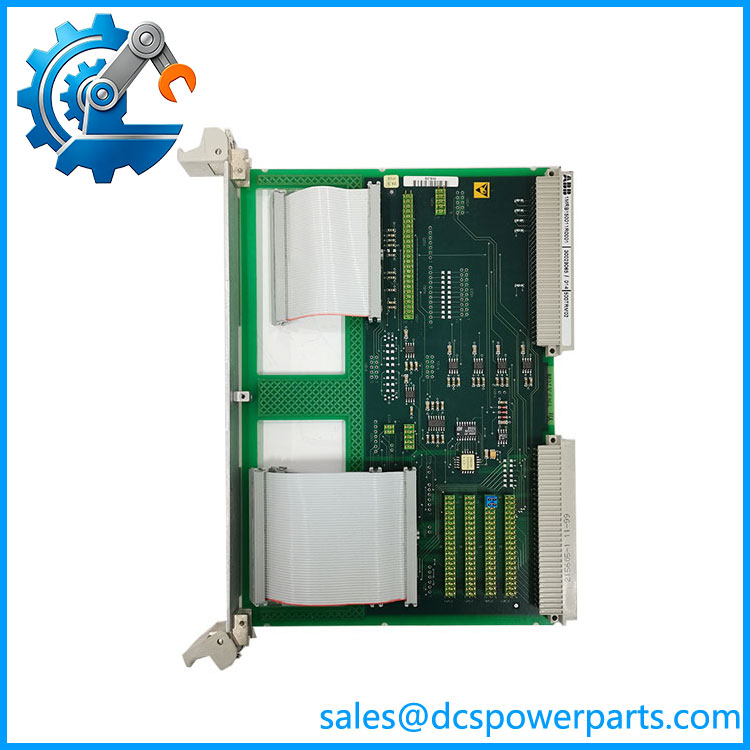
500TRM02 1MRB150011R1
The ABB 500TRM02 should be treated as a system-specific interface component rather than a generic modern PLC I/O module. Its actual electrical function depends on the hardware architecture in which it is installed. This is particularly important because current secondary-market descriptions are inconsistent: some identify it as a termination board, while others classify it as a communication or coupling module.
The ABB 1MRB150011R1 marking is therefore the critical procurement identifier. The complete number should be matched against the installed board rather than purchasing another component simply because it carries the 500TRM02 designation.
For legacy ABB equipment, the physical interface, terminal arrangement, board revision, associated CPU/I/O modules, and system wiring should all be checked before substitution. A module with the same general family name can still have a different electrical role or revision.
Main Features & Field Considerations
System-level signal interface
The 500TRM02 is associated with signal termination/interface functions in ABB 500-series equipment. It should be evaluated as part of the complete rack and wiring architecture.
Legacy hardware compatibility
Compatibility depends on the surrounding ABB hardware. Before replacement, identify the CPU, I/O modules, rack/backplane, terminal assemblies, and connected field circuits.
Part-number discipline
Record all markings from the physical board:
- 500TRM02
- 1MRB150011R1
- Any additional ABB identification number
- Hardware revision
- Connector/terminal labels
Do not rely on generic online specifications
The available secondary sources contain substantial contradictions. One listing describes the board as a temperature-input module with two isolated channels, while another identifies it as a termination/interface module.
Replacement Checks
Before replacing an ABB 500TRM02 1MRB150011R1, verify:
- Exact board markings
- Connector and terminal arrangement
- Associated ABB controller
- Rack/backplane type
- Field wiring
- Signal type
- Hardware revision
- Existing system drawings
- Configuration/software compatibility
If the module is connected to CT circuits, never disconnect energized CT secondary wiring without following the site’s approved protection and shorting procedure.
Procurement Note
For ABB 500TRM02 1MRB150011R1, I recommend using the complete 500TRM02 + 1MRB150011R1 identification and requesting photos of the actual board and terminals when purchasing a replacement.
The important point is that the online technical descriptions are not reliable enough to assign a definitive voltage, channel count, protocol, or signal type to this exact R1 variant. ABB’s indexed material confirms the part-number identity, but the secondary sources disagree on its detailed function.
For an operating legacy installation, the safest replacement process is to match the exact part number, hardware revision, physical connectors, and installed system architecture before energization.