Description
ABB 500CPU05 1MRB150081R1/E | CPU Control Module | Industrial Automation Spare
Key Technical Specifications
| Parameter | Specification |
|---|---|
| Manufacturer | ABB |
| Model | 500CPU05 |
| Part Number | 1MRB150081R1/E |
| Product Type | CPU / Control Processor Module |
| Hardware Revision | R1/E |
| Primary Function | Control-program execution and system coordination |
| Application | Industrial automation and control |
| System Interface | System-specific backplane architecture |
| User Program | Dependent on installed system and engineering configuration |
| Firmware | Revision-dependent |
| Replacement Basis | Exact part-number and system-configuration verification required |
Public references consistently identify 500CPU05 1MRB150081R1/E as an ABB CPU/control processor module, but the available technical data is inconsistent about the exact platform. One source describes it as an AC500 CPU, while another places it in an older P13/P14 control architecture. Because these descriptions conflict, detailed AC500 specifications such as 24 VDC supply, Ethernet protocol set, memory capacity, and processor speed should not be treated as verified specifications for this exact /E revision without the original ABB hardware documentation or nameplate data.
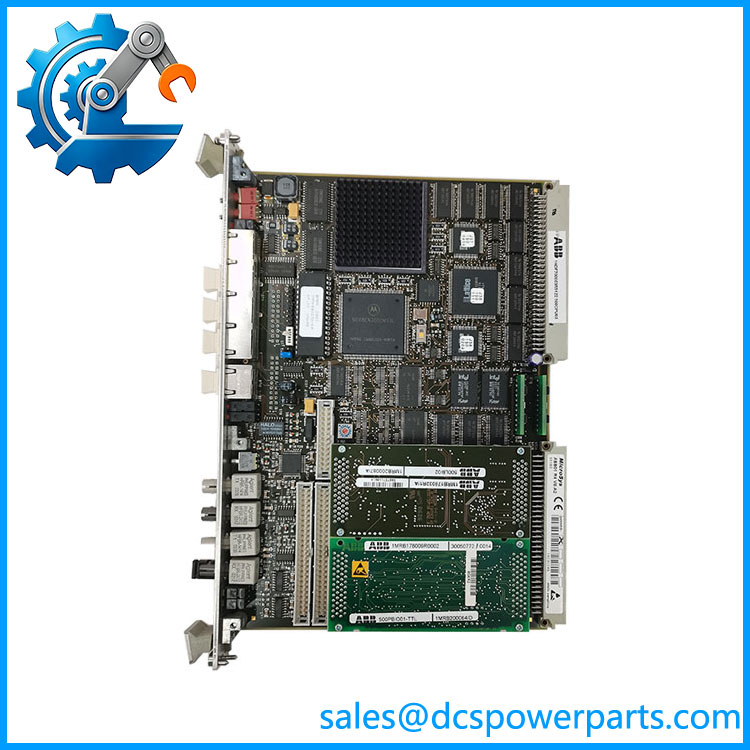
500CPU03 1HDF700003R5122
Product Introduction
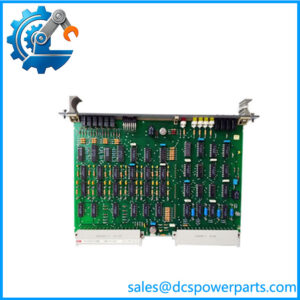
The ABB 500CPU05 1MRB150081R1/E is identified as a central processing/control module used to execute application logic and coordinate other hardware within its associated ABB automation architecture. The 500CPU05 designation appears repeatedly in ABB-related industrial automation inventories alongside other 500-series modules such as 500BIO01, 500CIM05, 500SCM01, 500PSM03, and 500TRM02.
For maintenance procurement, the complete part number 1MRB150081R1/E is more important than the generic “500CPU05” description. Older ABB control hardware can have closely related model numbers with different firmware, interfaces, or system roles. A visually similar CPU from another 500-series application should not be assumed to be interchangeable without checking the installed rack, firmware, engineering environment, and associated modules.
Application Scenarios & Field Pitfalls — The Engineer’s Perspective
Engineering Pain Point
The biggest risk with this part is platform misidentification. Current online listings frequently describe the 500CPU05 as an ABB AC500 PLC CPU, while other listings associate the same part number with P13/P14 control systems. The available evidence is not strong enough to use either description as a universal compatibility statement.
For a plant replacement, the safest approach is to match the complete ABB ordering number, hardware revision, rack/backplane, firmware family, and neighboring modules rather than selecting a replacement solely from the model name.
Typical Applications
- Legacy ABB control-system maintenance where an original 500CPU05 remains installed.
- CPU replacement following processor failure, memory corruption, or hardware degradation.
- Control cabinet refurbishment where the original CPU must be retained to avoid a larger system migration.
- Spare-parts inventory management for plants operating older ABB automation equipment.
- System troubleshooting where CPU status, program execution, or controller communication has been lost.
Technical Pitfalls
1. Do not automatically classify it as a modern AC500 CPU.
Several secondary listings place 500CPU05 within the AC500 family and even assign it specifications associated with newer AC500 CPUs. Other sources associate the exact part number with P13/P14 hardware. The conflict is significant enough that the platform should be confirmed from the installed equipment documentation before procurement.
2. Do not infer communication protocols from generic ABB CPU descriptions.
Claims involving Modbus TCP, PROFINET, EtherNet/IP, OPC UA, IEC 61850, or other modern protocols should not be assigned to this exact part without documentation for the specific hardware revision.
3. Firmware is a replacement issue, not a minor detail.
A CPU can be physically compatible while still being unsuitable because of firmware, application software, memory configuration, or engineering-tool differences. Before installing a replacement, record the firmware and application information from the existing unit whenever possible.
4. Preserve the existing application backup.
A replacement CPU should not be assumed to contain the plant’s application program. The engineering team should have a verified backup of the running control application and configuration before removing the original processor.
5. Check adjacent 500-series modules.
The 500-series inventory includes modules such as 500BIO01, 500CIM05, 500SCM01, 500PSM03, and 500TRM02. The presence of these modules can help establish which ABB hardware architecture is actually installed.
6. Verify the /E suffix.
The full designation is 1MRB150081R1/E, not simply 1MRB150081R1. For legacy equipment, revision suffixes can distinguish hardware variants or production revisions. The replacement should match the required revision or be confirmed as an approved substitute.
Related Products
- ABB 500CPU03 — Related CPU designation found in the same 500-series hardware family; compatibility should be confirmed rather than assumed.
- ABB 500BIO01 1MRB150005R1/J — 500-series I/O hardware appearing in related inventories.
- ABB 500CIM05 1MRB150077R1/B — Communication interface module associated with the same broader 500-series hardware group.
- ABB 500SCM01 — 500-series system/control module; exact system role depends on the installed architecture.
- ABB 500PSM03 — Power supply module used with related ABB control hardware.
- ABB 500TRM02 1MRB150011R1 — Related 500-series module frequently listed alongside 500CPU05.
- ABB 500CSP04 HE401314/0002 1MRB150051R2 — Related ABB control-system hardware.
- ABB 500MTM02 — Related 500-series module found in legacy ABB system inventories.
Procurement Note
For a replacement request, specify the complete designation:
ABB 500CPU05 — 1MRB150081R1/E
Do not substitute a generic “ CPU” based solely on online descriptions. Before purchase, compare the nameplate, installed rack/backplane, neighboring 500-series modules, firmware revision, and original ABB system documentation. This is particularly important because publicly available descriptions for this exact part number contain contradictory platform and specification information.
For a legacy control system, an exact tested spare with matching hardware revision is generally a lower-risk procurement choice than an assumed modern equivalent.