Description
Technical Specifications
| Parameter | Specification |
|---|---|
| Manufacturer | ABB |
| Model | 500BOM01 |
| Ordering Number | 1MRB150023R0002 |
| Product Type | Binary Output Module |
| Product Family | ABB 500 Series |
| Signal Type | Digital / discrete output |
| Main Function | Field-device control |
| Typical Loads | Relays, solenoids, contactors, indicators |
| Output Configuration | System-dependent |
| Output Rating | Verify against original ABB documentation |
| Channel Count | Verify against exact hardware revision |
| Isolation | Verify against installed configuration |
| Installation | ABB 500-series rack/system |
| Application | Industrial control and automation |
| Hardware Status | Legacy |
Product Introduction
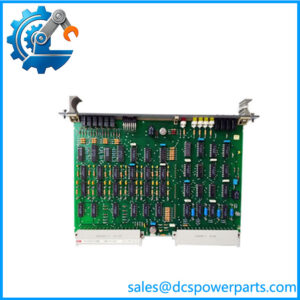
The ABB 500BOM01 1MRB150023R0002 is a binary output module from ABB’s legacy 500-series control hardware. Its role is to transfer discrete commands generated by the control system to external field equipment. In a typical installation, the module forms the final electronic interface between control logic and devices that must be switched between defined operating states.
The ABB 500BOM01 can be used for applications such as equipment start/stop commands, valve or solenoid control, relay actuation, annunciation, and sequence-control functions. Unlike an analog output module, its purpose is not to generate a continuously variable process signal; it provides binary states according to the requirements of the associated control architecture.
The ABB 1MRB150023R0002 identification should be retained when sourcing a replacement. Legacy ABB 500-series modules use similar physical formats but perform different functions, so a visually similar module is not sufficient as a substitute.
The 500BOM01 should also be considered as part of the complete output circuit. An apparent output-channel failure can originate in the field device, external power supply, fuse, wiring, terminal assembly, or interposing relay rather than the BOM itself. This is particularly important when troubleshooting older control cabinets where field wiring may have been modified during years of service.
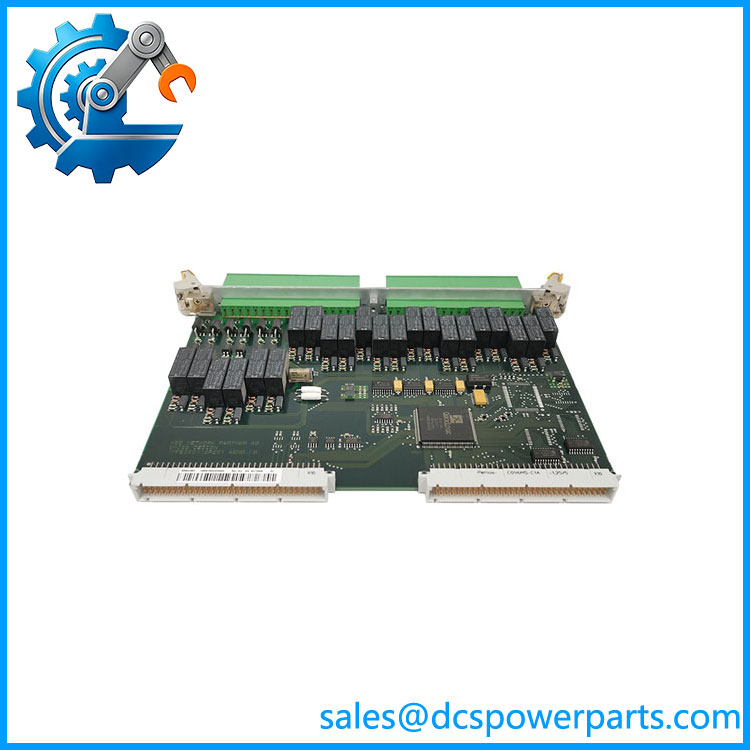
500BOM01 1MRB150023R0002
Main Features & Field Considerations
Discrete output control
The 500BOM01 provides binary control signals for downstream field equipment. It is suited to sequencing, interlocking, equipment control, and status-related functions.
Legacy ABB integration
Compatibility depends on the associated 500-series rack, controller, power supply, terminal arrangement, and system configuration.
Field-load verification
Before replacing the module, identify what each output channel actually drives. A shorted solenoid, damaged relay coil, or incorrect external supply can damage a replacement output channel.
Replacement checks
Verify:
- 500BOM01
- 1MRB150023R0002
- Hardware revision
- Channel assignment
- Output voltage
- Output current
- Load type
- Common/return wiring
- Terminal arrangement
- Rack/backplane compatibility
- Controller configuration
Troubleshooting
For a failed output, check:
- PLC/control logic command
- Module channel status
- Output supply
- Fuse/protection device
- Terminal wiring
- Interposing relay
- Field load
- BOM output channel
Do not replace the BOM simply because a field actuator does not operate.
Typical Applications
The ABB 500BOM01 is suitable for legacy industrial control applications involving:
- Motor start/stop circuits
- Solenoid control
- Valve actuation
- Relay interfaces
- Equipment interlocks
- Alarm/annunciation circuits
- Sequential process control
- Industrial machine control
Procurement Note
For ABB 500BOM01 1MRB150023R0002, use the complete 1MRB150023R0002 ordering number when sourcing the replacement. I would not assign a definitive output voltage, current rating, channel count, or load category without the original ABB documentation for this exact revision.
For an operating legacy system, the most useful pre-replacement records are the channel-to-field-device wiring list, output voltage/current requirements, hardware revision, and controller configuration. These checks are more reliable than matching the module by appearance alone.