Description
Key Technical Specifications
| Parameter | Value |
|---|---|
| Manufacturer | ABB |
| Model | 3ASC25H215E |
| Functional Designation | |
| Product Family | ABB 3ASC25H Series |
| Product Type | Generator excitation/control module |
| Primary Application | Generator excitation and power-generation control |
| System Role | Control / feedback / interface circuitry |
| Hardware Generation | Legacy ABB |
| Installation | Application-specific cabinet/rack installation |
| I/O Configuration | Application-dependent |
| Communication Interface | Verify from original documentation/nameplate |
| Supply Voltage | Verify from system drawings |
| Operating Temperature | Verify from equipment documentation |
| Dimensions | Verify from mechanical drawing |
| Firmware | Application/system dependent |
| Replacement Method | Match complete part number and hardware revision |
There is enough evidence to associate 3ASC25H215E with ABB generator/excitation-system hardware, but not enough reliable primary-source evidence to responsibly publish detailed voltage, current, communication, IP-rating, or dimensional figures. Several commercial listings give contradictory specifications, including 24 VDC, 220–380 V, RS-485, and generic Ethernet claims. Those values should not be used for engineering replacement decisions.
Product Introduction
ABB 3ASC25H215E
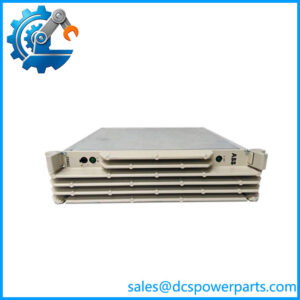
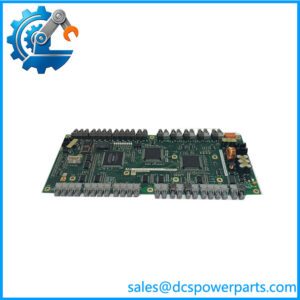
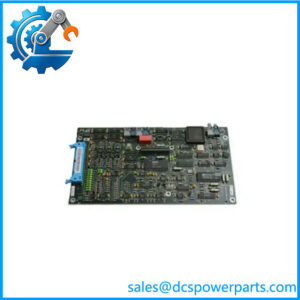
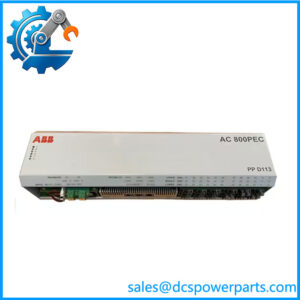
The ABB 3ASC25H215E is a legacy ABB control module associated with generator excitation and power-generation control equipment. Available product references identify it as ABB 3ASC25H215E / hardware, but the exact functional description varies between surviving documentation and supplier records.
For maintenance work, the important point is identification rather than guessing specifications. This is older ABB hardware, and its actual role depends heavily on the excitation-system architecture in which it was installed. Match the complete part number, cabinet drawings, connector arrangement, and neighboring boards before replacement.
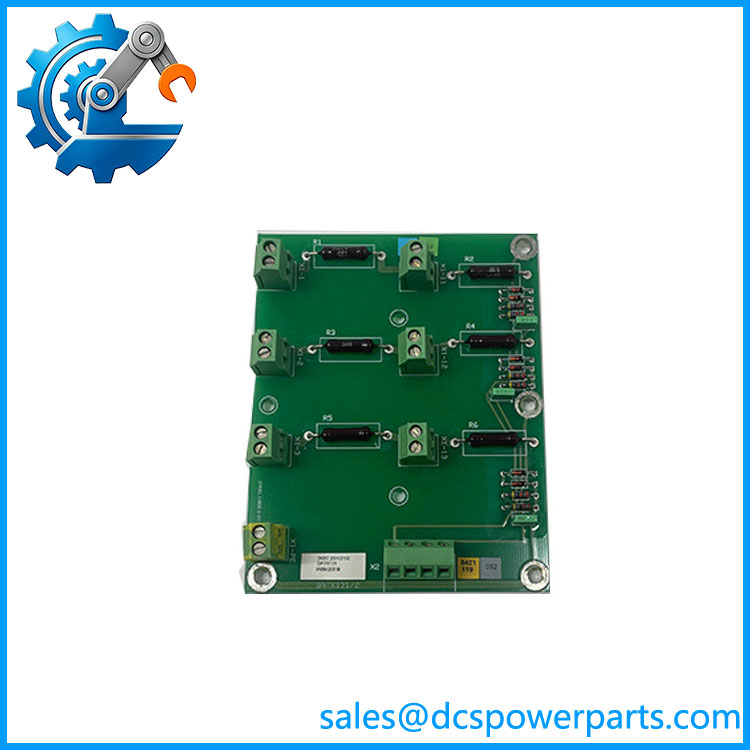
DATX131
Application Scenarios & Field Pitfalls
Engineering Pain Point
Legacy excitation systems are unforgiving during replacement. A control board can appear physically identical while having a different connector population, hardware revision, or system function. On a generator, that can turn a routine spare-parts replacement into a commissioning problem. should therefore be treated as an application-specific board, not a generic PLC module.
Typical Applications
- Power Generation — Generator excitation control and associated feedback/interface circuitry.
- Hydroelectric Plants — Legacy excitation-system control cabinets supporting synchronous generators.
- Steam-Turbine Generators — Excitation-system control and generator regulation hardware.
- Industrial Power Plants — Maintenance of older ABB generator control and excitation installations.
Technical Pitfalls to Avoid
- Do not rely on generic online specifications.
The exact information available publicly is inconsistent. Some sources call it an I/O control panel, others an excitation component, and others incorrectly describe it as a generic communication adapter. - Match the complete part number.
Verify 3ASC25H215E against the board label. Do not substitute a nearby 3ASC25H-series part merely because the PCB dimensions or connector layout appear similar. - Check the excitation-system documentation first.
Determine whether the board is handling generator feedback, excitation control, signal conditioning, or another cabinet-level function. The board designation alone does not establish every installed function. - Record connector positions before removal.
Legacy ABB systems can have numerous hardwired signals. Photograph and document every connector, terminal, jumper, and switch before pulling the original board. - Verify the hardware revision.
Older ABB boards can exist in multiple revisions. Compare the PCB markings and revision identifiers, not just the commercial model number. - Do not energize immediately after installation.
First verify supply polarity, connector seating, field wiring, grounding, and associated excitation-controller status. Then follow the plant’s approved excitation-system commissioning procedure. - Check the surrounding boards.
should be evaluated as part of the complete excitation/control cabinet. A failed board may be the result of a power-supply problem, field wiring fault, overvoltage event, or failure in an adjacent module. - Preserve the original configuration.
If the installation contains adjustable settings, jumpers, calibration information, or configuration records, document them before replacement. Legacy systems often lack the convenient configuration-management features found in newer digital excitation platforms.
Related Products
- ABB 3ASC25H214 DATX130 — Closely numbered legacy ABB hardware. It belongs to the same general 3ASC25H family, but it should not be considered a direct replacement without comparing schematics and connector assignments.
- ABB 3ASC25H219B DATX133 — Another 3ASC25H-series control board appearing in legacy ABB inventories. Its function differs from , so substitution requires system-level verification.
- ABB 3ASC25H204 DAPU100 — Related legacy ABB control hardware frequently encountered in older automation and excitation-system spare inventories. It is a different functional assembly and should not be substituted solely on family-number similarity.
- ABB DAPC100 3ASC25H203 — Another legacy 3ASC25H-series control assembly. Relevant when troubleshooting a cabinet containing multiple boards from the same hardware generation.
- ABB 3ASC25H705-7 DASA110 — Legacy ABB control/terminal expansion hardware. It may appear in related control cabinets, but it has a different physical and electrical role from .
- ABB Generator Excitation System Hardware — should be evaluated alongside the complete excitation controller, feedback circuitry, power stages, and associated interface boards. The surrounding architecture determines the board’s actual function.
- ABB REG670 — Modern Relion 670 generator protection IED. It is not a direct replacement for , but it can be part of a modernized generator protection/control architecture where a legacy ABB excitation system is being upgraded.
- ABB REG216 — Earlier ABB generator protection platform that may be encountered in legacy generator installations alongside older excitation equipment. It serves generator protection rather than replacing ‘s cabinet-level function.