Description
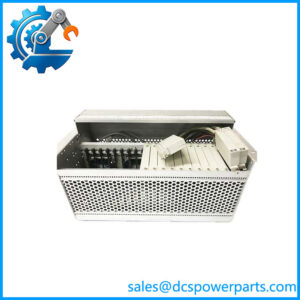
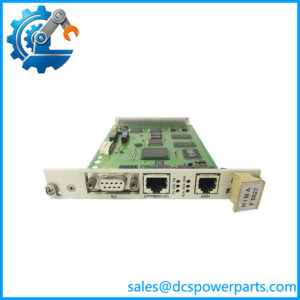
HIMA F8627X H41q/H51q Ethernet Communication Module
SEO Titles
- HIMA F8627X | H41q/H51q Ethernet Communication Module
- HIMA F8627X | 100Base-T SafeEthernet Communication
- HIMA F8627X | Legacy H41q/H51q Communication Module
- HIMA F8627X | HIMA Safety Ethernet Replacement Module
- HIMA F8627X | Genuine HIMA Communication Interface
Product Core Brief
- Model: F8627X
- Manufacturer / Brand: HIMA
- Series: H41q / H51q
- Product Type: Safety-system communication module
- Primary Function: Ethernet communication between HIMA safety controllers and external systems
- Safety Communication: SafeEthernet, mono or redundant configuration
- Ethernet Interface: 100Base-T, RJ45
- Additional Interface: HSR high-speed serial interface
- Supported Functions: OPC DA, OPC A&E, Modbus-TCP slave, ELOP II TCP
- Controller Compatibility: H41q/H51q central modules including F8650X/F8652X and F8651X/F8653X configurations
- Mechanical Format: 19-inch module, 3 HU × 4 WU
- Status: Legacy / discontinued
Product Overview
The HIMA F8627X is an Ethernet communication module designed for the HIMA H41q and H51q safety-system families. Its role is to provide the communications layer between the safety controller and external Ethernet-based systems while also supporting safety-related data exchange between HIMA controllers. HIMA’s original product documentation identifies the module for SafeEthernet and OPC DA communication, with later operating-system support adding OPC A&E, Modbus-TCP slave operation, and ELOP II programming through Ethernet.
Unlike a safety CPU, the HIMA F8627X does not execute the main application logic. The H41q/H51q central module remains responsible for the safety application, while the F8627X provides the communications path through the backplane. HIMA’s documentation specifically describes communication from the central module through the backplane to the F8627X and then through the Ethernet interface to the network. The module supports a 100Base-T RJ45 connection and an HSR interface for the associated high-speed redundant communication architecture.
For a legacy HIMA safety installation, the HIMA F8627X can be important when maintaining SCADA/DCS connectivity, HIMA-to-HIMA SafeEthernet links, Modbus TCP integration, or engineering access. The exact operating-system version matters: HIMA documentation states that the newer Modbus-TCP slave and ELOP II TCP functions require the appropriate F8627X operating-system version.
Product Introduction
In an H41q/H51q system, the communication module is not simply an Ethernet adapter. The F8627X separates the network communication function from the central safety-processing module and supports both safety-related and non-safety-related data paths through the HIMA architecture.
For a legacy HIMA SIS communication replacement, the installed F8627X revision, operating-system version, network configuration, SafeEthernet topology, and connected HIMA CPU must all be checked. A physically identical communication card with an older operating system may not provide every function required by the existing application.
Key Technical Specifications
| Parameter | Specification |
|---|---|
| Product Model | F8627X |
| Manufacturer | HIMA Paul Hildebrandt |
| Product Series | H41q / H51q |
| Product Type | Communication Module |
| Ethernet Interface | 100Base-T |
| Ethernet Connector | RJ45 |
| Ethernet Standard | IEEE 802.3 |
| HSR Interface | High-Speed Serial Redundancy interface |
| Safe Communication | SafeEthernet |
| SafeEthernet Configuration | Mono or redundant |
| OPC Communication | OPC DA |
| OPC Alarm & Event | OPC A&E via HIMA OPC server |
| Modbus | Modbus-TCP slave |
| Engineering Communication | ELOP II TCP |
| Installation | 19-inch H41q/H51q module |
| Height | 3 HU |
| Width | 4 WU |
| Associated CPU Families | F8650X/F8652X, F8651X/F8653X |
| Application | HIMA safety and process-control systems |
HIMA’s original 2006 product notice specifies the 3 HU × 4 WU mechanical format and identifies the 100Base-T RJ45 interface. The same document introduced the expanded OPC A&E, Modbus-TCP slave, and Ethernet-based ELOP II functions.
Major Features / Practical Advantages
1. SafeEthernet communication
The F8627X supports HIMA SafeEthernet for safety-related communication between H41q/H51q systems. HIMA documents both mono and redundant SafeEthernet configurations. This allows safety data exchange to remain within the HIMA safety communication architecture rather than relying on ordinary unsecured process Ethernet messaging.
2. 100Base-T Ethernet
The module provides a 100Base-T RJ45 interface based on IEEE 802.3. This was a significant architectural feature for the H41q/H51q generation because the same Ethernet infrastructure could support several communication and engineering functions.
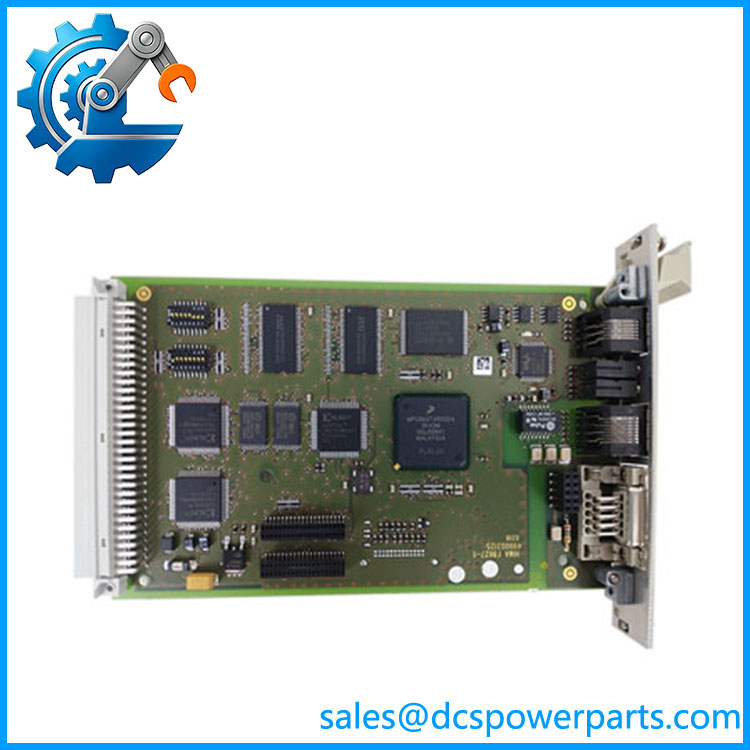
F8627X
3. HSR interface
The F8627X documentation identifies an HSR high-speed serial communication interface for the redundant HIMA communication architecture. This is distinct from the external Ethernet port and should not be confused with ordinary Ethernet redundancy.
4. OPC integration
The module supports communication with the HIMA OPC server. The original product announcement specifies OPC DA, with OPC Alarm & Event added as a new function. This provides a route for non-safety supervisory applications to receive HIMA process and alarm information.
5. Modbus TCP slave functionality
From the applicable HIMA operating-system generation, the F8627X supports Modbus-TCP slave operation. This is useful when the HIMA safety system must exchange selected data with a DCS, SCADA system, or other Ethernet-based controller.
The key procurement point is that Modbus TCP support is software-version dependent. It should not be assumed merely because the front panel says F8627X.
6. ELOP II programming over Ethernet
The F8627X can provide ELOP II TCP communication for engineering access. HIMA introduced Ethernet-based ELOP II programming with the F8627X/F8628X generation, while the detailed operating instructions specify the relevant operating-system requirement.
This can substantially simplify engineering access compared with relying solely on legacy serial connections.
7. Separation from the central safety CPU
The F8627X is a communication module, while the F865xX central module performs the safety-control function. HIMA documentation explicitly describes the communication path from the central module through the backplane to the F8627X and then onto the Ethernet network.
This distinction matters when troubleshooting: an F8627X communication fault does not necessarily mean the HIMA safety application itself has stopped executing.
8. H41q/H51q system integration
The F8627X was developed specifically for the H41q/H51q platform. HIMA’s product notice identifies it for use with the newer F8650X/F8652X safety CPUs and F8651X/F8653X non-safety CPUs, while earlier F8627 hardware remained in the product portfolio.
Related Products
- HIMA F8627 — Earlier communication module with the same fundamental communication role. HIMA documentation states that F8627X has the same functions as F8627, with newer functions dependent on the F8627X operating-system version.
- HIMA F8628X — H41q/H51q communication module oriented toward Profibus-DP slave communication rather than the F8627X’s Ethernet communication functions.
- HIMA F8650X — Safety-related central processing module for H51q/H41q systems used with the F8627X communication architecture.
- HIMA F8652X — Safety CPU generation associated with F8627X Ethernet communication.
- HIMA F8651X — Non-safety central module used with the F8627X in applicable H41q/H51q architectures.
- HIMA F8653X — Non-safety CPU associated with the F8627X communication architecture.
- HIMA F8621A — H41q/H51q coprocessor module used elsewhere in the system architecture; it is not a substitute for the F8627X.
- HIMA F7131 — H51q power-supply monitoring module with buffer-battery functionality; unrelated functionally to the F8627X.
- H41q — HIMA safety-system family supported by the F8627X.
- H51q — HIMA safety-system family supported by the F8627X.
FAQ
What is the HIMA F8627X?
It is a communication module for HIMA H41q/H51q safety systems, providing Ethernet-based communication, SafeEthernet, OPC connectivity, Modbus TCP slave functionality, and Ethernet engineering access when supported by the installed operating system.
Is F8627X a safety CPU?
No. This is one of the most important identification points. The F8627X is the communication module. HIMA’s F8650X/F8652X and F8651X/F8653X families are the associated central modules identified in the original product documentation.
Does F8627X support Modbus TCP?
Yes, but the exact operating-system revision matters. HIMA’s technical documentation states that Modbus-TCP slave functionality is available beginning with the applicable version 4.x operating system.
Can I use F8627X for ELOP II programming?
Yes. Ethernet-based ELOP II TCP communication is one of the functions introduced with this module generation. The applicable operating-system version must be verified before assuming the function is available on an individual spare.
Does it support SafeEthernet?
Yes. HIMA identifies the F8627X for safety-related communication through SafeEthernet, including mono and redundant configurations.
Can I hot-swap the F8627X?
Do not assume unrestricted hot-swapping. This module participates in the communications architecture of a safety-related H41q/H51q system. Replacement should follow the approved HIMA maintenance procedure and the site’s SIS change-control process. Network redundancy does not automatically make every physical removal operation safe.
Does F8627X support firmware v3.1?
A generic “v3.1” claim should not be attached to this module. HIMA documentation identifies specific operating-system generations and explicitly ties newer functions such as Modbus TCP and ELOP II TCP to later OS versions. The actual installed OS should be verified from the module/system rather than inferred from the part number.
Is F8627X compatible with F8627?
HIMA’s technical documentation states that F8627X has the same functions as F8627, while the newer functions are supported on F8627X with the applicable V4.x-or-higher operating system. That does not mean every system-level configuration can be exchanged without checking the CPU, OS, application, and communication configuration.
What should be checked before replacing an F8627X?
Verify the complete part number, hardware revision, installed operating-system version, H41q/H51q CPU type, Ethernet addressing, SafeEthernet topology, OPC configuration, Modbus TCP mapping, and ELOP II engineering requirements. Also preserve the original communication configuration before removing the existing module whenever possible.
Procurement Note
The HIMA F8627X is a legacy communication component, and the operating-system version is a particularly important procurement detail. The original HIMA documentation makes clear that F8627X functions evolved with the operating system: Modbus-TCP slave and ELOP II TCP are tied to the later OS generation.
For New Surplus or refurbished inventory, inspect the Ethernet connector, HSR connector, front-panel indicators, module identification, hardware revision, and available operating-system information. Do not accept a supplier description calling the F8627X a CPU or HIMax central processor; HIMA’s own documentation identifies it as the communication module for the H41q/H51q architecture.
Before commissioning a replacement, back up the ELOP II project and communication configuration. Record SafeEthernet peers, resource name, IP/network parameters, Modbus TCP settings, OPC configuration, and any redundancy arrangement. If the module is used in a safety-related communication path, replacement testing should confirm both the engineering connection and the intended safety communication before the system is returned to service.