Description
Product Overview
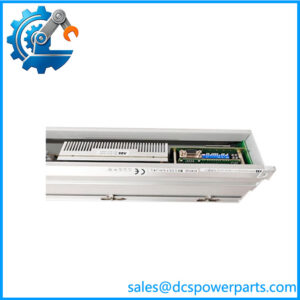
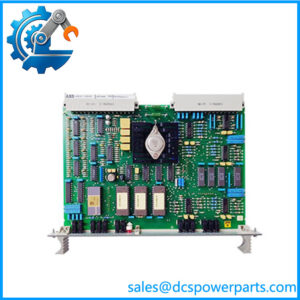
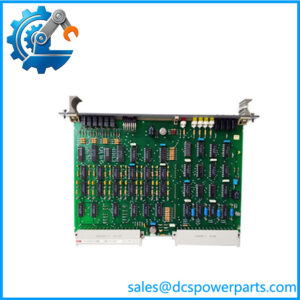
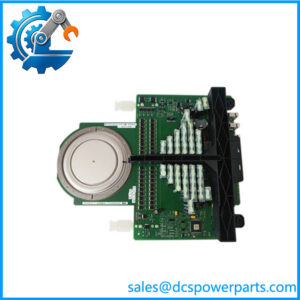
3BHE014070R0101 is an ABB spare part whose own catalogue record reads, in full: product ID 3BHE014070R0101, ABB type designation V PP C905 AE101, catalogue description “V PP C905 AE101; CCB-2 COMPLETE“, invoice description “CCB-2 COMPLETE”. That is the whole identification, and it is unusually clean: the code is a Converter Control Board of the ACS6000 medium-voltage drive family, supplied as a complete assembly, in the varnished variant.
The distinction worth understanding before anything else is that this part number describes hardware, not a job. In the ACS6000 control architecture, ABB builds a deliberately decentralised system, and the same circuit board type can carry different software depending on the function it performs in the drive. The AMC circuit board in the control unit is the drive’s brain — a Motorola DSP processor with two PPCS and eight DDCS optical channels — and the converter cabinets are served by interface boards that talk back to it over optical fibre. A CCB-2 is one of the converter-level boards in that chain, and what it does in a given cabinet is decided by the software loaded into it, not by the number stamped on the PCB.
That single sentence of ABB’s — identical hardware, function-specific software — is the reason a CCB-2 is not a plug-and-play consumable. A factory-fresh board arrives as hardware; the drive’s own software package and parameter set have to be established on it, and the drive’s documentation is explicit that configuration, customisation and tuning live in the application parameters, whose factory defaults are overwritten during commissioning for the specific process. On a 3 to 36 MW drive, the parameter set is the asset, and the board is the vessel. Every sensible maintenance strategy around this part is built on that: export the drive parameters and record the software before touching the hardware, and treat the replacement as a recommissioning exercise with a known-good reference, not as a board swap.
The varnished part of the description matters more than it looks. Medium-voltage drive cabinets are installed where the air carries dust, metal particles, salt or humidity — rolling mills, mine sites, marine propulsion rooms — and ABB’s coated board variants exist for exactly those ambients. A replacement that is electrically right but uncoated substitutes a shorter service life for the one the original had, which is why the catalogue name ends where it does and why the suffix should be matched rather than approximated.
Physically the part is a plug-in printed circuit board in the drive’s control electronics, connected by optical fibre to the power stage. Nothing about the power section is wired to the control section galvanically: phase modules are removed by disconnecting four fibre cables and four supply leads, an IGCT is replaced by pulling its fibre and its supply lead, and the current and voltage measuring interface is removed by unplugging its fibres and connectors. That architecture is a gift to maintenance and a discipline to reinstallation — every signal across the isolation boundary is a fibre that must be seated, dressed, and kept inside its bend radius, and a single poorly routed fibre produces faults that look like board failures.
Two catalogue details deserve to be quoted rather than paraphrased, because they save real money and real mistakes. The listing gives a product net weight of 0.01 kg, which is a placeholder value rather than a measurement — several resellers have copied it verbatim, and others quote 100 g, 240 g, 250 g and 780 g for the same board, which tells you none of them weighed anything. For freight and handling, weigh the board that comes out. The listing also classifies the item as a spare part with no minimum order quantity and no made-to-order requirement — it is a stocked spare, not a configured product built against a project.
ABB publishes generation-specific life-cycle statements for ACS6000, including statements covering Generation 1 and the AMC34-era control hardware, and has issued a sales ramp-down announcement for the AMC34 main board upgrade. None of that changes what the board is; all of it changes how long a cabinet can be supported, and it belongs in the same conversation as the order.
Technical Specifications
| Parameter | Value |
|---|---|
| Product ID | 3BHE014070R0101 |
| ABB type designation | V PP C905 AE101 |
| Catalogue / invoice description | V PP C905 AE101; CCB-2 COMPLETE — converter control board, complete, varnished |
| Manufacturer | ABB Switzerland Ltd, System Drives, Turgi (country of origin CH) |
| Product type | Plug-in printed circuit board, spare part (Technical Frame Size: Spare_Parts; made to order: No) |
| Drive platform | ACS6000 medium-voltage AC drive, 3–36 MW, IGCT three-level voltage source converter, Generation 1 control electronics |
| Control architecture | Decentralised: AMC circuit board in the control unit (Motorola DSP, 2 × PPCS and 8 × DDCS channels) exchanging data with converter-level boards over optical fibre |
| Function assignment | Hardware type is common; the software loaded into the board determines the function it performs in a given cabinet |
| Coating | Varnished (conformally coated) variant, as stated in the catalogue description |
| Signals across the isolation boundary | Optical fibre throughout — fibre cables plus separate supply leads to phase modules, IGCTs and the current/voltage measuring interface; no galvanic control wiring into the power stage |
| Configuration asset | Drive application parameters and board software, exported via ABB DriveWare tools (DriveWindow / DriveDebug over DDCS) before replacement |
| Customs tariff / classification | HS 85049090; UNSPSC 39122004 |
| Net weight (catalogue) | 0.01 kg — a catalogue placeholder, not a physical measurement; weigh the removed board for freight planning |
| Lifecycle | ACS6000 Generation 1 control electronics; ABB publishes generation-specific life-cycle statements and a sales ramp-down announcement for the AMC34 main board upgrade |
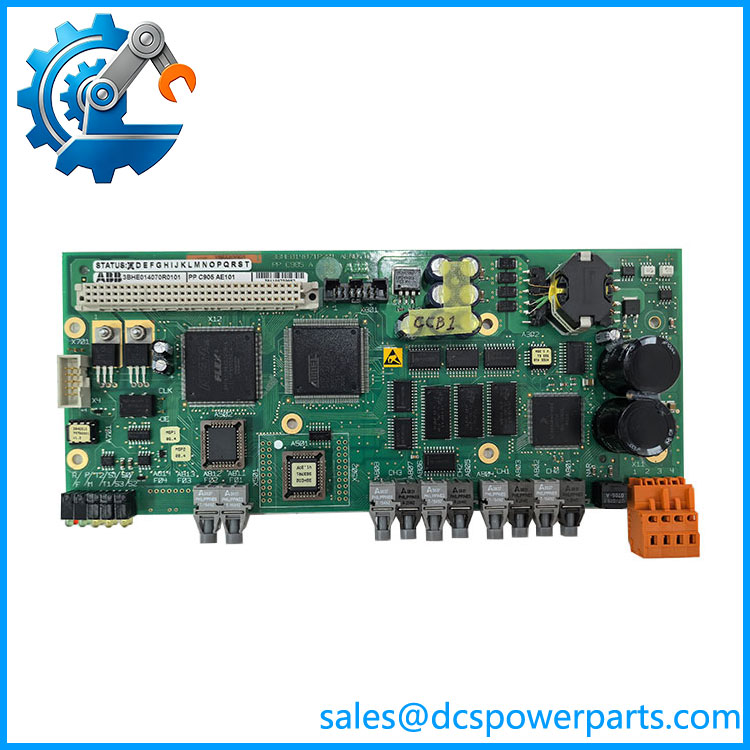
3BHE014070R0101
Key Features and Advantages
Converter-level control hardware for a 36 MW class platform: the CCB-2 belongs to a drive family built for the duties that low-voltage drives cannot reach — gearless mill drives, main-stand rolling mill drives, Azipod propulsion, high-power test benches — where the converter’s own control electronics decide whether torque is available in milliseconds or not at all.
Supplied as a complete varnished assembly: ” COMPLETE” means the populated board, not a kit of parts, and the varnish is the protection layer that lets it live in a mill or a marine machinery space. Buying an uncoated equivalent to save money is buying a different service life.
Software-defined function, honestly declared: ABB’s own architecture statement — identical hardware, different software by function — tells you precisely what to prepare. Two boards carrying the same number can serve different roles, so the software package and parameter set for the specific cabinet are the real compatibility question, and they are answerable before the order, not after.
Fibre-only interface to the power stage: all control signals cross into the phase modules, IGCTs and measuring interface on optical fibre with separate supply leads. That gives complete electrical separation between 690 V-class control electronics and the medium-voltage power section, and it makes fault-finding a matter of reading channels rather than chasing earth loops.
Replaceable without touching the power section: because nothing is hard-wired across the boundary, a board replacement is a control-side operation — de-energise, ground, wait out the DC link, unplug fibres and connectors, swap the board, reseat and re-download. No busbar work, no semiconductor clamping, no coolant drained.
Catalogue data you can actually use: the part is flagged as a stocked spare with no minimum order and no made-to-order step; the tariff code is explicit at 85049090. That removes the usual ambiguity about whether an order becomes a factory build with a lead time measured in months.
An honest data trap, flagged: the published net weight of 0.01 kg is a placeholder, and resellers have invented everything from 100 g to 780 g for the same article. Weigh the removed board — that number decides packaging, freight class and whether a courier will accept the parcel.
A repair path where none officially exists: on a platform whose control generation ABB has been ramping down, a correctly identified is the difference between a drive returning to production and a multi-megawatt asset waiting on a decision.
Documented envelope, documented limits: the drive’s DDCS/PPCS optical buses, the AMC’s channel count and the LED-based diagnostics of the control boards are all described in ABB’s own manuals, so a fault can be narrowed to a board, a fibre or a channel before anyone orders hardware.
Applications
Rolling mills and metals: main drives for hot and cold rolling stands, where the converter control electronics must hold torque accuracy under violent load steps and where the board’s varnished build survives the mill’s dust and metal-bearing air. This is the application the ACS6000 was designed around.
Mining, including gearless mill drives: very high power, low speed, high torque duties at remote sites, where replacement logistics are slow and a stocked spare is worth more than its price — and where the parameter set, not the board, is what takes weeks to reconstruct.
Marine propulsion and offshore: Azipod-class propulsion drives and thruster systems, in machinery spaces where salt air and continuous vibration are normal, and where classification requirements mean the approved configuration has to be restored exactly rather than approximated.
High-power fans, pumps and compressors in cement, power and heavy process plant: applications where the drive runs continuously for years and a control board failure stops a whole production line rather than one machine.
Test benches and specialised high-torque rigs: dynamometer and validation facilities where the drive is the measurement instrument and any change in control behaviour invalidates comparison data.
Multi-motor common DC bus installations: configurations where a common DC bus feeds several inverters, and where one converter’s control electronics failing affects the load sharing of the whole group.
Life extension of Generation 1 cabinets: the practical driver behind most orders today — a drive that is mechanically and electrically sound, whose control generation is out of production, and where the choice is a verified board plus a parameter restore, or an upgrade programme with a shutdown attached.
Related Products
3BHE024577R0101 (PP C907 BE) — AMC34 application and motor controller board; the drive’s DSP-based brain and the natural partner whose software must match the installation. 3BHE010751R0101 (PP C902 AE101) — AMC-33 controller board; the earlier AMC variant used across the same Generation 1 control family. HIEE300931R0001 — CCB-01 converter control board; the predecessor board designation, useful when a cabinet’s original parts list predates . 3BHE006412R0101 (UF C762 AE101) — CVMI current and voltage measuring interface; the measurement board the converter control depends on. 3BHB002916R0101 (UF C721 AE01) — IOEC I/O interface board; converter-cabinet I/O, replaced by the same fibre-and-connector routine. 3BHE014023R0101 (UF C789 ) — FSCD board, varnished; another coated spare in the same converter electronics set. 3BHE021083R0101 (XV C770 BE101) — HVD board, varnished; high-voltage divider board associated with converter voltage feedback. HIEE300888R0002 (UA C389 AE02) — pulse amplifier interface (PAI); part of the gating path between control electronics and the IGCT power stage. 3BHB020720R0002 (5SHY 3545L0016) — IGCT module, 4500 V, 91 mm; the power semiconductor the converter control ultimately commands, replaced as a separate item. 3BHE003604R0102 (UF C765 AE102) — earth-fault monitoring board (EAF); protection electronics in the same cabinet family.
Installation and Maintenance
Before installation: do not order or fit this board on the strength of a part number alone. Confirm the drive’s model, the cabinet, and the board position against the project’s parts list and converter hardware diagram, because the same hardware type serves different functions depending on the software loaded into it. Export the drive’s parameters and record the installed software versions with ABB’s DriveWare tools before the cabinet is opened; on a drive of this size the parameter set is the irreplaceable item, and the board is the replaceable one. Establish the replacement board’s software package and coating variant with ABB service, note the fibre routing with photographs, and verify that any board supplied as “complete” is the varnished assembly the cabinet was built with. De-energise and ground the drive, then wait the full discharge period for the DC link capacitors and prove zero volts before touching the control section.
Fitting: wear a wrist strap bonded to the converter frame, then unplug the optical fibres and the supply and signal connectors, keeping each fibre identified and respecting its minimum bend radius — never use a cable tie gun on optical fibre, and hold the connector body rather than the cable when disconnecting. Seat the replacement on its guides, secure it, reconnect every fibre in its recorded position, and check that no fibre is pinched by the door or the swing frame. Power up on control supply first, confirm the board’s LEDs and channel activity, then download and verify the software and restore the parameters.
Maintenance practice: treat fibre and coating as the two consumables around this board. Inspect fibre ends and seating at each major outage, since a dirty or half-seated connector mimics a failed channel; inspect the conformal coating for cracks or lifted edges in dirty or humid cabinets, because the coating is what the varnish variant was bought for. Keep a documented parameter backup and a record of software versions per board position so that a future replacement is a restore rather than a reconstruction. Log every fibre disturbed and every board moved, and re-verify drive behaviour against the pre-replacement record before handing the machine back — a board that runs is not the same as a drive that is calibrated.
Warranty and Quality
Each 3BHE014070R0101 is supplied as the ABB converter control board, complete and varnished, with the type designation V PP C905 and the catalogue description verified against the buyer’s drive model, cabinet and parts list before dispatch — because this article’s function is defined by software and its service life by coating, and neither is visible in a photograph. Units are inspected for PCB and coating condition, connector and fibre-port integrity, component damage or prior rework, label and type-designation legibility, and evidence of previous installation; where a compatible control arrangement is available for test, boards are powered and checked for boot behaviour, LED and channel activity, communication over the drive’s optical buses, and recognition by the controller with the correct software loaded. A 12-month repair, replacement or refund commitment applies. Support covers the questions this part actually raises: which cabinet position and software package the drive needs, how to export parameters before a swap, why a 0.01 kg catalogue weight must not be used for freight, how the varnished variant differs from an uncoated board, how to handle and route the optical fibres safely, how to tell a board fault from a fibre or channel fault using the drive’s own diagnostics, and what ABB’s Generation 1 life-cycle statements mean for a cabinet that is still earning.
免费
今天 09:54