Description
Key Technical Specifications
| Parameter | Specification |
|---|---|
| Manufacturer | Yokogawa |
| Model | ALE111-S51 |
| Physical interface | IEEE 802.3 10BASE-T |
| Communication mode | Half-duplex |
| Transmission speed | 10 Mbps |
| Connector | RJ-45 |
| Number of ports | 1 |
| Connection method | Point-to-point |
| Cable | 100-ohm twisted-pair, unshielded |
| Maximum segment length | 100 m |
| Media access control | CSMA/CD |
| Current consumption | Approx. 0.5 A |
| Weight | Approx. 0.3 kg |
| Environmental option | ISA Standard G3 |
| Explosion protection | Not provided |
| Mounting | Supported Yokogawa field control or bus node unit; verify hardware revision and node compatibility |
Specifications are based on Yokogawa’s ALE111 general specification. The exact host-unit and software compatibility must be checked against the installed system configuration.
Product Introduction
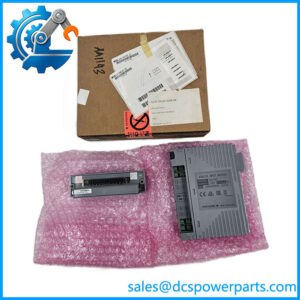
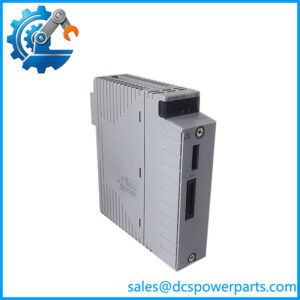
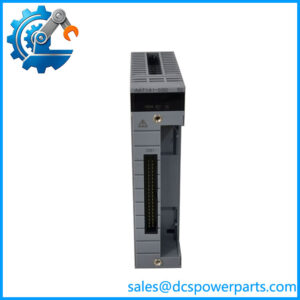
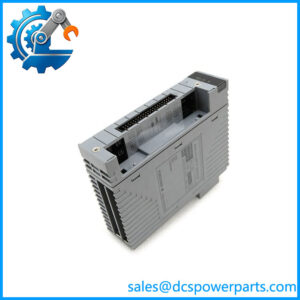
Yokogawa ALE111-S51 Ethernet Communication Module
The Yokogawa ALE111-S51 is an Ethernet communication module designed to connect a Yokogawa control station with external subsystems over a 10BASE-T network. It provides one RJ-45 port and supports point-to-point, half-duplex communication at 10 Mbps. The S51 suffix identifies the standard, non-explosion-protected configuration with the ISA Standard G3 environmental option.
In an installed control system, the module provides a communication path for supported subsystem functions rather than acting as a general-purpose Ethernet switch. Confirm the host node, control-system software, communication function, and module revision before replacement.
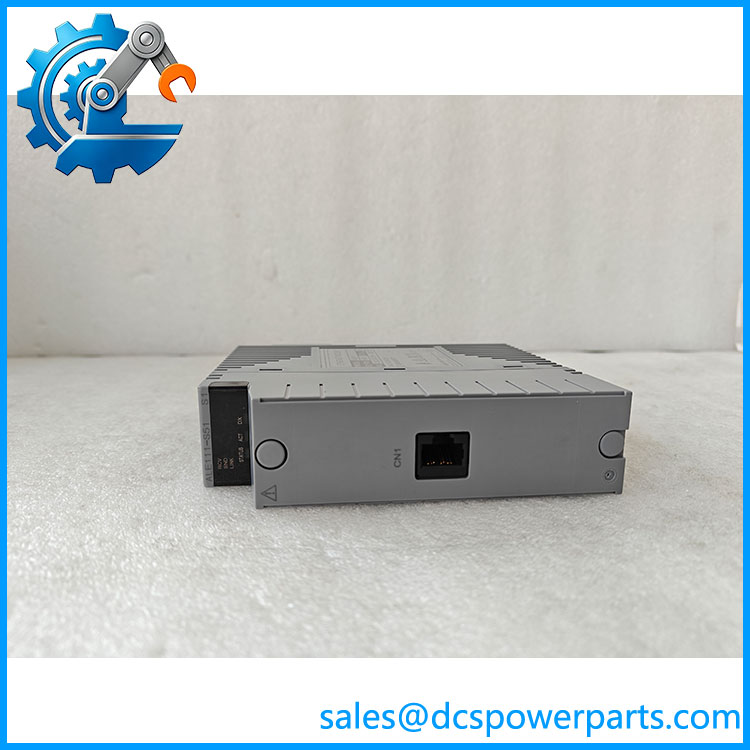
ALE111-S51
Application Scenarios & Field Pitfalls
Typical application scenarios
- PLC subsystem integration: Connect supported PLC equipment to a Yokogawa control station for data exchange.
- Modbus communication: Support the documented Modbus slave communication function in compatible system configurations.
- Legacy subsystem connections: Maintain Ethernet links to existing plant equipment that uses the ALE111 interface.
- Redundant communication arrangements: Support a redundant installation where the host architecture and engineering configuration permit two communication modules. Redundancy must be verified at the system level.
Field pitfalls and verification points
- Do not assume modern Ethernet compatibility: The ALE111 uses 10BASE-T half-duplex at 10 Mbps. Check switch-port settings and network equipment compatibility before commissioning.
- Observe the segment limit: The specified maximum is 100 m per segment. Check cable length and the complete network topology.
- Verify the subsystem function: The supported communication functions depend on the host system, software, and engineering configuration. A physical Ethernet connection alone does not establish protocol compatibility.
- Check the suffix code: S51 specifies ISA Standard G3 and no explosion protection. Do not substitute an explosion-protected variant without reviewing the installation requirements.
- Confirm the mounting location: Verify the field control unit or bus node model and applicable hardware revision before installing a replacement.
Related Products
The following models are related by product family or communication function. They are not automatically interchangeable with -S51.
- -S50 — Basic configuration; does not include the ISA Standard G3 option.
- -S53 — configuration with ISA Standard G3 and a wide-temperature option.
- Ethernet Communication Module — Base module family; confirm the complete suffix and system application.
- ALR111 — Yokogawa RS-232C communication module; serial interface rather than Ethernet.
- ALR121 — Yokogawa RS-422/RS-485 communication module; serial interface rather than Ethernet.
- ALF111 — Yokogawa FOUNDATION Fieldbus communication module; different network technology.
Procurement note: For a replacement -S51, match the complete model code and inspect the module label, connector condition, hardware revision, and installation history. Confirm the target node and required communication function with the system documentation before returning the unit to service.