Description
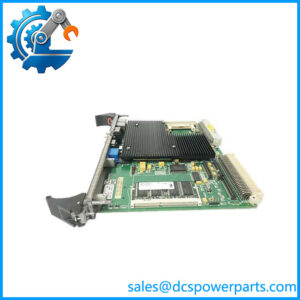
VMIVME-5565-11000 332-015565-110000 P Reflective Memory Node Card
Key Technical Specifications
| Parameter | Specification |
|---|---|
| Manufacturer / Lineage | VMIC / GE Embedded / Abaco Systems |
| Model | VMIVME-5565-11000 |
| Part Number | 332-015565-110000 P |
| Product Family | VME-5565 |
| Product Type | Reflective Memory Node Card |
| Bus Interface | VMEbus |
| Board Format | 6U VME |
| Serial Link Speed | 2.12 Gbaud |
| Sustained Data Rate | Up to 170 MB/s |
| Onboard Memory | 128 MB SDRAM for the referenced configuration |
| Maximum Network Nodes | Up to 256 |
| Network Medium | Fiber optic |
| Multimode Fiber | Up to 300 m |
| Single-Mode Fiber | Up to 10 km |
| Packet Size | 4–64 bytes |
| Node-to-Node Latency | Approximately 450–500 ns |
| Network Topology | Ring; star configuration possible with managed hub |
| Interrupt Transfer | Supported |
| Data Integrity | Hardware error detection/management |
| Primary Application | Deterministic real-time data distribution |
The published VME-5565 specifications describe a 2.12 Gbaud serial connection, packet sizes from 4 to 64 bytes, sustained rates up to 170 MB/s, 450–500 ns node latency, and 64/128 MB or higher memory configurations depending on the specific product variant.
Product Introduction
The VMIVME-5565-11000 332-015565-110000 P is a VME-based Reflective Memory Node Card designed for deterministic real-time data exchange between multiple independent computing or control nodes. Rather than relying on normal network protocols and operating-system data transfers, the reflective-memory architecture maintains a shared data image across connected nodes. A write to local memory is propagated through the high-speed fiber link to the other nodes.
The VMIVME-5565-11000 is particularly suited to systems where predictable transfer timing matters more than conventional Ethernet-style networking. Published specifications indicate support for networks containing up to 256 nodes, with sustained data rates reaching 170 MB/s and low node-to-node latency. This makes the card relevant to distributed control, real-time data acquisition, simulation, test systems, and other VME-based applications requiring rapid exchange of shared data.
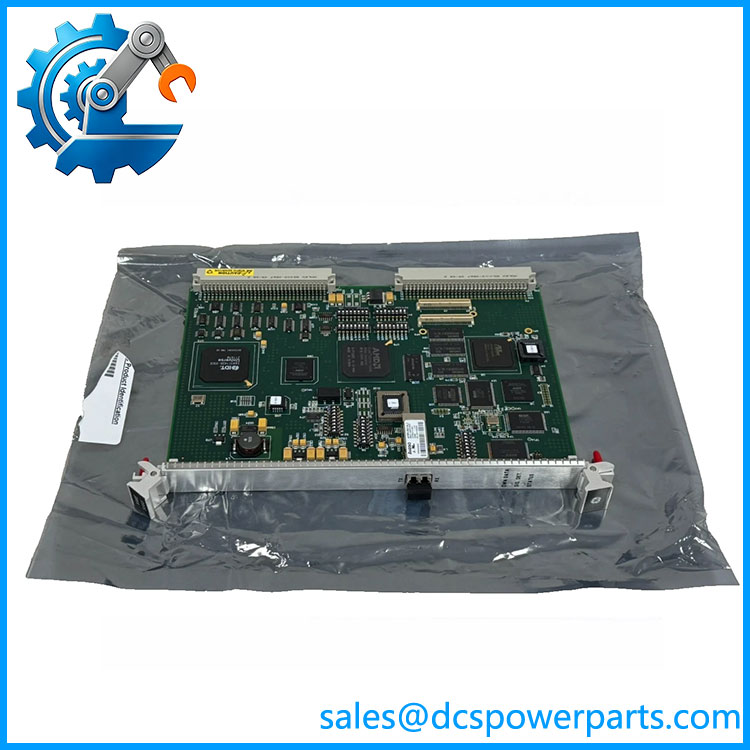
VMIVME-5565-11000
Application Scenarios & Field Pitfalls — Engineer’s Perspective
The VME-5565 is best understood as a real-time data-sharing infrastructure component inside a VME computer or control system. It can connect processors, controllers, acquisition systems, and other VME nodes so that time-sensitive data can be distributed without imposing the same software overhead associated with conventional network communication. The hardware handles memory replication and fiber transmission, leaving the host application with a shared-memory interface.
Typical applications
- Distributed control systems — sharing process or machine data between multiple VME processors.
- Real-time data acquisition — transferring measurement data between acquisition and processing nodes.
- Simulation and test equipment — distributing deterministic data among multiple computing platforms.
- Motion and machine control — coordinating high-speed data between embedded controllers.
- Legacy VME computing platforms — extending the service life of established VME architectures.
Engineering considerations
- Do not classify it as a PLC CPU. Some marketplace listings incorrectly identify VMIVME-5565-11000 as a “PLC Processor Module.” The technical description and VME-5565 architecture clearly point to a reflective-memory node card.
- Match the exact memory/configuration variant. The VME-5565 family exists in different memory and form-factor configurations. Do not assume another 5565 variant is electrically or mechanically identical.
- Fiber type matters. Multimode and single-mode installations have different maximum transmission distances; the installed optical transceiver configuration must match the system.
- Check the network topology. A normal point-to-point or ring configuration is different from a star architecture using the appropriate managed hub.
- Verify VME slot compatibility. This is a VME board, not a PCI/PMC replacement simply because other 5565 family cards use those form factors.
- Check firmware/software support. A replacement card should be tested with the existing host operating system, driver, application software, and reflective-memory network configuration.
- Inspect the complete fiber network. Optical connectors, cable type, attenuation, node addressing, and network termination can all affect commissioning.
- Preserve node configuration. Replacing one node in an established reflective-memory network should include verification of node identity, interrupt behavior, memory mapping, and application data offsets.
Related Products
- VMIVME-5565 — VME form-factor member of the 5565 Reflective Memory family; the closest family reference to VMIVME-5565-11000.
- VMIVME-5565-010000 — Another VME-5565 configuration; memory and hardware configuration should be checked before considering it as a substitute.
- PMC-5565PIORC — PMC-form-factor reflective-memory node card using the same general 5565 architecture, but not a mechanical replacement for a 6U VME card.
- VMIPCI-5565 — PCI-form-factor member of the 5565 family for systems using PCI rather than VME.
- VMIVME-5576 — Another VMIC/GE reflective-memory VME product family; compatibility must be established at the system and software level.
- ACC-5595 — Managed hub used to construct a star-configured reflective-memory network with compatible 5565 hardware.
- VMIVME-7750 — VME single-board computer family that can serve as host computing hardware in legacy VME architectures; it is not a replacement for the reflective-memory card.
Procurement Note
For , the most important checks are VME form factor, exact 5565 configuration, onboard memory, optical interface, firmware/driver compatibility, and the existing reflective-memory network topology. Do not approve a substitute solely because the seller describes it as “”; the suffix and board configuration need to match the installed system.