Description
Product Overview
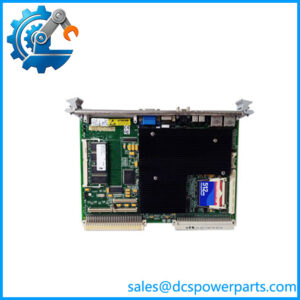
The GE VMIVME-4140-000 is a 32-channel 12-bit Analog Output Board designed for VMEbus-based industrial computer systems, data acquisition platforms, automatic test equipment, and precision control applications. Originally developed under VMIC and later supported within the GE Intelligent Platforms and Abaco Systems product families, the module provides high-density analog signal generation through dedicated digital-to-analog conversion channels.
The GE VMIVME-4140-000 provides 32 independent analog output channels, with each channel using an individual 12-bit DAC. The board can source or sink up to 10 mA per channel and supports software-selectable voltage ranges including unipolar 0 to +2.5 V, 0 to +5 V, 0 to +10 V, and bipolar ±2.5 V, ±5 V, and ±10 V configurations. This design allows engineers to generate control references, simulation signals, actuator commands, and test waveforms directly from a VME-based computing platform.
The VMIVME-4140-000 is not a traditional PLC analog output module. It belongs to the VME embedded control and industrial computing ecosystem, where the host processor communicates with the board through the VMEbus backplane. Typical applications include laboratory automation, aerospace test systems, industrial simulation, process-control development platforms, and legacy machine-control systems.
The board includes onboard diagnostics, automatic calibration, self-test capability, and double-buffered output registers. These functions allow synchronized updates across multiple channels and provide better control over analog output accuracy during long-term operation. When replacing an installed unit, engineers should confirm the exact connector option, channel configuration, VME addressing setup, and application software driver compatibility.
Technical Specifications
| Parameter | Specification |
|---|---|
| Manufacturer | GE Intelligent Platforms / VMIC / Abaco Systems |
| Model | VMIVME-4140-000 |
| Product Type | VME Analog Output Board |
| Function | Analog Output Module |
| Number of Channels | 32 Analog Output Channels |
| Resolution | 12-bit DAC |
| DAC Architecture | One DAC per output channel |
| Output Type | Single-ended analog voltage |
| Output Current | 10 mA maximum per channel |
| Output Impedance | 0.8 Ω |
| Voltage Ranges | 0 to +2.5 V, 0 to +5 V, 0 to +10 V |
| Bipolar Ranges | ±2.5 V, ±5 V, ±10 V |
| Update Mode | Random update / non-scanning |
| Output Buffering | Double-buffered outputs |
| Synchronization | Software or external trigger update |
| Calibration | Automatic calibration |
| Self-Test | Built-in diagnostic testing |
| Interface | VMEbus |
| Bus Compliance | ANSI/IEEE STD 1014-1987 VMEbus |
| Connector Type | Discrete wire output connector |
| Front Panel | Status LED, analog output connector, reference voltage access |
| Form Factor | 6U VME board |
| Operating Temperature | Industrial range (application dependent) |
| Typical Application | Control systems, data acquisition, ATE |
| Status | Legacy / Restricted Production Phase |
Specifications are based on GE/VMIC and Abaco Systems documentation for the VME-4140 series.
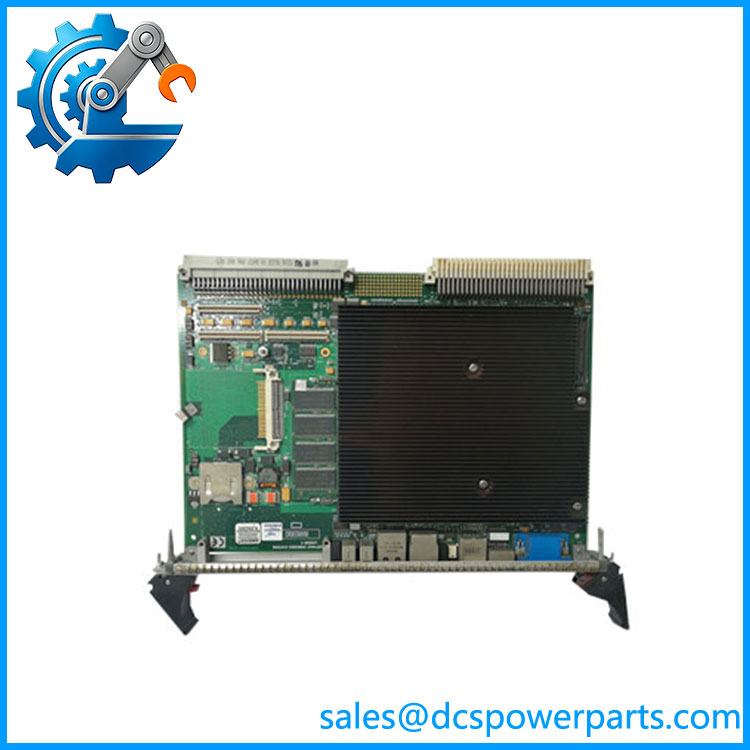
VMIVME-4140-000
Main Features and Advantages
32 Independent Analog Outputs
The primary capability of the GE VMIVME-4140-000 is its high channel density. Thirty-two independent DAC outputs allow one VME slot to generate multiple analog control signals without requiring additional external conversion hardware.
Typical applications include:
- Servo and actuator reference generation
- Analog simulation systems
- Test equipment stimulus generation
- Industrial control prototypes
- Process simulation platforms
Dedicated DAC Per Channel
Each output channel includes its own 12-bit digital-to-analog converter. This architecture avoids channel scanning limitations found in multiplexed designs and allows individual channel updates according to application requirements.
For systems requiring multiple synchronized outputs, the double-buffered architecture allows all channels to be updated together through software commands or external triggers.
Flexible Voltage Configuration
The VMIVME-4140-000 supports both unipolar and bipolar output ranges:
- 0 to +2.5 V
- 0 to +5 V
- 0 to +10 V
- ±2.5 V
- ±5 V
- ±10 V
This flexibility allows the same hardware platform to support different signal-conditioning requirements without changing the board.
Automatic Calibration
The board performs automatic calibration through onboard measurement and correction routines. Calibration coefficients for offset and gain are stored in memory and applied during operation.
This reduces manual adjustment requirements when maintaining multiple analog output channels.
Built-In Diagnostics
The includes self-test functions initiated after system reset or through software commands. Diagnostic functions can identify output-related faults and allow testing before connecting outputs to field equipment.
The ability to disconnect outputs from field wiring during testing is useful for maintenance environments where unintended actuator movement must be avoided.
VMEbus Integration
The module communicates through the VMEbus architecture, making it suitable for legacy industrial computers and embedded systems that still depend on VME hardware.
When maintaining these systems, compatibility depends on more than the physical board. Engineers should verify:
- VME CPU platform
- Address configuration
- Driver software
- Application interface
- Output connector wiring