Description
Key Technical Specifications
| Parameter | Specification |
|---|---|
| Product Model | VMIVME-7740-850 |
| Part Number | 350-007740-850 L |
| Manufacturer | VMIC |
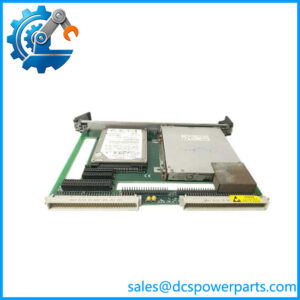
| Product Type | VMEbus Single-Board Computer |
| Processor | Intel Pentium III, PGA370 |
| Processor Speed | 850 MHz |
| Board Format | 6U single-slot VMEbus |
| SDRAM | Up to 512 MB |
| Memory Interface | 144-pin SDRAM SODIMM |
| VMEbus Memory | Dual-ported DRAM |
| VMEbus Modes | A32/A24/D32/D16/D08(EO), MBLT64, BLT32 |
| VMEbus Role | Master, Slave, Interrupt Handler, Interrupter, System Controller |
| Graphics | AGP SVGA controller |
| Graphics Memory | 4 MB SDRAM |
| Maximum Display Resolution | Up to 1600 × 1200 |
| Ethernet | Dual 10/100 Mbps Ethernet |
| Serial Interface | RS-232 serial interfaces |
| USB | USB host interface |
| Storage | Optional IDE CompactFlash, up to 192 MB |
| BIOS | Reprogrammable flash |
| Watchdog | Software-selectable watchdog timer with reset |
| Operating Systems | MS-DOS, Windows, Linux, VxWorks, QNX, Solaris and others |
| Cooling | Forced-air VME chassis cooling |
| Installation | VMEbus backplane |
The 850 MHz processor option is explicitly represented in the original VMIVME-7740 ordering scheme: processor option “8” corresponds to the 850 MHz Pentium III. The same documentation specifies one 144-pin SDRAM SODIMM with capacity up to 512 MB.
One procurement point worth emphasizing: 350-007740-850 L should be matched against the actual board label and configuration, not just the generic VMIVME-7740 family name. The family has multiple processor and memory configurations.
Application Scenarios & Pain Points
VME systems are often kept alive long after the original engineering team has moved on. The problem is not usually whether the VME chassis still works; it is whether the replacement CPU behaves exactly enough like the old one for the application software, drivers, and I/O cards to remain usable.
- Industrial automation: Functions as the computing/control processor in legacy VME-based automation equipment where direct access to VMEbus I/O is required.
- Multi-processor VME systems: The dual-port memory architecture allows the processor to exchange information with other VMEbus modules without treating the board as an isolated PC.
- Embedded control: The PC-compatible architecture supports operating environments such as Windows, Linux, VxWorks, QNX, and Solaris, making it useful across several generations of embedded applications.
- Legacy VME replacement: A practical option when maintaining an existing VME chassis is preferable to redesigning the entire control computer architecture.
Field note: On a 20-year-old VME rack, inspect the backplane connectors before condemning the CPU board. A VMIVME-7740 can be perfectly healthy while an oxidized or mechanically worn backplane contact creates intermittent VMEbus faults.
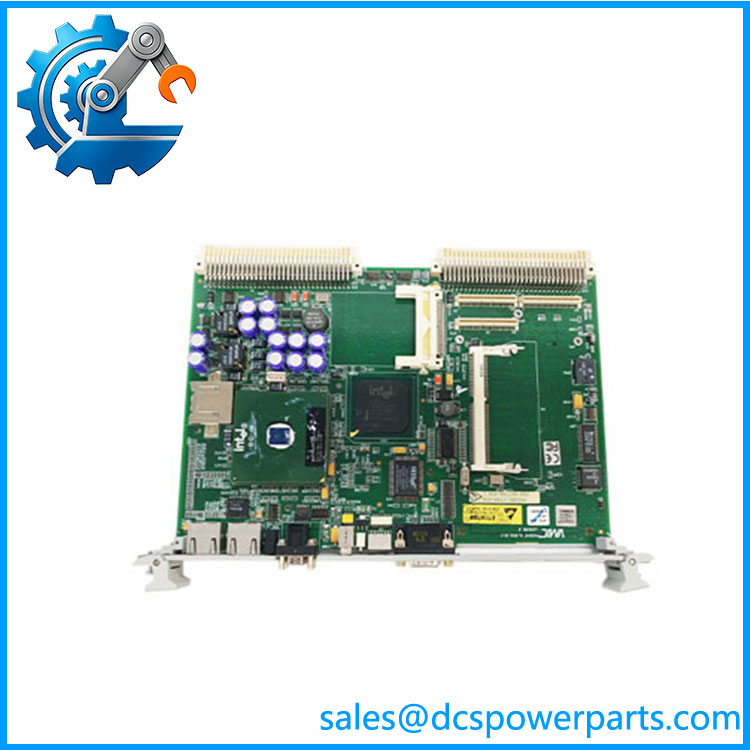
VMIVME-7740-850-350-007740-850-L
Related Products
- VMIVME-7740 — Base VMIVME-7740 family designation. The 850 version is one processor configuration within this family; verify memory and processor options before treating another as equivalent.
- VMIVME-7452 — Companion VMEbus floppy/hard-disk module designed to provide storage functions alongside compatible VMIVME processor boards. It is an accessory, not a CPU replacement.
- VMIVME-7750 — A later-generation VMIC/GE VME processor family. It may offer greater processing capability, but migration requires checking software, VMEbus behavior, I/O mapping, and mechanical compatibility.
- VMIVME-7645 — Another VMIC VME processor/computing platform. Useful as a family-level alternative only after application and software review.
- VMIVME-7696-650 — VME processor board from another VMIC generation. It may fit the same general VME environment but is not a drop-in replacement for the 7740-850.
- VMIVME-7614-132 — Related VMIC VME computing platform. Consider it for system redesign or processor replacement projects rather than direct substitution.
- VMIVME-5530S — VMEbus interface/communication hardware that can complement processor-based VME systems, but it performs a different system function.
- VMIVME-5567-100 — VME reflective-memory networking hardware used for high-speed data exchange between compatible systems. It complements a VME CPU rather than replacing it.
- VMIVME-7750-744001 — Related VMIC VME single-board computer from a later family. Check operating system, I/O, memory, and software dependencies before migration.
- VMIVME-2170A — VMIC VME I/O hardware from another product family. It can operate as a peripheral within a VME architecture but is not a processor substitute.
The Engineer’s Guide: Field Pitfalls to Avoid
Warning 1 — Do not ignore the processor configuration encoded in the model.
The family was available with several Pentium III speed options. The original ordering documentation identifies the 850 MHz option separately.
How to avoid it: Match the complete -850 / 350-007740-850 L identification and verify the processor marking before installation.
Warning 2 — Memory and CompactFlash configuration can affect legacy software.
The board supports up to 512 MB SDRAM and optional CompactFlash configurations. A replacement with a different memory or storage arrangement may behave differently with old operating systems or application software.
How to avoid it: Record the existing SODIMM capacity, CompactFlash capacity, BIOS settings, boot device, and operating system before removing the original CPU board.
Warning 3 — VMEbus problems are not always CPU problems.
A failing backplane contact, incompatible VME configuration, or poorly seated board can produce symptoms that look like processor or software faults.
How to avoid it: Inspect the VME connector fingers and chassis backplane. Check for oxidation, bent contacts, contamination, and uneven insertion depth. Then verify VMEbus termination/configuration before replacing a second board.
Frequently Asked Questions (FAQ)
What is -850?
The is a 6U VMEbus single-board computer based on an 850 MHz Intel Pentium III processor. It combines PC-compatible computing functions with VMEbus master/slave and system-controller capabilities.
Is 350-007740-850 L the same product as -850?
Yes, 350-007740-850 L is used as the full part-number identification for the -850 configuration in equipment records. The safer procurement practice is to specify both designations together rather than ordering only “.”
How much memory does the -850 support?
The documented architecture accepts one 144-pin SDRAM SODIMM, with a maximum capacity of 512 MB. The onboard DRAM is dual-ported to the VMEbus.
What operating systems ?
The documented platform supports a range of PC-compatible and embedded operating systems, including Windows NT/2000, Windows CE, Linux, VxWorks, QNX, Solaris, and LynxOS, with other configurations supporting older PC operating environments.
For a replacement project, the important issue is not simply whether the OS can boot. Old VME drivers, BIOS settings, storage media, and application dependencies can determine whether the complete system actually functions.
Can I replace an older with the 850 version?
Possibly, but confirm the original processor configuration and software environment first. The family contains multiple processor and memory options.
Check:
- Processor speed
- SDRAM capacity
- CompactFlash configuration
- BIOS revision/settings
- Operating system
- VMEbus configuration
- Application software
- PMC or other installed expansion hardware
How should a r be tested?
A useful acceptance test should go beyond powering the board:
- Verify the exact 350-007740-850 L marking.
- Confirm the 850 MHz processor.
- Test SDRAM and BIOS initialization.
- Verify CompactFlash or other storage access.
- Check Ethernet and serial interfaces.
- Test VMEbus master/slave operation.
- Verify interrupt handling.
- Run the applicable operating system.
- Exercise the installed application or VME I/O where practical.
- Record BIOS, memory, storage, and board-revision information.
For an old VME system, application-level testing is much more valuable than a photograph showing a successful POST screen.
What should I confirm before buying a replacement?
Ask for the actual board photograph and verify / 350-007740-850 L, processor marking, memory configuration, CompactFlash/storage configuration, BIOS revision, board revision, and physical connector condition.
If the board is being used in a live control system, also confirm the seller’s testing scope and warranty in writing. A “tested” label without details does not tell you whether the VMEbus interface or application environment was actually exercised.