Description
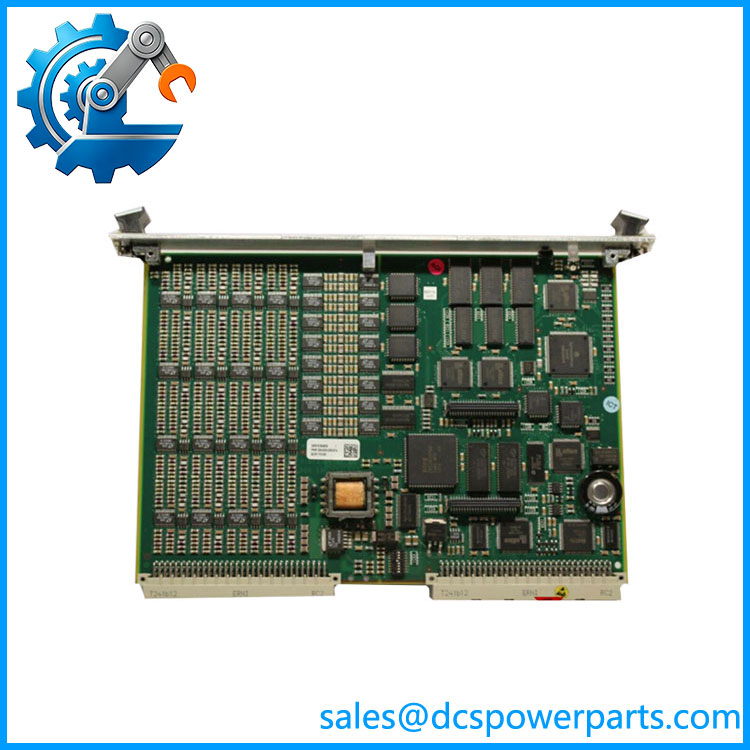
Vibro-Meter CMC16 200-530-022-014 | Condition Monitoring Card | VM600
Key Technical Specifications
| Parameter | Specification |
|---|---|
| Manufacturer | Vibro-Meter / Meggitt |
| Product Family | VM600 |
| Module | CMC16 |
| Part Number | 200-530-022-014 |
| Product Type | Condition Monitoring Card |
| System Role | Intelligent front-end DAU |
| Dynamic Channels | 16 |
| Signal Processing | Dynamic and quasi-static machinery signals |
| Architecture | VM600 condition monitoring system |
| Bus / Rack | Legacy VM600 / VME-based architecture; verify rack revision |
| Sensor Compatibility | Verify exact channel configuration and sensor type |
| Firmware | Configuration dependent |
| Environmental Specifications | Verify against the applicable CMC16 hardware revision |
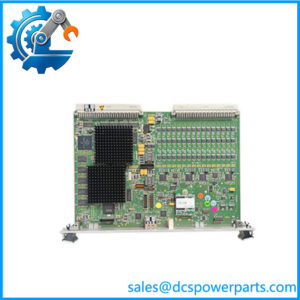
Available CMC16 records consistently identify 200-530-022-014 as a VM600 CMC16 Condition Monitoring Card and describe its role as an intelligent front-end data acquisition unit.
There are conflicting online claims about exact input voltage, ADC resolution, communication protocols, frequency range, and environmental ratings. Because those figures are not confirmed here by an OEM CMC16 datasheet for this exact suffix, they should not be treated as procurement-grade specifications.
Product Introduction
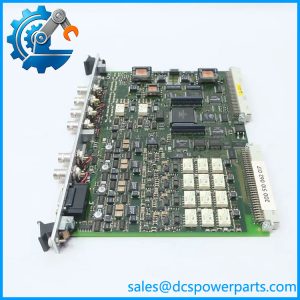
The Vibro-Meter 200-530-022-014 is a VM600 condition-monitoring card used for acquisition and processing of machinery dynamic signals. It sits within the monitoring architecture rather than functioning as a conventional PLC or DCS analog I/O module.
Its practical role is to acquire vibration-related and other machinery-condition signals for analysis and monitoring. The exact sensor configuration should be checked against the installed rack, IOC interface, firmware, and monitoring application before replacement.
CMC16
Application Scenarios & Field Pitfalls — Engineer’s Perspective
Engineering Pain Point
A fault can be mistaken for a sensor or signal-conditioning problem. Because the card is part of a larger monitoring chain, troubleshooting should include the sensor, cable, rack, interface card, configuration, and monitoring software.
Typical Applications
- Turbine and compressor condition monitoring
- Rotating machinery vibration analysis
- Generator and rotating-equipment diagnostics
- machinery protection and condition-monitoring systems
Technical Pitfalls to Avoid
- Do not treat as a generic 16-channel analog input card. It is a specialized condition-monitoring/data-acquisition card.
- Match the complete part number. The suffix 200-530-022-014 should be retained in procurement rather than purchasing an unspecified .
- Verify sensor compatibility. channels can be used within a machinery-monitoring architecture with different dynamic signal requirements; the installed sensor and IOC configuration must be checked.
- Check the rack and firmware. A physically compatible card may still require the correct system configuration.
Related Products
- Vibro-Meter MPC4 — Machinery protection and monitoring card used within systems.
- Vibro-Meter IOC4T — Input/output interface card associated with monitoring systems.
- Vibro-Meter IOC16T — Higher-channel-count I/O interface for configurations.
- Vibro-Meter IOCN — interface/network hardware.
- Vibro-Meter RPS6U — rack/power-supply platform.
- Vibro-Meter — System platform containing the monitoring architecture.
- Vibro-Meter System 1 — Monitoring/diagnostic software environment associated with Vibro-Meter condition-monitoring systems.
Procurement Check
Verify:
- 200-530-022-014
- system generation
- Rack/backplane version
- IOC interface
- Sensor type and signal range
- Existing channel configuration
- Firmware revision
- Monitoring software compatibility
- Original card label and hardware revision
Recommended procurement description:
Vibro-Meter 200-530-022-014 Condition Monitoring Card, Intelligent Dynamic Signal Data Acquisition Unit for Machinery Vibration and Condition Monitoring.
The key point is that is specialized machinery-monitoring hardware, not a generic PLC analog module. For a field replacement, the complete part number and the existing sensor/IOC architecture should be matched rather than relying on generic specifications.