Description
Key Technical Specifications
| Parameter | BI01 |
|---|---|
| Manufacturer | TRICONEX |
| Model | BI01 |
| Product Type | Bus Interface Module |
| Interface Type | Fiber-optic |
| Fiber Ports | 3 groups reported |
| Transmission Distance | Up to 20 km reported |
| Redundancy | Dual-channel |
| Application | Safety-system bus communication |
| System Compatibility | Tricon / Tricon CX / Trident reported |
| Safety Application | SIS / critical control |
| Certification | SIL 3 reported in current listings |
Important specification note: the public information available for BI01 is much thinner than the documentation available for standard Tricon modules such as the 3008, TCM, NCM, and RXM families. The current BI01 records provide the fiber-interface and redundancy information above, but I would not publish connector type, optical wavelength, exact power consumption, operating temperature, or detailed dimensions without the module datasheet or nameplate.
Product Introduction
TRICONEX BI01 Bus Interface Module
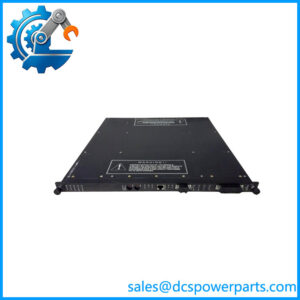
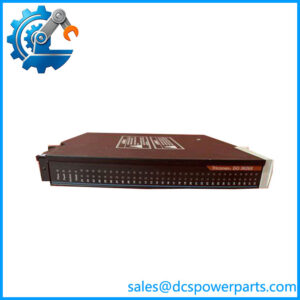
The TRICONEX BI01 is identified as a bus interface module intended for fiber-optic communication within Triconex safety-system architectures. Available records describe three groups of fiber-optic ports, dual-channel redundancy, and transmission distances of up to 20 km.
This is a communication/interface component rather than a conventional Tricon digital or analog I/O module. That distinction matters during procurement because standard Tricon documentation separately identifies main processors, communication modules, I/O modules, and remote extender modules such as the RXM and SRXM families.
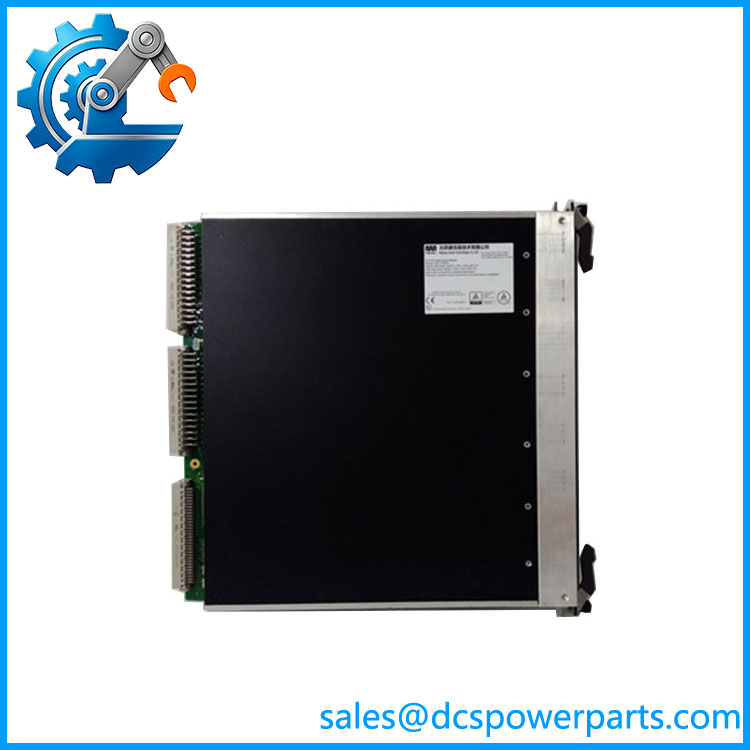
DO3201
Application Scenarios & Field Pitfalls — Engineer’s Perspective
Engineering Pain Point
Fiber interface hardware is highly dependent on the installed system architecture. A visually similar communication module can have a different optical interface, redundancy arrangement, or system-generation requirement.
Typical Applications
- Triconex SIS communication where fiber-based bus connectivity is required.
- Long-distance cabinet or chassis interconnection where copper bus wiring is unsuitable.
- Redundant safety-system communication using separate communication paths.
- Legacy Tricon / Trident maintenance where an installed must be retained rather than redesigning the communication architecture.
Technical Pitfalls to Avoid
- Do not confuse with a standard Tricon communication module.
Tricon documentation identifies TCM, EICM, NCM, ACM, and HIM as specific communication-module families with defined network interfaces. should be verified against the actual system drawing before substitution. - Verify the fiber interface before ordering.
“Fiber optic” alone is not enough for a replacement. Connector style, fiber type, optical specification, cable length, and the mating module all need to match the installed system. - Confirm the controller generation.
Tricon, Trident, Tricon CX, and later Safety Intelligent Enclosure architectures do not necessarily use the same interface hardware. For example, current Tricon CX SIE documentation identifies dedicated 4701X IMSS RS-485 and 4703X IMFF fiber interfaces, showing why a generic fiber-interface substitution is unsafe.
Related Products
- TRICONEX 4200-3 — Primary Remote Extender Module set using multimode fiber optics; part of the older Tricon remote-expansion architecture.
- TRICONEX 4201-3 — Remote RXM set for multimode fiber communication.
- TRICONEX 4210-3 — Primary SRXM set using single-mode fiber optics.
- TRICONEX 4211-3 — Remote SRXM set using single-mode fiber optics.
- TRICONEX TCM — Ethernet and serial communication module for Tricon systems, with applicability beginning at Tricon v10.0 and later.
- TRICONEX NCM 4329/4329G — Network Communication Module family providing Ethernet connectivity.
- TRICONEX EICM 4119/4119A — Serial communication module supporting RS-232/RS-422/RS-485 interfaces.
- TRICONEX 4703X IMFF — Fiber interface used in newer Tricon CX Safety Intelligent Enclosure architectures; not a direct replacement.
Procurement Note
For TRICONEX , I would record the identification as:
TRICONEX + Bus Interface Module + fiber-optic interface + installed system generation
The most important procurement check is the existing cabinet/system drawing and the mating fiber cable/interface. Public information is limited and some online product pages provide only generic specifications, so a claimed direct replacement should not be approved from the designation alone.
If this is for an actual replacement, a photo of the nameplate and front/rear connectors would allow a much tighter identification of the exact hardware variant.