Description
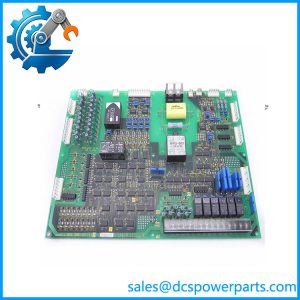
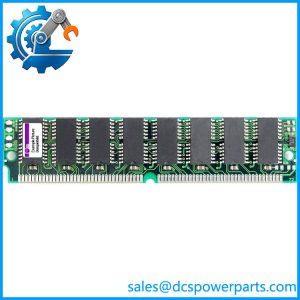
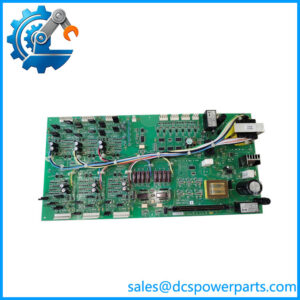
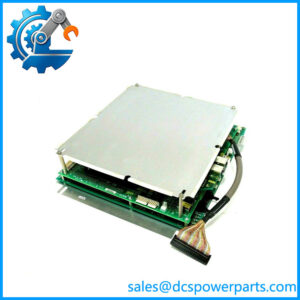
Toshiba HC422B N-300 | VME Interface Board | Legacy Industrial Automation Spare
Key Technical Specifications
| Parameter | Specification |
|---|---|
| Manufacturer | Toshiba |
| Model | HC422B |
| Associated Code | N-300 |
| Product Category | Industrial control/interface board |
| Reported Architecture | 6U VME/VME64x in secondary documentation |
| Application | Legacy industrial automation and control |
| Installation | VME chassis, if confirmed by the installed system |
| Hardware Revision | Verify from board label |
| Electrical I/O | Configuration-dependent / requires OEM documentation |
| Replacement Basis | HC422B + N-300 + revision + host-system configuration |
A secondary catalog specifically associates Toshiba HC422B with N-300, while another listing describes HC422B-N-300 as a 6U VME64x interface board.
Other reseller databases label the same HC422B as a digital input module, but they do not provide sufficient supporting documentation for channel count, voltage, isolation, or input thresholds. That conflict makes it unsafe to publish those parameters as confirmed specifications.
Product Introduction
The Toshiba N-300 is a legacy Toshiba industrial automation hardware designation encountered in VME-based and other Toshiba control-system inventories. Publicly available technical information is limited, and descriptions of the board’s exact role are inconsistent.
For maintenance procurement, the important point is identification. The model marking, N-300 designation, PCB revision, connector arrangement, and host chassis/system should be matched before a replacement is approved. This avoids treating a similarly marked board as a generic PLC input or interface card.
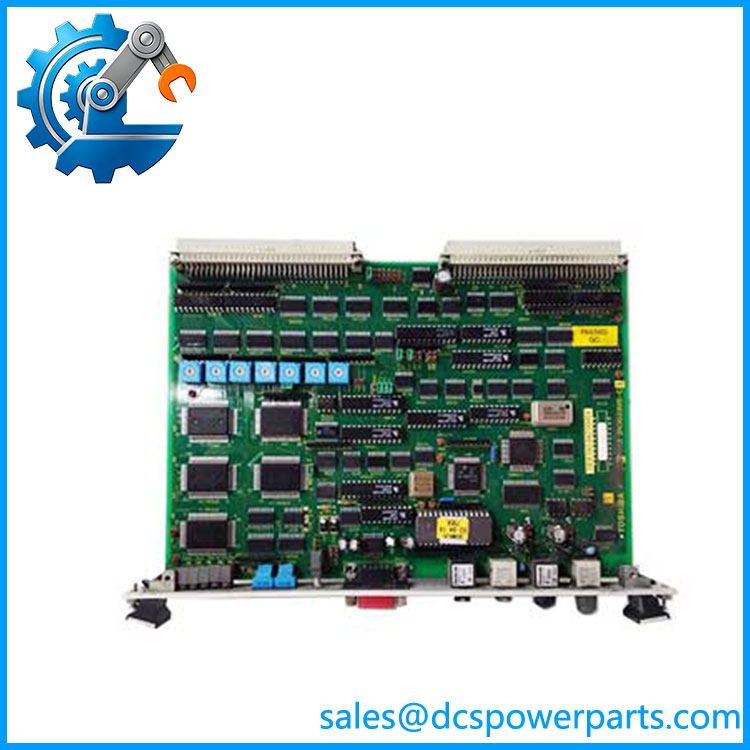
HC422B
Application Scenarios & Field Pitfalls — The Engineer’s Perspective
Engineering Pain Point
The main problem with older Toshiba hardware is often documentation ambiguity. A replacement may carry the correct family marking while having a different revision, interface configuration, or system role. With , this matters because available secondary sources do not agree on whether the board should be classified as a digital I/O module or a VME interface board.
Typical Applications
- Legacy Toshiba industrial control systems
- VME-based automation equipment
- Process-control installations
- Industrial data acquisition
- Factory automation equipment
- Maintenance of discontinued Toshiba control platforms
Technical Pitfalls
- Verify the complete marking.
Record together with N-300 where that designation appears on the board or system documentation. - Do not assume digital-input specifications.
Secondary listings call a digital input module, but reliable public documentation supporting channel count, voltage, or isolation was not found. - Check the VME architecture.
If the installed board is the reported 6U VME64x version, confirm the chassis slot, backplane, neighboring boards, and system-controller arrangement before replacement. - Compare connector locations.
On legacy VME hardware, connector placement and rear-I/O arrangements can be critical. A board with a similar front-panel appearance may not have the same rear connections. - Record the PCB revision.
Revision information should be included in the spare-parts record. Do not assume all units are electrically interchangeable. - Do not trust generic electrical specifications.
One secondary listing claims 200–240 VAC input, 24 VDC output, 2 A current, and an IP20 enclosure, but these values are not adequately supported and should not be used for engineering approval. - Verify the host Toshiba system first.
The safest identification method is to compare the failed board against the system BOM, cabinet drawings, slot position, connector labels, and software configuration.
Related Products
- Toshiba -N-300 — Alternate presentation of the same /N-300 designation.
- Toshiba N-300 — Associated code appearing with in legacy parts records.
- GE VMIVME-7807RC — Different manufacturer and architecture, but a comparable legacy VME-based industrial computer.
- GE VMIVME-7750 — Earlier VME single-board computer family; not a direct substitute.
- Toshiba industrial control hardware — Host-system-specific components should be matched by the original Toshiba system documentation.
Procurement Note
For , I recommend listing the part as:
Toshiba — N-300
Do not specify it simply as a “digital input module” unless the physical board or OEM documentation confirms that function. The current evidence is too inconsistent for that claim.
For a used or refurbished spare, request clear photographs of the front label, PCB identification, revision markings, connectors, and any Toshiba assembly number. Those details can resolve the remaining identification uncertainty before the part is committed to a plant application.