Description
Key Technical Specifications
| Parameter | Value |
|---|---|
| Manufacturer | TMEIC / Toshiba Mitsubishi-Electric Industrial Systems |
| Model | ARND-3119 A6 |
| Assembly Number | 2N3A3119-B |
| Product Type | Drive / Inverter Control PCB |
| Hardware Revision | A6 |
| Primary Function | Drive control and internal signal processing |
| System Application | TMEIC industrial drive systems |
| Controller Architecture | Application-specific embedded drive control |
| Communication | Verify from the host drive documentation |
| I/O | Host-system dependent |
| Power Supply | Supplied by host drive; verify system drawings |
| Firmware | Host-system dependent |
| Mounting | Internal drive/control cabinet assembly |
| Cooling | Verify host equipment configuration |
| Dimensions | Verify against original board/mechanical drawing |
| Weight | Public sources conflict; do not use third-party figures for engineering design |
| Replacement Requirement | Match ARND-3119 A6 / 2N3A3119-B and host-drive configuration |
A significant limitation is worth stating plainly: there does not appear to be a reliable publicly available OEM datasheet giving a complete standalone specification for ARND-3119 A6 / 2N3A3119-B. Several online descriptions assign unsupported details such as Modbus, specific I/O counts, processor architecture, and exact dimensions. Those should not be treated as verified specifications.
Product Introduction
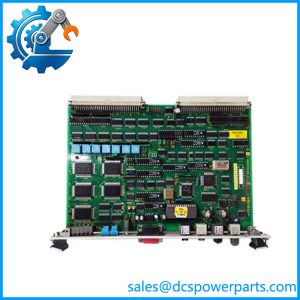
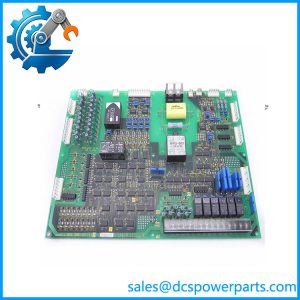
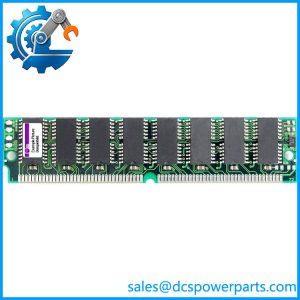
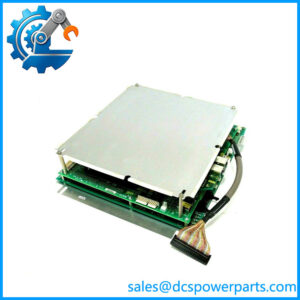
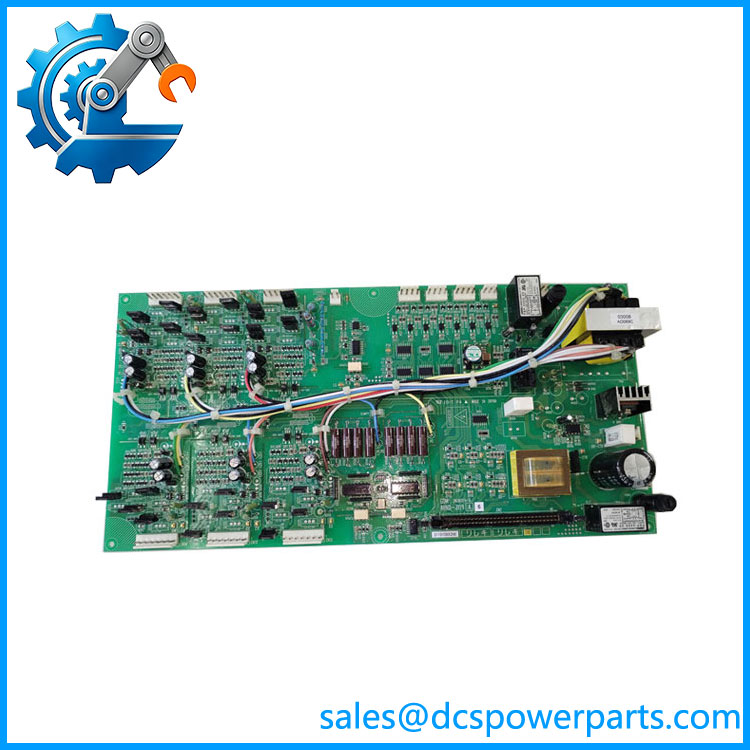
TMEIC ARND-3119 A6 2N3A3119-B
The TMEIC ARND-3119 A6 2N3A3119-B is a legacy industrial drive control-board assembly used within TMEIC/Toshiba drive equipment. Available technical records identify it as control hardware associated with inverter and motor-control systems rather than a standalone PLC I/O module.
Its replacement value is mainly in maintaining an existing drive rather than upgrading the control architecture. Because this is an internal board, its electrical interfaces and firmware depend heavily on the host drive. The exact drive model and board revision should therefore be confirmed before installation.
ARND-3119
Application Scenarios & Field Pitfalls
Engineering Pain Point
A drive suddenly faults, the motor stops, and the first assumption is usually a power-stage problem. On older TMEIC equipment, that can be misleading. A defective control PCB, corrupted control hardware, failed interface circuitry, or an internal communication problem can prevent the drive from operating even when the main power components are healthy.
Typical Applications
- Steel Mills — Large motor drives for rolling mills, conveyors, pumps, and auxiliary equipment.
- Mining Equipment — High-power drive systems for conveyors, crushers, mills, and material-handling equipment.
- Industrial Process Plants — Motor-speed and torque control for pumps, fans, compressors, and process machinery.
- Heavy Manufacturing — Legacy TMEIC/Toshiba inverter systems requiring control-board replacement.
Technical Pitfalls to Avoid
- Do not treat ARND-3119 as a generic PLC card.
The available evidence points to an internal TMEIC drive/inverter control-board application. The board’s actual interfaces depend on the host equipment. - Verify the host drive model first.
This is the single most important replacement check. Obtain the drive’s complete model number, control-board assembly list, and wiring documentation before ordering. - Match both identifiers.
Verify and 2N3A3119-B on the physical PCB. Do not substitute another ARND-series board simply because the numbering looks similar. - Do not rely on claimed Modbus specifications.
Some commercial records list “Modbus” as the communication interface, but this is not enough evidence to establish the board’s actual external communication function. It may be an internal drive-control interface rather than a standalone Modbus device. - Check firmware compatibility.
A physically identical control PCB can still be unsuitable if its firmware or configuration does not correspond to the host drive revision. - Inspect the power electronics before installing the replacement.
If the original control board failed after a major drive fault, check the DC bus, gate-drive circuits, cooling system, control power supply, and connected feedback circuitry. Otherwise, the replacement board may fail again. - Document connectors before removal.
Photograph every cable and connector. Internal drive boards can have several similar-looking plugs, and incorrect reconnection can damage low-voltage electronics. - Check grounding and shielding.
High-power drives generate substantial electrical noise. Poor grounding, damaged shields, or incorrect cable routing can create control-board communication and feedback problems. - Do not power the replacement board outside its intended drive.
This is not a generic bench-powered automation module. Its power rails and interfaces should be established from the host-drive documentation. - Verify calibration and feedback paths.
If the board participates in current, voltage, speed, or position feedback, replacement may require drive-specific commissioning and verification rather than simply restoring power.
Related Products
- TMEIC ARND-3116 A 2N3A3116-A — Closely numbered TMEIC control-board assembly found alongside in legacy equipment inventories. It is a related board, not a confirmed drop-in replacement.
- — Base control-board designation. The A6 / 2N3A3119-B designation should be matched when replacing the specific revision installed in the drive.
- TMEIC TMdrive Series Control Hardware — The broader TMEIC drive platform in which ARND-series control boards are encountered. Exact compatibility depends on the TMdrive model and hardware generation.
- TMEIC Drive Gate-Control Hardware — Complementary power-stage control hardware responsible for interfacing drive-control commands with the inverter switching devices. It should be checked when a control-board failure follows a power-stage fault.
- TMEIC Drive Power Supply Assemblies — Internal low-voltage supplies supporting controller and interface boards. A failed control board should not be diagnosed without checking these supplies.
- TMEIC Drive Feedback Hardware — Current, voltage, speed, and position feedback circuits provide critical signals to the control system. Incorrect feedback can mimic a controller failure.
- TMEIC Inverter Power Modules — High-power semiconductor assemblies form the drive power stage. They are functionally separate from but should be inspected after catastrophic drive faults.
- TMEIC Drive Main Control Assemblies — Higher-level controller assemblies may work together with ARND-series boards depending on the specific drive generation. Exact board-to-board compatibility must be confirmed from the equipment drawing.
- Toshiba Industrial Drive Control Boards — Earlier Toshiba drive platforms may use similar-looking PCB assemblies, but Toshiba and TMEIC part-number similarities do not establish interchangeability.
- TMEIC Drive Communication Interfaces — Network/interface boards may provide plant-level communication separately from the internal control circuitry represented by . Do not assume itself is the external communication card.