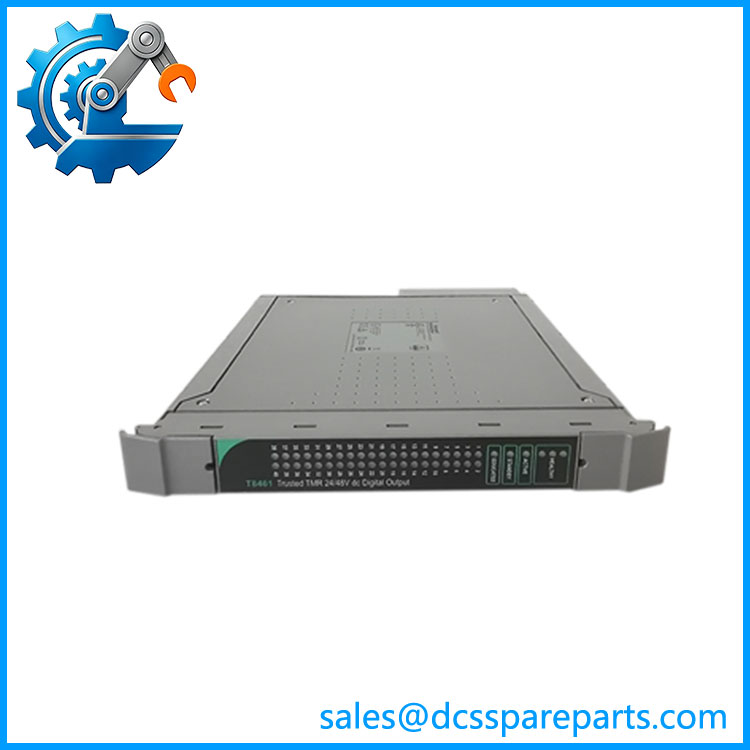
Description
Rockwell Automation T8471C
Product Overview
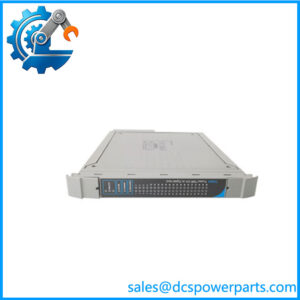
The Rockwell Automation T8471C is a Trusted TMR 120 VDC digital output module used in safety instrumented and emergency shutdown applications. It belongs to the ICS Triplex Trusted architecture, now supported within Rockwell Automation’s safety-system portfolio. The module provides 32 digital output channels, with each channel implemented using triplicated output circuitry and internal 2-out-of-3 voting. Rockwell’s Trusted documentation specifically identifies T8471 and T8471C as triplicated 120 VDC digital-output modules and classifies their de-energize-to-trip configuration as certified up to SIL 3.
Unlike a conventional PLC output card, the T8471C incorporates fault-tolerant output architecture and extensive diagnostics within the module. The output circuitry continuously checks voltage and current conditions, including detection of stuck-on and stuck-off failures. Automatic line monitoring can identify open or short-circuit conditions in field wiring and connected loads. These functions are important when the output is driving safety-related equipment such as shutdown solenoids, relays, or other final elements.
The module also supports Sequence of Events (SOE) reporting. When an output changes state, the module records timing information that can subsequently be retrieved by the Trusted processor for inclusion in the system SOE log. The published documentation specifies 1 ms SOE resolution.
For procurement, the C suffix matters. T8471C is a specific Series C hardware variant rather than simply an alternate description of the older T8471. Rockwell’s documentation identifies T8471C alongside T8471 as a supported 120 VDC TMR output module, and Rockwell also publishes dedicated firmware for /T8471CX. Hardware revision, installed firmware, and system compatibility should therefore be checked before replacing an installed module.
Product Introduction
When a safety system has to energize 120 VDC field loads while maintaining tolerance to individual output-channel faults, a standard PLC DO card is not an equivalent substitute. The combines 32-channel 120 VDC output capability with TMR architecture and internal 2oo3 voting.
For a legacy Trusted system upgrade or replacement, check the exact hardware revision, module firmware, field termination assembly, load characteristics, and de-energize-to-trip philosophy. The output module is only one part of the safety loop.
Key Technical Specifications
| Parameter | Specification |
|---|---|
| Product Model | |
| Manufacturer | Rockwell Automation / ICS Triplex |
| Product Family | Trusted TMR |
| Product Type | Safety Digital Output Module |
| Output Type | Digital |
| Output Voltage | 120 VDC |
| Output Channels | 32 |
| Architecture | Triple Modular Redundancy (TMR) |
| Voting Architecture | Internal 2oo3 |
| Diagnostic Coverage | Triplicated voltage/current monitoring and output diagnostics |
| Field-Line Monitoring | Open/short-circuit detection |
| SOE Resolution | 1 ms |
| Safety Configuration | De-energize-to-trip |
| Safety Certification | Up to SIL 3 for documented de-energize-to-trip configuration |
| System Power | Trusted system backplane |
| Installation | Trusted chassis / I/O slot |
| Module Family Variant | Series C |
| Firmware | Module-specific; verify installed revision |
| Application | SIS, ESD, critical shutdown and safety control |
Rockwell documentation confirms the 32-channel TMR 120 VDC function, internal 2oo3 architecture, and SIL 3 capability for the documented de-energize-to-trip configuration.
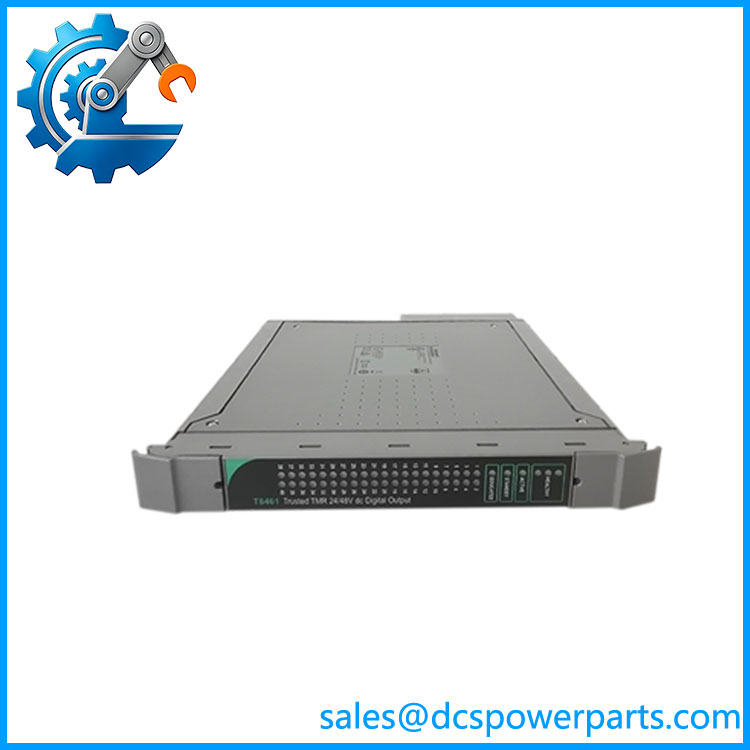
T8461C
Major Features and Advantages
32-Channel 120 VDC Digital Output
The provides 32 field-output channels from a single Trusted I/O module. The outputs are intended for 120 VDC field devices and are organized into four groups of eight channels in the documented T8471 architecture.
This channel density is useful in shutdown systems where numerous solenoids, relays, or other final elements must be controlled without sacrificing the diagnostic architecture expected from the Trusted platform.
Triple Modular Redundancy
TMR is the defining hardware characteristic. Each output channel contains triplicated circuitry, with the module using internal 2oo3 voting to determine the commanded output state. Rockwell’s Trusted safety documentation explicitly lists under the triplicated 120 VDC output modules with internal 2oo3 implementation.
The practical benefit is fault tolerance at the output-module level. A single internal channel fault does not automatically become a loss of the voted output function.
Continuous Output Diagnostics
The module does more than issue an ON/OFF command. Its diagnostics measure field voltage and current and test for output conditions such as stuck-on and stuck-off failures. Automatic line monitoring also detects open and short circuits in field wiring and load devices.
For shutdown systems, this diagnostic capability is significant because an apparently healthy logic command does not necessarily prove that the final-element circuit is electrically intact.
Sequence of Events Recording
The module provides on-board SOE functionality. An output transition is detected from field-loop conditions, and the module records the associated timing information for retrieval by the Trusted processor. Published documentation specifies 1 ms resolution.
That timing information can be valuable when investigating trips, interlock sequences, and competing shutdown commands.
SIL 3 Safety Application
Rockwell’s Trusted system documentation identifies as suitable for de-energize-to-trip configurations certified up to SIL 3. The certification applies to the specified safety architecture and operating conditions; it does not mean that installing a automatically makes an entire SIS SIL 3.
The complete safety loop—including sensors, logic solver, output module, final elements, proof-test regime, and application design—must satisfy the applicable safety requirements.
Series C Hardware
The C suffix identifies a particular hardware generation. Rockwell’s current product data lists T8471CX separately as a non-RoHS version and provides dedicated firmware documentation for and T8471CX.
This matters during procurement of legacy Trusted equipment. Confirm the actual suffix rather than treating T8471, , and T8471CX as interchangeable catalog descriptions.
Related Products
- T8471 — Earlier Trusted TMR 120 VDC digital output module with the same fundamental 32-channel safety-output architecture.
- T8471CX — non-RoHS variant listed separately by Rockwell Automation.
- T8472C — Trusted TMR 120 VAC digital output module; similar safety architecture but different field-output voltage.
- T8451C — Trusted TMR 24 VDC digital output module with 40 channels.
- T8461C — Trusted TMR 24/48 VDC digital output module with 40 channels.
- T8480C — Trusted TMR analog output module for 4–20 mA applications; not a digital shutdown-output substitute.
- T8800 — Trusted 40-channel 24 VDC digital-input field termination assembly associated with the Trusted I/O architecture.
- T8100/T8100C — Trusted controller chassis components used with Trusted I/O modules.
- T8151B/T8151C — Trusted interface/controller-related hardware used within the Trusted system architecture.
FAQ
Is a PLC output card?
Not in the conventional PLC sense. It is a Trusted TMR safety digital-output module intended for safety-system applications. Its internal diagnostics, TMR architecture, and voting arrangement distinguish it from an ordinary 120 VDC PLC output card.
How many outputs does have?
The / architecture provides 32 digital output channels. Rockwell’s Trusted documentation identifies the module as a 32-channel 120 VDC digital output module.
Does use 2oo3 voting?
Yes. Rockwell identifies as a triplicated 120 VDC output module with internal 2oo3 voting implemented within the module.
Can I hot-swap the ?
The Trusted architecture supports replacement arrangements using the appropriate SmartSlot/field termination architecture, but do not interpret that as permission to remove any module from a live safety system without checking the specific system configuration and approved maintenance procedure. The field interface documentation specifically describes SmartSlot support for one-to-many replacement of output modules.
Before replacement, confirm the application’s bypass, shutdown, and maintenance requirements. A safety I/O replacement is not an ordinary PLC card swap.
Does support firmware vU44?
Rockwell currently publishes firmware vU44 for and T8471CX. That does not establish that every installed already contains vU44, so the actual module firmware should be checked using the appropriate Trusted diagnostic/collection tools.
Is SIL 3 by itself?
No. The module is documented as capable of being used in a de-energize-to-trip configuration certified up to SIL 3, but the SIL claim applies to the complete certified safety architecture and its specified conditions. The module alone does not determine the SIL of an entire SIS.
What should I verify when buying a New Surplus ?
For a safety-system spare, verify more than the faceplate label:
- Complete catalog number: .
- Series/hardware revision.
- Installed module firmware.
- 120 VDC field-output requirement.
- Trusted chassis compatibility.
- Associated FTA/SmartSlot arrangement.
- Field-load current and line-monitoring requirements.
- De-energize-to-trip or energize-to-trip application philosophy.
- Physical condition of the backplane connector and terminal interface.
- Functional test evidence, if available.
“New Surplus” should not be treated as proof that a safety module has never been installed or energized. For a critical SIS spare, serial number, hardware revision, firmware revision, and test history are worth documenting before the part enters controlled inventory.