Description
Key Technical Specifications
| Parameter | Specification |
|---|---|
| Product Model | 9470/22-16-11 |
| Manufacturer / Brand | R. STAHL |
| Order Number | 168682 |
| Product Type | IS1 NAMUR Digital Input Module |
| Input Channels | 16 |
| Input Standard | EN 60947-5-6 (NAMUR) |
| Supported Field Devices | NAMUR proximity switches, volt-free contacts |
| Intrinsic Safety | Ex i / intrinsically safe inputs |
| Maximum Output Voltage (Uo) | 11.6 V |
| Maximum Output Current (Io) | 22 mA per channel |
| Maximum Output Power (Po) | 51 mW per channel |
| Switching Threshold | 1.65 mA |
| Minimum Current for ON | 2.1 mA |
| Maximum Current for OFF | 1.2 mA |
| Frequency / Counter Function | Channels 14 and 15; up to 20 kHz |
| Line Diagnostics | Open-circuit and short-circuit monitoring |
| Ambient Temperature | -20 to +65°C |
| Module Protection | IP30 |
| Connection Protection | IP20 |
| Maximum Power Consumption | 5 W |
| Installation | R. STAHL IS1 BusRail system |
Specifications are drawn from available product documentation and technical listings. Confirm the applicable certificate and hardware revision before using the module in a certified hazardous-area installation.
Product Introduction
The R. STAHL 9470/22-16-11 is a 16-channel NAMUR digital input module in the IS1 Remote I/O product family. It provides the interface between hazardous-area field instruments and a higher-level PLC or DCS control system. Typical connected devices include NAMUR proximity switches and volt-free contacts used for position detection, equipment status feedback, limit monitoring, and discrete process signals.
Its intrinsically safe input design is intended for applications where field circuits must meet hazardous-area protection requirements. The module also supports open-circuit and short-circuit monitoring, which helps maintenance personnel identify wiring problems that might otherwise be mistaken for a genuine process-state change. The documented switching thresholds provide the electrical basis for interpreting NAMUR input states.
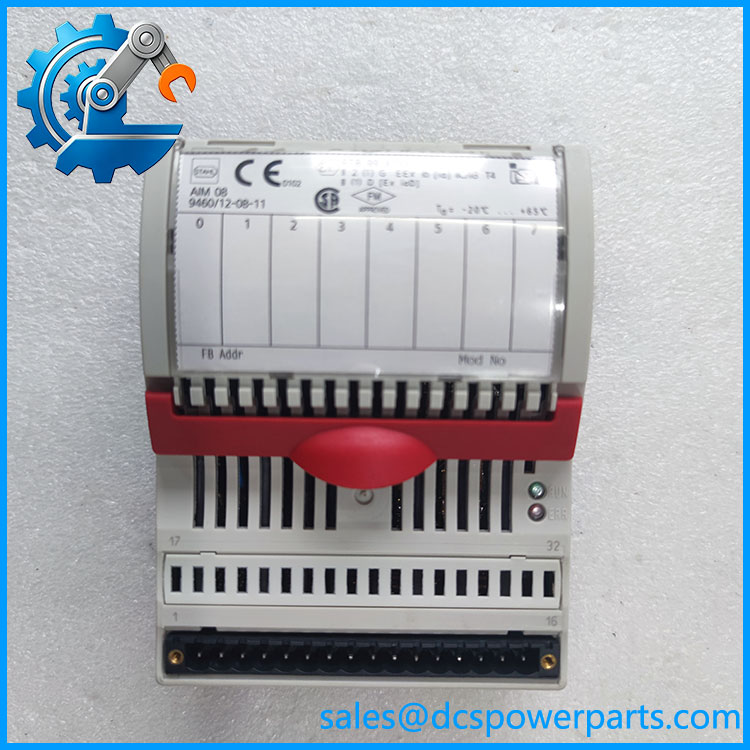
947022-16-11
A useful additional capability is available on channels 14 and 15. These channels can be used for frequency measurement or pulse counting up to 20 kHz, subject to the configured operating mode and signal conditions. This allows selected pulse-based signals to be handled within the same module instead of requiring a separate input card for every application.
The 9470/22-16-11 is an IS1 system component, not a general-purpose 24 VDC digital input card. Replacement planning must account for the BusRail, field terminal assembly, channel configuration, and hazardous-area installation requirements.
Major Features and Advantages
16-channel NAMUR signal acquisition
Sixteen inputs support multiple discrete field signals in one module position. This is useful for equipment status, proximity detection, valve-position feedback, and other contact-based monitoring points.
Intrinsically safe input circuits
The module is designed for Ex i field applications. Its intrinsic-safety parameters must be considered together with the field-device characteristics, cable capacitance, cable inductance, and applicable installation certificate. Do not treat the module’s intrinsic-safety designation as blanket approval for every field-device combination.
Open-circuit and short-circuit diagnostics
Line monitoring helps identify abnormal field wiring conditions. This is particularly important for remote instruments where a broken conductor or shorted cable could otherwise create misleading input information.
Frequency and pulse-counting capability
Channels 14 and 15 provide additional functionality for frequency-related signals, with a documented maximum of 20 kHz. Confirm the channel assignment and application configuration before using these channels for pulse measurement.
IS1 system integration
The module is designed for the R. STAHL IS1 architecture. Its system compatibility depends on the installed BusRail, associated CPU and power modules, terminal components, and configuration.
Application Scenarios and Field Pitfalls
Typical applications include:
- NAMUR proximity-switch feedback in hazardous-area process plants.
- Valve and actuator position monitoring.
- Discrete equipment status acquisition.
- Machine and process interlock signal collection.
- Frequency or pulse monitoring through channels 14 and 15.
Important replacement checks
- Confirm that the existing module is specifically 9470/22-16-11, not a similarly numbered 9471 or 9470 variant.
- Check the field terminal type and terminal order number. The 9470 series requires an appropriate additional terminal assembly.
- Record the existing channel mapping and diagnostic configuration before removal.
- Verify the field-device wiring and line-monitoring resistor arrangement against the applicable R. STAHL documentation.
- If channels 14 or 15 are used for pulse measurement, verify the configured operating mode and test the signal frequency after replacement.
- Confirm hazardous-area certification and site procedures before considering module replacement during operation.
The historical IS1 documentation lists this model for Zone 1 or Zone 2 / Division 2 installation, subject to its certification and system conditions.
Related Products and Variants
| Model | Description |
|---|---|
| 9470/22-16-11 | 16-channel NAMUR intrinsically safe digital input module |
| 9471/10-16-11 | 24 V digital input module |
| 9475 series | Digital output modules |
| 9477/10-08-12 | Relay digital output module |
These are related IS1 digital I/O products, not interchangeable replacements.
Procurement and Quality Control
The 9470/22-16-11 is identified in secondary parts records as discontinued by the manufacturer. Buyers should therefore establish the actual supply condition rather than assume that a listed unit is factory-new.
Before accepting a replacement, request:
- A clear photograph of the module nameplate and complete part number.
- Order number confirmation: 168682.
- Hardware revision and serial number.
- Photographs of the housing, connector, and contact surfaces.
- Written condition classification: new original, unused surplus, refurbished, or used.
- Functional test evidence covering input channels and diagnostics, where available.
- Confirmation that the correct terminal assembly is included or available separately.
For critical process applications, a physical inspection and documented channel-level test are preferable to relying solely on a seller’s visual-condition statement. The module’s hazardous-area certification and system compatibility should be checked independently before installation.