Description
Key Technical Specifications
| Parameter | Specification |
|---|---|
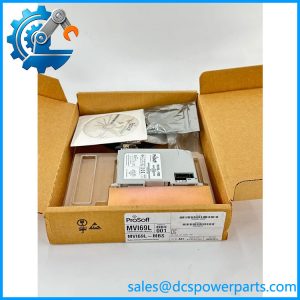
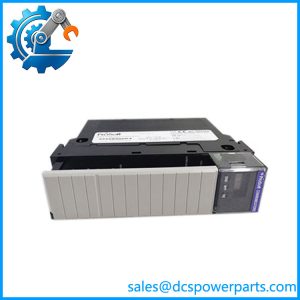
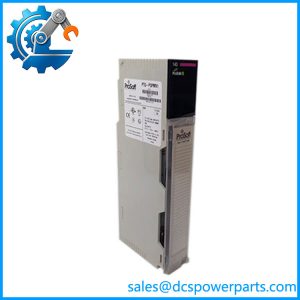
| Product Model | PLX32-EIP-SIE |
| Manufacturer | ProSoft Technology |
| Product Family | PLX32 |
| Product Type | EtherNet/IP to Siemens Industrial Ethernet Gateway |
| Ethernet Ports | 2 independently addressable ports |
| Ethernet Speed | 10/100 Mbps |
| Rockwell Protocol | EtherNet/IP |
| Siemens Protocol | Siemens Industrial Ethernet |
| Supported Siemens PLCs | S7-200, S7-300, S7-400, S7-1200, S7-1500 |
| Siemens Data Types | DB, Inputs, Outputs, Flags, Counters, Timers |
| Siemens Clients | Up to 20 |
| Class 1 I/O Connections | 2 |
| I/O Connection Size | 248 bytes input / 248 bytes output |
| Minimum / Maximum RPI | 5 ms minimum per connection |
| EtherNet/IP Message Types | PCCC and CIP |
| Command List | Up to 100 commands per client |
| Register Capacity | Up to 10,000 16-bit registers |
| Power Supply | 24 VDC nominal |
| Allowed Supply Range | 10–36 VDC |
| Current Load | 300 mA at 24 VDC nominal; 610 mA maximum over 10–36 VDC |
| Operating Temperature | -25°C to +70°C |
| Storage Temperature | -40°C to +80°C |
| Relative Humidity | 5–95%, non-condensing |
| Dimensions | 13.67 × 5.05 × 11.13 cm |
| Configuration Storage | SD card slot; SD card optional |
| Ethernet Architecture | Separate protocol/subnet ports |
The manufacturer’s current product information confirms the 24 VDC supply range, environmental ratings, dual Ethernet architecture, Siemens PLC support, and register/data-exchange functions.
One detail matters during network design: the two Ethernet ports are independently addressable and must be configured on different Ethernet subnets. The manufacturer’s technical note also states that configuration and discovery are performed through P1, not P2.
Application Scenarios & Pain Points
The hard part of a mixed-vendor control network is rarely the physical Ethernet cable. It is the protocol boundary, data addressing, scan timing, and keeping an old PLC architecture intact while adding a new system.
- Rockwell-to-Siemens integration: The gateway allows EtherNet/IP-based Rockwell PACs to exchange data with Siemens S7 controllers without requiring either controller to natively support the other’s protocol.
- Brownfield plant upgrades: Useful when an existing Siemens S7 installation must exchange data with a newer Rockwell PAC while the existing Siemens program and network addressing remain unchanged.
- Machine-to-plant integration: A Siemens machine controller can exchange production, status, alarm, or command data with a Rockwell plant-level controller through the gateway.
- Dual-subnet architectures: P1 and P2 can be placed on separate networks, which helps keep the two automation environments administratively distinct.
Field note: A gateway does not magically make two PLC programs compatible. You still have to define what constitutes a valid data map—DB offsets on the Siemens side, tags/registers on the EtherNet/IP side, byte order, update rate, and write ownership. Most commissioning headaches happen there.
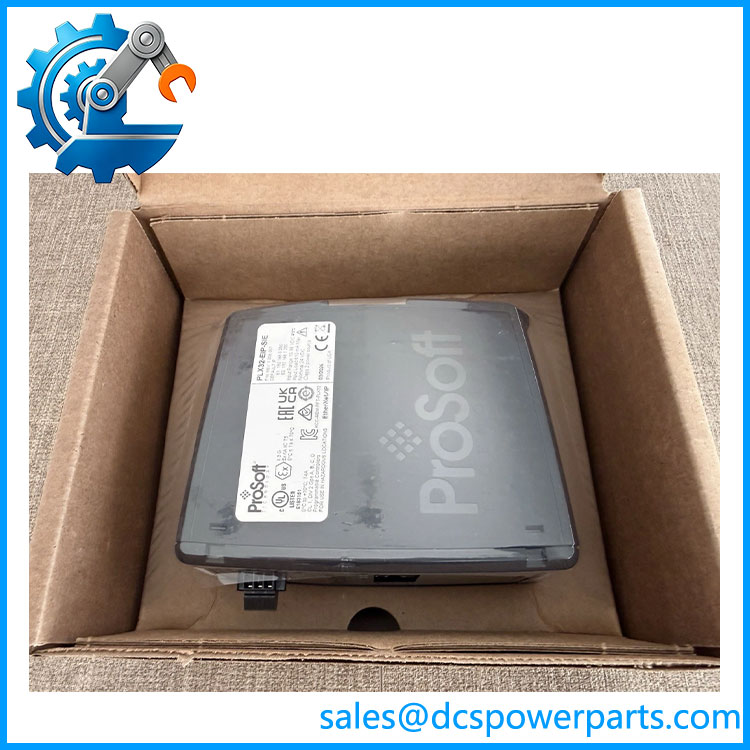
PLX32-EIP-SIE
Related Products
- PLX32-EIP-MBTCP — EtherNet/IP-to-Modbus TCP/IP gateway in the same PLX32 family. It is appropriate when the second automation system uses Modbus TCP rather than Siemens Industrial Ethernet.
- PLX32-MBTCP-SIE — Modbus TCP/IP-to-Siemens Industrial Ethernet gateway. It shares the dual-Ethernet architecture but replaces the EtherNet/IP side with Modbus TCP/IP.
- PLX32-EIP-PND — EtherNet/IP-to-PROFINET gateway. This is the more appropriate choice when the Siemens-side architecture requires PROFINET rather than Siemens Industrial Ethernet.
- -EIP-104 — EtherNet/IP-to-IEC 60870-5-104 gateway. Intended for applications involving utility/telecontrol communication rather than direct Siemens S7 Industrial Ethernet exchange.
- PLX31-EIP-MBTCP — Another member of the PLX gateway family for EtherNet/IP and Modbus TCP communication. Selection depends on the required protocol combination and connection architecture.
- gateway family — Provides dual-port protocol-conversion hardware. The exact suffix matters; -EIP-SIE should not be substituted merely because another model has the same enclosure.
- Siemens S7-300 / S7-400 — Legacy Siemens controller families explicitly supported for data read/write by the -EIP-SIE. These are application endpoints rather than replacement gateway hardware.
- Siemens S7-1200 / S7-1500 — Newer S7 controller families listed by the manufacturer as supported Siemens data-exchange targets.
The Engineer’s Guide: Field Pitfalls to Avoid
⚠️ Do not put both Ethernet ports on the same subnet.
This is a documented limitation of the dual-port architecture. Each port is independently addressable, and the manufacturer states that the two ports must be configured on different Ethernet subnets.
How to avoid it: Draw the network topology first. Assign the EtherNet/IP-side address and Siemens-side address on separate subnets before connecting the gateway.
⚠️ Do not configure the gateway through P2.
The manufacturer’s technical note specifies that configuration is performed through P1, while P2 cannot be used for configuration or temporary IP assignment through ProSoft Discovery Service.
How to avoid it: Label P1 and P2 during commissioning. It sounds trivial; on a crowded control cabinet, it saves time.
⚠️ Do not confuse protocol conversion with data mapping.
Getting the Ethernet links green does not prove that the PLCs are exchanging meaningful data.
How to avoid it: Verify Siemens DB/register addressing, EtherNet/IP tag mapping, read/write direction, data sizes, byte ordering, RPI, and command status one layer at a time.
Frequently Asked Questions (FAQ)
What is the ProSoft -EIP-SIE used for?
It is an industrial communication gateway designed to exchange data between EtherNet/IP systems and Siemens Industrial Ethernet systems. The manufacturer specifically describes bidirectional communication between Rockwell PACs and Siemens S7 PACs.
Which Siemens PLCs are supported by -EIP-SIE?
The manufacturer lists S7-200, S7-300, S7-400, S7-1200, and S7-1500 for Siemens PLC data exchange. Supported Siemens data areas include DBs, inputs, outputs, flags, counters, and timers.
Can -EIP-SIE connect two PLC networks with different IP ranges?
Yes. That is one of its useful architectural features. The two Ethernet ports are independently addressable and can operate on separate subnets, allowing the existing IP addressing of each automation network to remain unchanged.
require an EDS file?
The gateway includes an embedded EDS Add-On Profile for EtherNet/IP integration. This simplifies controller-side integration, but it does not eliminate the need to configure the actual data mapping and Siemens-side communication parameters.
What power supply does require?
The specified supply is 24 VDC nominal, with an allowed range of 10–36 VDC. Current consumption is specified at 300 mA nominal at 24 VDC and up to 610 mA over the wider supply range.
Can I for PROFINET?
Not as a PROFINET gateway simply because the PLC is a Siemens S7. uses Siemens Industrial Ethernet, while ProSoft offers a separate -EIP-PND product for EtherNet/IP-to-PROFINET applications. Select the gateway based on the actual Siemens-side protocol, not merely the PLC manufacturer.