Description
Product Overview
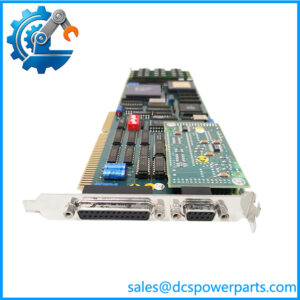
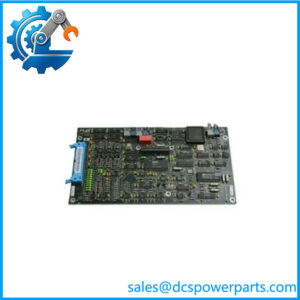
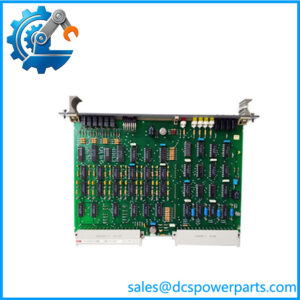
PM511V08 is the central processor of an Advant Controller 450 — the large controller in ABB’s Advant OCS family, built for mixed binary, regulatory and supervisory control in power plants, chemical works, steel mills and marine installations. The board carries the microprocessor, the entire working memory, the program card interface and the S100 I/O bus connection; it executes the application, drives the backplane bus, and handles the handshake with the communication submodules sitting beside it in the subrack. It is a plug-in Euro-card module for a dedicated CPU slot, normally one of two.
The controller it belongs to sits at the top of a long ladder. MasterPiece 200/1 was the earlier platform; Advant Controller 450 was its designated evolution path, adding processing capacity, online configuration, and up to five S100 I/O racks with roughly 5,700 channels. Within that architecture, PM511V08 is the 8 MB member of a two-member family: the AC 450 manual describes one processor module, PM511V, available with either 8 or 16 Mbyte of error-correcting dynamic RAM, both carrying the same name, with the RAM size stated on a label on the side of the module. Nothing else on the front panel changes. That single sentence resolves most of the confusion that surrounds this part number in the secondary market.
What makes it interesting to an installed base is that the two versions are not interchangeable in practice, even though they look it. All 8 MB of PM511V08 — not a fraction of it — holds the system program, the controller configuration and the application program that runs at scan time. On a controller whose application has grown over twenty years of plant modifications, the memory ceiling is the binding constraint, and the board reports it in a way no purchase order can: as a halt code on the front character display.
Technical Specifications
表格
| Parameter | Value |
|---|---|
| Model | PM511V08 |
| Article number | 3BSE011180R1 |
| Manufacturer | ABB (Advant OCS / Master, Sweden) |
| Product type | Processor module (CPU board) for Advant Controller 450 |
| Processor | Motorola 68040, 25 MHz |
| Memory | 8 MB dynamic RAM with ECC (system program, configuration and application share it) |
| Program storage | PCMCIA program card slot on module front; optional flash card for application backup |
| Redundancy | Up to 2 CPU boards in the AC 450 CPU subrack, primary/standby with changeover |
| I/O bus | S100 I/O bus connection on module front; up to 5 S100 I/O racks, approx. 5,700 channels |
| Communication | Via SC510/SC520 submodule carriers: up to 12–14 submodules (CI531 V.24, CS513 MasterBus 300/300E, CI522A Advant Fieldbus 100, CI541V1 Profibus DP, CI532/CI534 Modbus) |
| Diagnostics | Front LED indicators, character display for halt codes, four-position start mode selector, restart push-button |
| Backup | RAM held by subrack battery (SB511 battery unit / SB522 internal battery) or station battery; board carries no cell of its own |
| Supply | 24 V DC unstabilised and 5 V stabilised from the subrack backplane |
| Weight | Approx. 0.76 kg |
| Dimensions | Euro-card plug-in module, AC 450 CPU subrack slot |
| Life cycle | Classic — superseded platform, spare-part supply only |
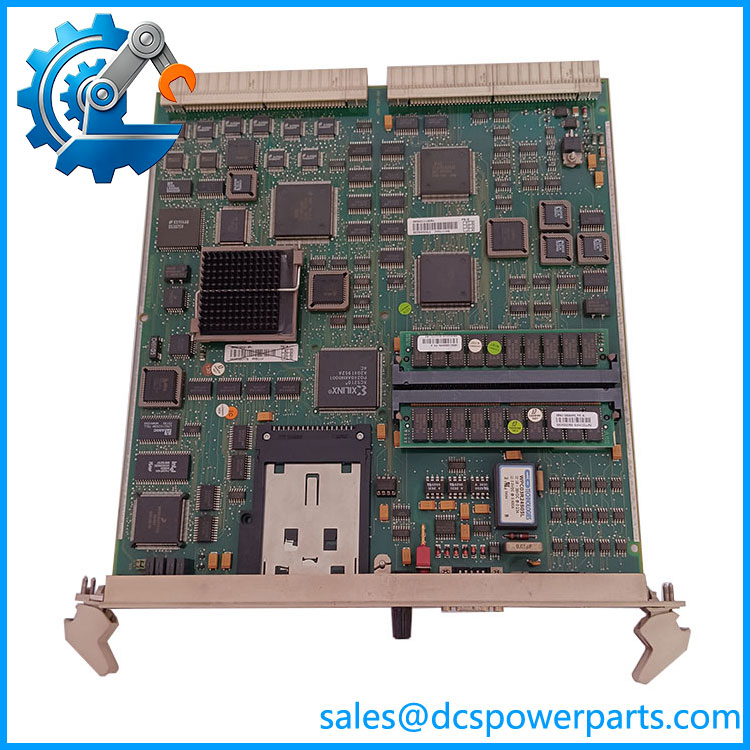
PM511V08-3BSE011180R1
Key Features and Advantages
08 is a memory size, not a generation
Secondary-market listings describe V08 as a “later revision with updated firmware and improved stability”. The ABB manual does not support that: PM511V and PM511V16 are the same board with 8 or 16 Mbyte fitted, and the distinguishing mark is a label on the module side. PM511V08 buys capacity, not capability. A buyer who orders it expecting a newer CPU generation will get exactly 8 MB and the same 68040.
The RAM budget includes everything
On later controllers, RAM is something the CPU has plus flash for the application. Here the 8 MB is the whole working set: system program, configuration, application, buffers. PM511V08 therefore fails predictably rather than gracefully — halt code 03 on the character display means RAM fully occupied, and it appears after a plant modification, not during commissioning. Sizing the application before ordering the board is cheaper than discovering the ceiling afterwards.
Two boards, one application
The AC 450 subrack takes two CPU boards for primary/standby operation, and the redundancy covers CPU and memory rather than only the I/O path. in a redundant pair must be matched in RAM size and program card contents; mixing an 8 MB board with a 16 MB partner produces the halt codes in the 2C/32/36/38/40–48 range that the manual reserves for redundant-processor faults. Matching spares is a specification exercise, not a stockroom convenience.
Firmware lives on a card you can hold
System software is not flashed over a cable but supplied on a program card that plugs into the module front; updating firmware means ordering the card, stopping the controller, exchanging it under ESD protection and restarting through CLEAR then AUTO. For this is an advantage in a legacy plant: the software revision is a physical object that can be inventoried, labelled, and kept as a matched spare alongside the board, instead of a file whose version nobody can prove.
Diagnostics without a laptop
The front character display reports high-level system diagnostics and halt codes directly, and a four-position rotary switch selects start and operating mode, including a CLEAR position that wipes RAM and drops the controller into configuration mode. For in a cabinet with no engineering station nearby, that is often the fastest path to knowing whether the board, the card, or the memory is the problem.
A legacy platform with a real migration story
Advant Controller 450 integrates upward into System 800xA through communication modules for S100 I/O, Modbus, Advant Fieldbus 100 and MasterBus 300. keeps a 1990s controller alive, but it also keeps the plant’s I/O, cabling and application definitions alive — which is precisely the asset a migration project wants to carry forward rather than re-engineer.
Applications
Power generation uses in boiler and turbine auxiliary control, feedwater and combustion loops, and in plants where the AC 450 has been the unit controller since commissioning and the S100 I/O racks are still the plant’s process interface.
Chemical and petrochemical sites apply it on reactor temperature and pressure control, sequence and interlock logic, and batch supervision, where the controller also carries the operator interface link to MasterView or an 800xA gateway.
Steel and metallurgical plants use the board in rolling-mill and furnace control, where the fast scan and the 1 ms event time-stamping matter for sequence-of-event analysis after a mill trip.
Marine and offshore installations specify the coated variant of the same board where salt atmosphere and classification rules apply, running propulsion auxiliaries and engine-room monitoring.
Pulp, paper, cement and water plants keep in service as the installed controller for drive coordination, kiln and filtration sequences, using Modbus or Profibus submodules to reach third-party equipment that has been replaced around the ABB core.
Related Products
PM511V16 / 3BSE011181R1 — the same processor module with 16 MB of ECC RAM; the direct capacity upgrade where the application outgrows 8 MB. PM511MV08 / 3BSE019191R1 — marine-coated version of this board for salt-laden and classification-society installations. PM150V08 / 3BSE009598R1 — the 8 MB processor module of the smaller Advant Controller 410; a different board, not a substitute for this one. SC510 / SC520 — submodule carriers that host the communication submodules in the AC 450 subrack. CI531 — V.24/RS-232 communication submodule, up to four per controller. CS513 — MasterBus 300/300E interface submodule for controller-to-controller and plant network traffic. CI522A — Advant Fieldbus 100 interface, the route to distributed S800 I/O stations. CI541V1 — Profibus DP submodule for third-party drives and remote I/O. CI532V02 / CI534V02 — Modbus interface submodules, two channels each. SB511 / SB522 — subrack battery unit and internal battery that hold the RAM this processor depends on. I/O boards — the process interface family the module drives over its front-panel bus connection.
Installation and Maintenance
Before installation: confirm three things before pulling a out of its slot — the RAM size on the module label, the program card revision fitted to it, and the state of the subrack battery. The first decides whether the application will fit at all; the second decides whether the controller comes back with the software revision the plant was validated against; the third decides whether the application survives the power-down at all, because this board carries no cell of its own and relies entirely on the subrack battery or station battery. Handle the board as an ESD-sensitive device, and note the start mode selector position before removal so the controller is not restarted into CLEAR by accident.
Maintenance practice: read the character display before touching anything, since a halt code identifies the fault domain faster than any swap. Check the battery and its charger on a scheduled basis — the classic failure is a CPU exchange where the RAM was already lost because the battery had quietly aged. When a redundant pair is fitted, transfer control deliberately during a maintenance window so the changeover is proven rather than assumed, and keep the two boards matched in RAM and program card. Any board taken out of service should be stored with its program card identified, because a without a matching card is a processor with no software revision history.
Warranty and Quality
is supplied as a tested processor module with its article number confirmed as 3BSE011180R1, so the buyer receives the 8 MB board and not the 16 MB version or the similarly shaped AC 410 module. Each unit is checked for boot behaviour and front-panel diagnostics, program card readability, bus connection, redundant-pair recognition and RAM integrity before dispatch, and carries a 12-month repair, replacement or refund commitment. Because the platform is in its classic life cycle, support is deliberately practical: confirming RAM size against the application, matching program card revisions, advising on subrack battery and backup strategy, interpreting halt codes, and sourcing the SC510/SC520 carriers and communication submodules that a working AC 450 needs around the CPU.