Description
Product Introduction
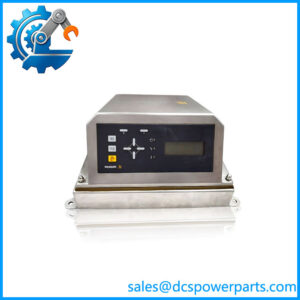
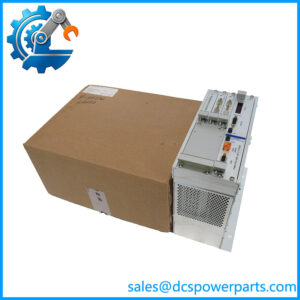
In a substation SCADA or industrial control cabinet, the computer often has to handle several jobs at once: protocol processing, data logging, HMI or supervisory software, serial equipment, Ethernet-connected IEDs, and local storage. The Moxa DA-682C is a 2U rackmount industrial computer designed around that type of workload, using 7th-generation Intel processors and a combination of six Gigabit Ethernet ports, two configurable serial ports, digital I/O, dual HDMI, and expandable storage.
The platform is particularly oriented toward power automation and railway wayside applications. Moxa specifies IEC 61850-3, IEEE 1613, and IEC 60255 compliance for power applications, together with EN 50121-4 compliance for railway wayside environments. Two independent expansion slots also allow additional communication interfaces to be installed when the base I/O configuration is not enough.
Key Technical Specifications
| Parameter | Specification |
|---|---|
| Product Model | DA-682C Series |
| Product Type | Industrial / Embedded Computer |
| CPU Options | Intel Celeron 3965U; Core i3-7100U; Core i5-7300U; Core i7-7600U |
| CPU Generation | 7th Generation Intel |
| Memory | 2 × DDR4 SODIMM |
| Maximum Memory | 32 GB |
| Memory Speed | Up to 2133 MHz |
| Graphics | Intel HD Graphics 630 |
| HDMI | 2 × HDMI |
| USB | 3 × USB 2.0 + 3 × USB 3.0 on current product specification |
| Ethernet | 6 × 10/100/1000 Mbps RJ45 |
| Serial Ports | 2 × RS-232/422/485, software-selectable |
| Digital Inputs | 6 |
| Digital Outputs | 2 |
| 2.5-inch Storage | 2 × hot-swappable HDD/SSD bays |
| mSATA | 1 slot |
| RAID | Intel RST RAID 0/1 |
| Expansion Slots | 2 independent modular expansion slots |
| Input Power | 100–240 VAC or 100–240 VDC |
| Maximum Input Current | 0.9 A |
| Installation | 19-inch rack mount |
| Dimensions | 440 × 282 × 88 mm, without mounting ears |
| Weight | Approx. 9.9 kg |
| Operating Temperature | -40 to +70°C |
| Storage Temperature | -40 to +85°C |
| Relative Humidity | 5–95%, non-condensing |
| Power Substation Standards | IEC 61850-3, IEEE 1613 |
| Protection Relay Standard | IEC 60255 |
| Railway Standard | EN 50121-4 |
| Warranty | 3 years, according to Moxa’s current product page |
Specifications can vary by exact DA-682C model suffix. Moxa currently lists four CPU configurations and individual model pages should be checked before ordering a complete system.
Main Features and Engineering Advantages
2U Rackmount Architecture
The DA-682C uses a standard 2U, 19-inch rackmount form factor, making it suitable for control-room cabinets, substation equipment racks, railway wayside cabinets, and industrial network infrastructure. Its metal enclosure and front/rear control arrangement are intended for fixed industrial installation rather than desktop use.

MOXA DA-682C
Multiple Gigabit Ethernet Interfaces
Six auto-sensing 10/100/1000 Mbps Ethernet ports are integrated into the computer. This is useful when a single industrial computer needs to maintain separate network connections for SCADA, engineering access, IED communications, redundant networks, or other segregated systems. Actual network architecture still depends on the application design; six physical ports do not automatically constitute a redundant network configuration.
Flexible Serial Communications
Two onboard serial interfaces support RS-232, RS-422, and RS-485, with software-selectable operating modes. This gives the computer a practical interface to legacy meters, controllers, protection devices, RTUs, and other serial equipment without immediately requiring an expansion card.
Expandable Communication Architecture
The DA-682C has two independent expansion slots. Moxa offers expansion modules including an eight-port RS-232/422/485 communication module and a four-port 10/100/1000 Mbps LAN module. This modular approach is useful when the initial serial or Ethernet port count is insufficient.
Hot-Swappable Storage
Two 2.5-inch HDD/SSD slots are provided, with support for Intel RST RAID 0/1. For industrial data acquisition or SCADA applications, RAID 1 can provide disk-level redundancy, but it should not be confused with a complete system-level backup strategy.
Power-Automation Compliance
The DA-682C is specified for IEC 61850-3 and IEEE 1613 environments and also carries IEC 60255 compliance relevant to protection equipment applications. These standards are significant when selecting computing hardware for electrical substations because environmental and EMC requirements can be substantially different from those of ordinary commercial PCs.
Wide Temperature Range
The specified operating range is -40 to +70°C, which is appropriate for many non-air-conditioned industrial and wayside installations. Temperature compliance does not eliminate the need to check the actual cabinet thermal design, particularly when installing multiple computers, communication modules, or high-power storage devices in a confined enclosure.
Application Scenarios & Field Pain Points
Substation SCADA
The DA-682C can serve as an industrial computing platform for SCADA, data acquisition, gateway, or supervisory applications in substations. Its combination of multiple Ethernet ports, serial interfaces, storage, and power-automation compliance fits installations where several communication paths must terminate at one computer.
IEC 61850-Based Automation
IEC 61850 environments frequently involve multiple IEDs and Ethernet communication paths. Six integrated Gigabit ports give system designers considerable physical connectivity without immediately adding a separate network interface card.
Railway Wayside Systems
Moxa specifies EN 50121-4 compliance for railway wayside applications. Potential applications include station SCADA, traction-power monitoring, signaling-related supervisory systems, and wayside data-processing equipment. The actual application must still satisfy the project’s railway certification and environmental requirements.
Industrial Data and Protocol Gateway
The serial interfaces and expandable communication modules make the platform suitable for applications that have to bridge older serial devices with modern Ethernet-based infrastructure. The practical advantage is greatest when the installed device population contains a mixture of RS-232, RS-422, RS-485, and Ethernet equipment.
Engineer’s Guide: Field Pitfalls to Avoid
1. Do not order only “DA-682C” when the project requires a complete replacement.
DA-682C identifies the platform family. The exact suffix determines the CPU configuration and other hardware details. For example, Moxa lists DA-682C-KL5-HH-T with an Intel Core i5-7300U processor.
2. Verify the CPU before replacing an existing unit.
The family includes Celeron, Core i3, Core i5, and Core i7 configurations. Application software may run differently depending on CPU generation, installed OS, memory, and storage configuration.
3. Check the installed expansion modules.
A replacement DA-682C may have the correct base computer but still fail the application’s communication requirements if the original expansion modules are missing or incompatible. Moxa offers dedicated DA-682C expansion modules, including eight-port serial and four-port Gigabit Ethernet versions.
4. Do not assume six Ethernet ports provide network redundancy by themselves.
Physical port count and actual network topology are separate issues. Confirm VLAN, switch, routing, SCADA, and IEC 61850 network requirements from the project design.
5. Check the storage arrangement before swapping the computer.
The platform supports two 2.5-inch storage devices and Intel RST RAID 0/1. If the existing system uses RAID 1, replacing only one disk or changing the controller/storage configuration without documenting the array can create an avoidable recovery problem.
6. Treat the operating system as part of the replacement specification.
Moxa lists Windows 10 IoT Enterprise LTSC 2019 and Linux Debian 9 for the platform, while current support resources also list newer Linux SDK support. Confirm the exact installed OS and application compatibility before migration.
7. Verify the power configuration.
The platform accepts 100–240 VAC or 100–240 VDC, and Moxa specifies a redundant power architecture. Check the actual model’s power-input arrangement and cabinet wiring rather than assuming every visible DA-682C has the same PSU configuration.
8. Do not confuse the DA-682C with a PLC or RTU I/O controller.
It is an industrial x86 computer. The digital I/O and serial interfaces are computer peripherals; they do not turn the unit into a conventional PLC with deterministic scan-based control.
Related Products
- Moxa DA-682C-UART expansion modules — Add eight RS-232/422/485 serial ports through the DA-682C expansion architecture.
- Moxa DN-SP08-I-DB — Eight-port isolated serial expansion module with DB9 connectors.
- Moxa DN-SP08-I-TB — Eight-port isolated serial expansion module with terminal-block connections.
- Moxa DA-682C-KL5-HH-T — Specific DA-682C configuration using the Intel Core i5-7300U processor.
- Moxa DA Series industrial computers — Related rackmount and embedded computing platforms; exact hardware compatibility must be checked by model.
Frequently Asked Questions
What is the Moxa DA-682C?
The Moxa DA-682C is a 2U rackmount industrial computer designed particularly for power-substation automation and railway wayside applications. It combines Intel 7th-generation processor options with Ethernet, serial, digital I/O, storage, and modular expansion.
What processor does the DA-682C use?
Depending on the exact model, the DA-682C family supports Intel Celeron 3965U, Core i3-7100U, Core i5-7300U, and Core i7-7600U processors. The exact suffix should therefore be included in a purchase order.
How many Ethernet ports does DA-682C have?
The standard DA-682C configuration provides six 10/100/1000 Mbps Ethernet ports. Additional LAN interfaces can be added through compatible expansion modules.
Does DA-682C support RS-485?
Yes. Its two onboard serial ports are software-selectable for RS-232, RS-422, or RS-485 operation. Moxa also provides eight-port serial expansion modules for the platform.
Is DA-682C suitable for substation automation?
The platform is specifically specified for power-substation automation and carries IEC 61850-3, IEEE 1613, and IEC 60255 compliance. Whether a particular configuration is suitable for a project still depends on the required software, communications architecture, storage, power arrangement, and environmental conditions.
What is the operating temperature of DA-682C?
Moxa specifies an operating range of -40 to +70°C and a storage range of -40 to +85°C. Cabinet temperature, airflow, and installed expansion hardware should still be evaluated for the actual installation.
Does DA-682C support RAID?
Yes. The computer provides two 2.5-inch HDD/SSD slots and supports Intel RST RAID 0/1. The actual RAID configuration should be confirmed before replacing an installed computer.
Procurement Note
For purchasing or replacement work, identify the unit using the complete DA-682C model suffix, not simply “DA-682C.” Confirm:
- Exact CPU configuration
- Installed DDR4 memory
- HDD/SSD quantity and capacity
- RAID configuration
- Expansion modules
- Power-supply arrangement
- Operating system and version
- Existing application software
- Physical module and chassis condition
Moxa continues to publish current DA-682C manuals, datasheets, software, and technical notes, including a hardware manual updated in December 2025 and a datasheet updated in July 2025.
For used or surplus equipment, verify the actual inventory condition, installed storage, RAM, expansion cards, power modules, and BIOS/OS state. The DA-682C family designation alone does not establish the configuration or condition of a particular unit.