Description
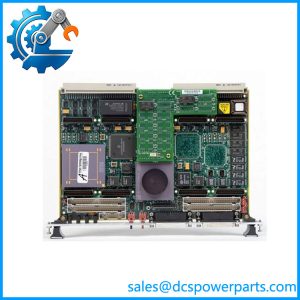
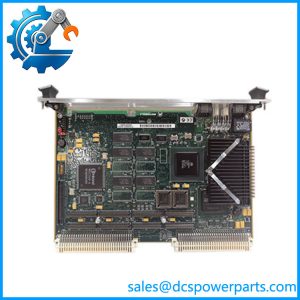
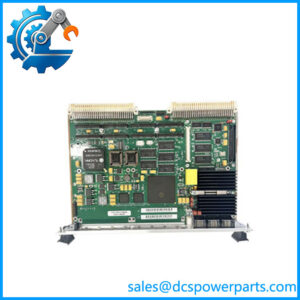
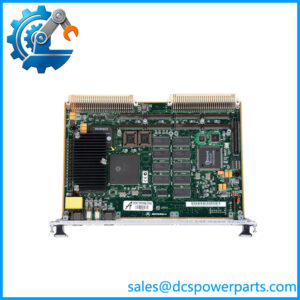
Motorola MVME-51105E-2261 VME Processor Module
Product Overview
The Motorola MVME-51105E-2261 is a 6U VMEbus processor module from the MVME5100 family, using the PowerPlus II architecture and a 500 MHz MPC7410 PowerPC processor. The documented -2261 configuration combines 512 MB ECC SDRAM, 17 MB flash memory, and 2 MB of L2 cache, with a VME Scanbe 5E front panel. This configuration was intended for embedded computing applications where substantial processor and memory performance had to coexist with an established VMEbus backplane.
The Motorola MVME-51105E-2261 is a computer/processor board rather than a conventional PLC CPU or DCS controller. Its architecture provides VMEbus processing, PCI-based expansion, PMC slots, Ethernet, serial communications, NVRAM, and real-time clock resources. The MVME5100 family was developed for demanding embedded applications including industrial automation, medical equipment, defense, aerospace, and other OEM systems.
A particularly useful distinction is the 2261 suffix. Within the MVME5110 5E family, the 2161 configuration is documented at 400 MHz, while the 2261 is the 500 MHz MPC7410 configuration. The corresponding -2263 version uses an IEEE 1101-compatible front panel rather than the Scanbe front-panel arrangement. That makes the complete ordering code relevant during replacement; a superficially similar MVME5110 is not automatically equivalent.
For legacy equipment, the board’s surrounding software and hardware environment matter as much as the processor itself. PMC cards, VME slot assignments, boot firmware, operating-system image, NVRAM contents, and application software can all affect whether a replacement board actually restores the machine or control system.
Product Introduction
When an old VME controller fails, processor speed is only one part of the replacement problem. The MVME-51105E-2261 is tied to a specific VME, PMC, front-panel, and software environment, so a newer-looking board can still be the wrong substitute.
For a legacy VME system upgrade or controller replacement, verify the original board revision, PMC population, boot image, operating system, VME configuration, and application software before exchanging hardware. That work is usually more important than simply matching the PowerPC processor family.
Key Technical Specifications
| Parameter | Value |
|---|---|
| Product Model | MVME-51105E-2261 |
| Alternate Model Reference | MVME5110-2261 / MVME-5110-2261 |
| Manufacturer / Brand | Motorola / Emerson Network Power |
| Product Series | MVME5100 |
| Product Type | 6U VME processor module |
| Architecture | PowerPlus II |
| Processor | MPC7410 PowerPC |
| Processor Speed | 500 MHz |
| Front-Side Bus | 100 MHz |
| L1 Cache | 32 KB instruction + 32 KB data |
| L2 Cache | 2 MB |
| SDRAM | 512 MB ECC |
| Flash Memory | 17 MB |
| NVRAM | 32 KB |
| Ethernet | 2 × 10/100BaseTX |
| Serial Ports | 2 × 16550-compatible asynchronous ports |
| PMC Slots | 2 × IEEE P1386.1-compatible 32/64-bit PMC |
| PCI Expansion | 64-bit PCI expansion mezzanine connector |
| VME Interface | VMEbus / VME64 architecture |
| Front Panel | VME Scanbe 5E |
| Operating Environment | Embedded VME computing |
| Product Status | Legacy / discontinued |
The published MVME5100 ordering table identifies MVME51105E-2261 specifically as a 500 MHz MPC7410, 512 MB ECC SDRAM, 17 MB flash, 2 MB L2 cache, Scanbe 5E configuration.
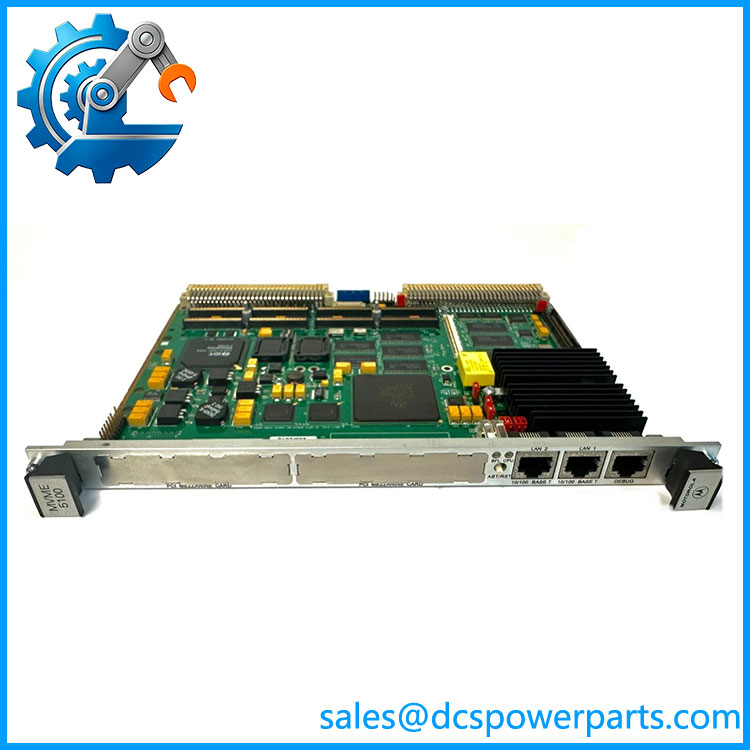
MVME-51105E-2261
Major Features and Advantages
500 MHz MPC7410 PowerPC
The central processing element is the MPC7410 running at 500 MHz. This places the -2261 configuration above the 400 MHz -2161 variant within the documented commercial MVME5110 5E range. Both use the architecture, but the clock-rate distinction is relevant when matching an installed system or validating application timing.
The board also provides 2 MB of L2 cache, supporting processor performance without relying entirely on external SDRAM accesses.
512 MB ECC SDRAM
The standard configuration provides 512 MB ECC SDRAM. Error-correcting memory is useful in embedded computing environments where memory integrity is important, particularly in long-running industrial or mission-oriented systems. The MVME5100 architecture also supported optional RAM500 expansion modules, with family documentation specifying expansion up to 1.5 GB.
Do not assume an expansion module is installed simply because the board belongs to the MVME5110 family. Check the physical board and memory configuration.
PowerPlus II VME architecture
The MVME5100 family uses Motorola/Emerson’s PowerPlus II architecture, combining processor, memory controller, PCI bridge, and VMEbus resources on the board. Published family information cites memory bandwidth up to 582 MB/s for reads and 640 MB/s for burst writes, with PCI throughput up to 264 MB/s.
These are architecture-level performance figures, not guaranteed application throughput. Actual performance depends on the VME transaction pattern, PMC hardware, operating system, application, and bus loading.
Dual Ethernet
Two 10/100BaseTX Ethernet interfaces are integrated into the board. This provides network connectivity without consuming a PMC position for standard Ethernet communications.
These are Fast Ethernet interfaces, not Gigabit Ethernet. When modernizing a legacy installation, network topology and switch compatibility should be considered separately from processor-board compatibility.
PMC expansion
Two IEEE P1386.1-compatible PMC positions provide local expansion for specialized functions. The family architecture also includes a 64-bit PCI expansion mezzanine connector that can accommodate additional PMC-related expansion hardware.
This is one of the most important compatibility checks when replacing a fielded board. A processor module may be electrically compatible with the VME chassis while still being unsuitable because the installed PMC hardware or rear-I/O arrangement differs.
Scanbe 5E front panel
The -2261 suffix specifies the VME Scanbe 5E front-panel configuration. The corresponding -2263 is the IEEE 1101-compatible front-panel version.
That distinction can affect mechanical fit, handles, mounting, and front-panel interfaces. For cabinet replacement work, the final suffix should therefore be matched exactly.
VME-based embedded control
The family was designed to provide high-performance processing within a VMEbus system. The board can act as the computing center of a larger embedded architecture containing VME I/O, PMC modules, transition modules, storage, and application-specific hardware.
This makes the MVME-51105E-2261 particularly relevant to long-lived industrial machines and OEM equipment where the VME backplane remains part of the system design.
Related Products
- Motorola MVME51105E-2161 — 400 MHz version with 512 MB ECC SDRAM, 17 MB flash, and 2 MB L2 cache; same Scanbe 5E front-panel family.
- Motorola MVME51105E-2263 — 500 MHz configuration with the IEEE 1101-compatible front panel rather than the Scanbe 5E arrangement.
- Motorola MVME51105E-2163 — 400 MHz / 512 MB configuration using the IEEE 1101-compatible front panel.
- Motorola MVME51005E-0161 — 450 MHz MPC750-based configuration with 512 MB ECC SDRAM and 1 MB L2 cache.
- Motorola MVME51005E-0163 — Related MPC750 configuration with IEEE 1101-compatible front panel.
- Motorola MVME5107-2161 — 500 MHz extended-temperature member of the broader family; environmental and hardware configuration differ from the commercial -2261.
- Motorola MVME6100-0161 — Later VME processor family; not an automatic drop-in replacement for MVME5110 hardware.
- Motorola MVME712M — Rear transition/I/O hardware associated with compatible MVME systems; verify exact system configuration before substitution.
- Motorola IPMC7126E-002 — Multifunction rear-I/O PMC module documented for the family.
FAQ
Can I hot-swap the ?
Do not assume hot-swap capability. This is a VME processor board forming part of the system’s computing architecture. Follow the VME chassis manufacturer’s shutdown and insertion/removal procedure, and stop the application before replacing the board unless the complete system documentation specifically supports another method.
Does support firmware v3.1?
A specific firmware v3.1 compatibility statement cannot be confirmed for this exact board from the documentation reviewed. The board’s boot-monitor revision and installed application environment should be checked directly. Do not infer firmware compatibility from the hardware suffix alone.
What processor does the use?
It uses an PowerPC processor at 500 MHz, with 2 MB L2 cache. The 500 MHz processor speed is the key distinction between the documented -2261 and the 400 MHz -2161 configuration.
How much memory is installed?
The standard -2261 configuration has 512 MB ECC SDRAM. The family supports optional RAM500 memory expansion, but the presence of an expansion module must be verified on the individual board.
Is the same as MVME-5110-2261?
For procurement purposes, these designations refer to the same documented 500 MHz / 512 MB / 17 MB flash / 2 MB L2 / Scanbe 5E configuration. ESI Technologies explicitly lists -2261, , and MVME-5110-2261 together.
The exact board marking should still be checked before purchasing.
Is this a PLC CPU?
No. The is a VMEbus processor module / embedded single-board computer. It can serve as the computing controller within an industrial machine, but it is not a conventional PLC CPU with a proprietary PLC I/O architecture.
What should I check before buying a replacement?
Verify:
- Complete part number:
- Board revision
- Processor configuration
- 512 MB SDRAM configuration
- PMC cards installed
- VME slot and system-controller requirements
- Scanbe 5E front-panel arrangement
- Rear transition module
- Boot-monitor/firmware revision
- Operating-system image
- Application software
- NVRAM and battery condition
- Ethernet and serial assignments
- VME address and interrupt configuration
The front-panel suffix deserves particular attention: -2261 is the Scanbe version, while -2263 is the IEEE 1101-compatible version. They should not be treated as mechanically identical without checking the chassis.
Does “New Surplus” mean the board is factory-new?
No. “New Surplus” describes the seller’s stated condition of an individual unit. For a legacy VME processor, inspect the board label, revision, VME connector pins, PMC connectors, battery, front-panel hardware, power-up behavior, memory test, Ethernet/serial interfaces, and boot-monitor status.
Procurement and Compatibility Note
The has a useful cross-reference trail: the documented -2261 designation, the full ordering string, and NSN 5998-01-538-0062 are associated with this configuration.
For a legacy VME installation, match the complete configuration, not merely “.” In particular, verify the 500 MHz processor, 512 MB ECC memory, 2 MB L2 cache, Scanbe 5E front panel, installed PMC hardware, rear I/O, boot software, and application image.
One practical warning: some secondary listings describe the board generically as “-2261” without preserving the 5E designation. The family documentation confirms that the 5E ordering code carries specific front-panel and configuration information, so procurement records should retain the complete identifier.