Description
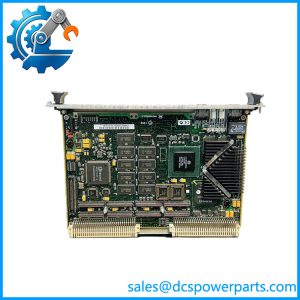
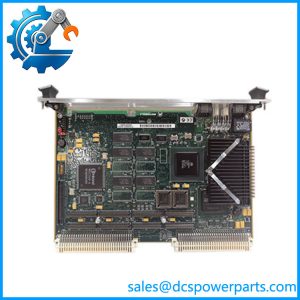
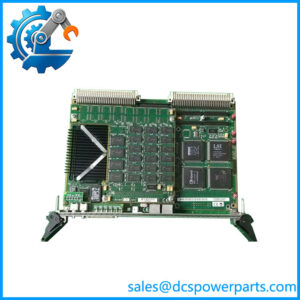
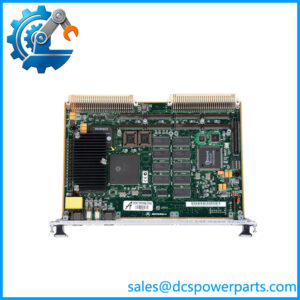
Motorola FLN3524A | ACE3600 CPU3640 | RTU Processor Module
Key Technical Specifications
| Parameter | Specification |
|---|---|
| Manufacturer | Motorola |
| Model | FLN3524A |
| CPU Designation | CPU3640 |
| Product Family | ACE3600 |
| Product Type | RTU CPU / processor module |
| System Role | Central controller |
| Application | SCADA / remote telemetry |
| Communication | ACE3600 communication architecture; verify installed configuration |
| Programming / Maintenance | ACE3600-specific engineering tools |
| Installation | ACE3600 RTU rack/frame |
| Firmware | Application and hardware revision dependent |
| Operating Temperature | Verify against exact CPU3640 hardware revision |
| Power Requirement | Verify against ACE3600 chassis/power configuration |
The strongest available identification is FLN3524A = CPU3640, an CPU module. One current industrial reference explicitly categorizes it as an CPU module, while another lists the same part as an CPU3640 processor.
Product Introduction
The Motorola FLN3524A is the CPU3640 processor module for the RTU platform. It functions as the central processing element of a remote terminal unit, coordinating application logic, data acquisition, control functions, and communications within a distributed SCADA installation.
Unlike a conventional PLC I/O card, the FLN3524A is a controller-level component. Its compatibility therefore depends on the complete hardware configuration, firmware/application version, installed communication hardware, and the RTU’s stored configuration rather than simply whether the module physically fits the chassis.
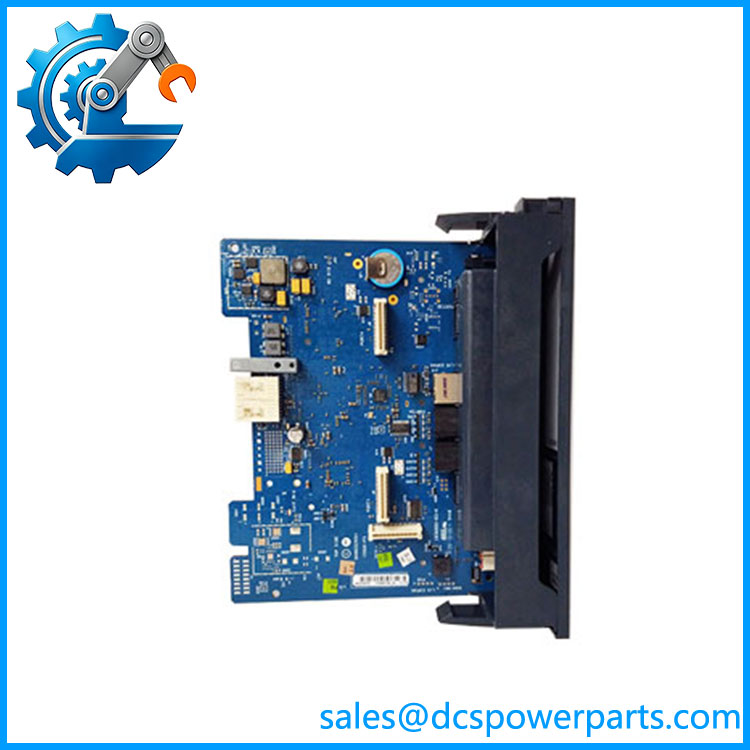
FLN3524A
Application Scenarios & Field Pitfalls — Engineer’s Perspective
Engineering Pain Point
When an FLN3524A fails, the resulting symptoms can extend well beyond loss of local control. Remote telemetry, communication with the control center, stored application logic, and I/O processing may all be affected because the CPU is central to the RTU.
Typical Applications
- Remote SCADA terminal units
- Water and wastewater telemetry
- Electrical utility remote monitoring
- Oil, gas, and pipeline monitoring stations
Technical Pitfalls to Avoid
- Confirm CPU3640 identification before replacement.
is associated with the designation. Do not substitute another CPU simply because it belongs to the same product family. Hardware revision, memory configuration, and firmware support can differ. - Do not trust generic PowerPC/VME specifications.
Several online listings incorrectly mix information with specifications for unrelated Motorola VME processor boards. Claims such as 833 MHz, 512 MB DDR, VME64x, or VxWorks should not be attributed to without OEM documentation. - Preserve the RTU application configuration.
A replacement CPU is not necessarily a plug-and-run exchange. Record the existing application, firmware revision, communication configuration, and retained data before removing the original processor.
Related Products
- Motorola / — Exact CPU designation associated with this part number.
- Motorola FLN3527A — -related I/O hardware; functional role differs from the CPU.
- Motorola FLN4234A — Another CPU/RTU module designation used in the same broader product family.
- Motorola FPN1640A — power-supply hardware; verify voltage and chassis compatibility.
- Motorola RTU — Host remote-terminal platform for the .
- Motorola STS — System Tool Suite environment associated with configuration and maintenance.
- Motorola ACE3680 — Related RTU platform for different system architectures and capacity requirements.
Procurement Check
Before approving a , verify:
- Exact part number:
- CPU designation:
- chassis/frame type
- Hardware revision
- Existing firmware version
- RTU application configuration
- Communication configuration
- I/O configuration
- Retained memory requirements
- Power-supply module
- Existing CPU diagnostics
- Replacement unit’s tested condition
Recommended procurement description:
Motorola RTU Processor Module, Central Controller for Legacy SCADA and Remote Telemetry Systems.
The important identification is / / . For procurement, I would treat the CPU designation as confirmed but require the original module label and chassis configuration before accepting detailed processor, memory, or communication specifications.