Description
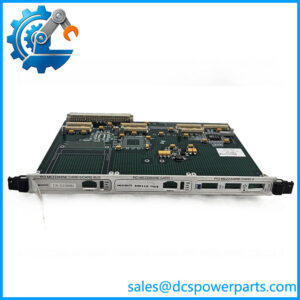
MKS LVF3527A 660-072825-200 RF Generator
Key Technical Specifications
| Parameter | Specification |
|---|---|
| Product Model | LVF3527A |
| Full Model Commonly Listed | LVF3527A-10B-05 |
| LAM Research P/N | 660-072825-200 |
| Manufacturer | MKS / ENI |
| Product Type | RF Generator |
| Operating Frequency | 27 MHz |
| Application | Plasma generation / semiconductor processing |
| RF Power | Multi-kilowatt class; exact rating requires nameplate verification |
| Equipment Integration | LAM Research semiconductor equipment |
| RF Output | Application-specific RF output connection |
| Cooling | Forced-air cooling is indicated by available equipment records |
| Installation | Semiconductor process equipment / equipment rack integration |
| Communication / Control | Configuration-dependent; verify machine interface and generator revision |
| Environmental Rating | Verify against the generator nameplate and applicable MKS documentation |
| Service Status | Legacy equipment; application-specific replacement verification is recommended |
The LVF3527A is repeatedly identified as a 27 MHz MKS/ENI RF generator with LAM Research part number 660-072825-200. A LAM equipment configuration document also identifies an LVF3527A 27 MHz generator alongside other MKS generators in a 300 mm semiconductor processing system.
Product Introduction
The MKS LVF3527A 660-072825-200 is a 27 MHz RF generator used as a plasma power source in semiconductor manufacturing equipment. Its job is not conventional PLC-style control; it supplies RF energy to the process chamber through the associated matching and RF distribution hardware. Available equipment documentation places the in LAM Research 300 mm process equipment, where it is used alongside dedicated RF generators operating at other frequencies.
For maintenance teams, the important point is that 660-072825-200 is an equipment-specific RF power component, not simply a generic 27 MHz signal generator. The exact generator configuration, output-power capability, control interface, cooling arrangement, RF connector arrangement, and machine-side integration should therefore be checked against the installed unit. Public records consistently connect the part number with , but they do not provide enough authoritative information to safely reproduce every electrical rating.
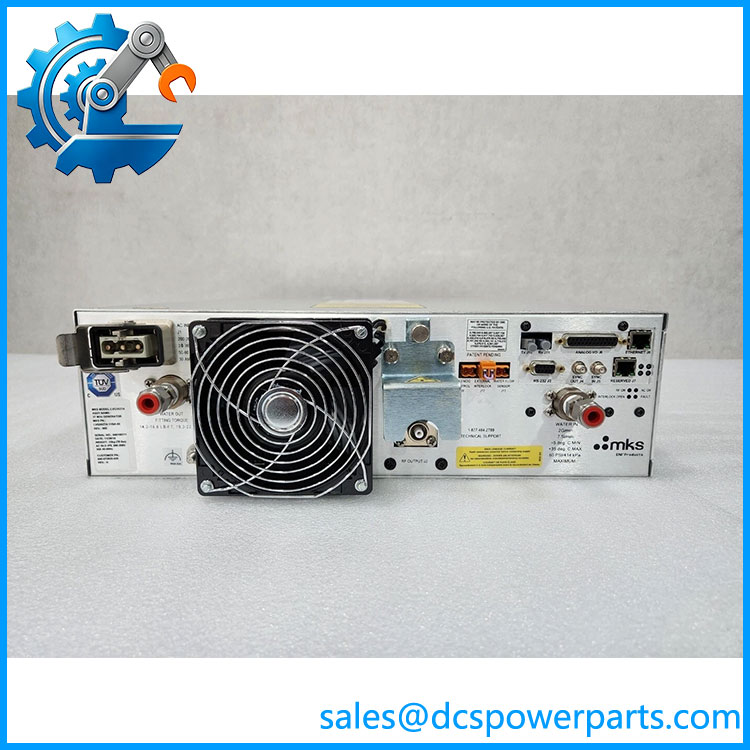
LVF3527A 660-072825-200
Application Scenarios & Field Pitfalls — The Engineer’s Perspective
Engineering Pain Point
When an fails in a plasma process tool, replacing the generator alone does not necessarily restore the process. RF output must work correctly with the matching network, chamber load, RF cabling, grounding, generator control interface, and equipment software. A generator that produces RF energy but does not behave correctly under the installed load can create reflected-power trips, unstable plasma ignition, process drift, or repeated protective shutdowns. The machine-specific configuration is therefore more important than matching only the 27 MHz frequency.
Typical Applications
- Semiconductor plasma etch equipment — supplies RF energy for plasma generation and process control.
- 300 mm wafer processing systems — the has been identified in LAM Research equipment configurations using multiple RF frequencies.
- Plasma deposition processes — RF energy can be used to sustain plasma conditions required by deposition processes.
- OEM process equipment service — used as a replacement-level RF generator where the installed machine configuration calls for 660-072825-200.
Technical Pitfalls to Avoid
- Do not substitute by frequency alone. A different 27 MHz generator may have different power-control behavior, interfaces, output characteristics, or machine integration.
- Verify the complete model code. Records associate 660-072825-200 with -10B-05, but other configurations also appear in the field. Confirm the complete nameplate before procurement.
- Do not assume the published power rating. Some secondary records describe this unit as approximately 3.5 kW, while equipment documentation identifies it more generally as a 27 MHz, 3 kW-class generator. Treat the exact RF power rating as a nameplate/datasheet verification item rather than a guaranteed specification.
- Inspect the RF path before condemning the generator. Damaged coaxial connections, poor grounding, matching-network faults, or an abnormal chamber load can produce symptoms that look like generator failure.
- Check cooling and airflow. Field service records for this model family describe over-temperature symptoms associated with cooling-fan problems. These are secondary service reports rather than OEM failure-rate data, but they are useful troubleshooting clues.
- Verify machine-side control compatibility. The generator must be compatible with the particular LAM equipment configuration, interlocks, RF enable logic, monitoring signals, and process-control architecture.
Related Products
- MKS LVF3560A-10B-05 — 60 MHz RF generator associated with LAM part number 660-072826-200; useful for comparison when the equipment uses multiple RF frequencies.
- MKS LVG3527A-11BA-05 — 27 MHz LVG-series generator with a different LAM part number; do not assume it is a drop-in replacement for .
- MKS LMF5002A-10B-05 — 2 MHz RF generator used in the same type of multi-frequency semiconductor equipment architecture.
- MKS EDGE 6060A — 60 MHz RF generator family; different platform and application configuration.
- MKS Spectrum B-5002 — higher-power RF generator family; different frequency and power architecture.
- MKS SurePower QL5513 — separate RF generator family; compatibility must be established from the equipment configuration rather than nominal RF function.
- MKS GMW-25A — 2 MHz RF generator family, substantially different frequency/application configuration.
Procurement and Replacement Note
For 660-072825-200, procurement should be based on the complete generator identification, not the 27 MHz frequency alone. Confirm the full suffix, LAM Research part number, hardware revision, RF output configuration, cooling arrangement, machine interface, and the semiconductor tool model before accepting a substitute.
If the unit is being replaced inside an operating LAM process tool, retain the original generator’s nameplate information and equipment configuration data. The matching network, RF cabling, chamber load, interlock behavior, and generator control parameters should all be checked during commissioning. Available public records are sufficient to identify the component, but not sufficient to certify every electrical specification of a particular revision. That distinction matters when qualifying a replacement RF source.