Description
Key Technical Specifications
| Parameter | Value |
|---|---|
| Manufacturer | Metso Automation / Valmet |
| Model | IOP304 |
| Assembly Number | 181503 |
| Legacy Part Number | 69230I304A |
| Product Type | Thermocouple / mV Analog Input Module |
| System Family | maxPAC / Metso DNA DCS |
| Input Channels | 16 isolated channels |
| Input Type | Thermocouple and millivolt signals |
| Supported TC Types | J, K, T, E, R, S, B, N |
| Voltage Input Range | ±100 mV |
| Resolution | 16-bit A/D conversion |
| Isolation | Channel-to-logic isolation |
| Cold Junction Compensation | Internal CJC support with thermistor |
| Signal Processing | Microprocessor-based measurement processing |
| Filtering | 50/60 Hz noise rejection |
| Mounting | maxPAC I/O rack |
| Application | Temperature and process measurement |
Product Introduction
Metso IOP304 Overview
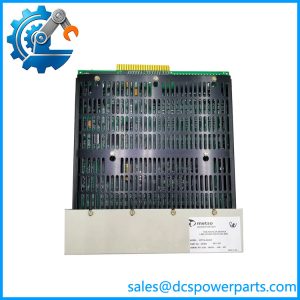
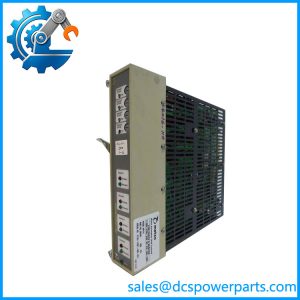
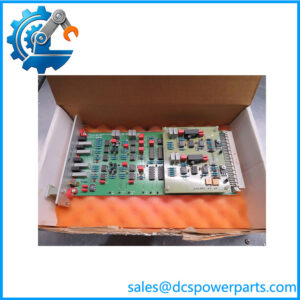
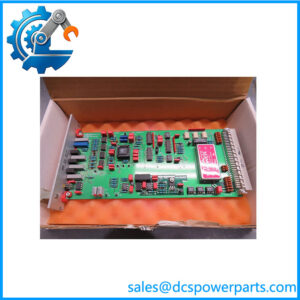
The Metso IOP304 181503 is a thermocouple and millivolt input module designed for the Metso maxPAC and Metso DNA distributed control system platforms. It provides high-density temperature measurement capability by accepting up to 16 isolated TC or mV input signals from field instruments and transmitting processed measurement data to the DCS controller.
The Metso IOP304 analog input module is commonly used in applications where accurate temperature monitoring is required. It connects directly with thermocouples installed in process equipment, eliminating the need for separate signal conversion devices in many installations. The module supports multiple thermocouple types, allowing engineers to integrate different temperature sensors within the same automation architecture.
The Metso IOP304 69230I304A uses isolated input channels to reduce interference between field signals and control electronics. Each measurement channel is processed through dedicated signal conditioning and analog-to-digital conversion circuits, allowing the DCS to receive stable temperature values from demanding industrial environments.
The Metso IOP304 TC/mV module includes cold junction compensation capability for thermocouple measurements. Accurate CJC is important because thermocouple signals are affected by temperature differences at the connection point. The module can use thermistors installed at the terminal connections to compensate for these effects and improve measurement accuracy.
The Metso Automation is part of the maxPAC I/O family and operates as a field interface component rather than an independent controller. Correct operation depends on the DPU configuration, I/O database, module addressing, terminal wiring, and engineering parameters stored within the Metso DNA system.
When replacing a , engineers should verify the existing module revision, channel configuration, thermocouple type, terminal wiring, and DCS database settings. A replacement module with the correct part number but incorrect configuration may produce inaccurate temperature readings or unexpected process alarms.
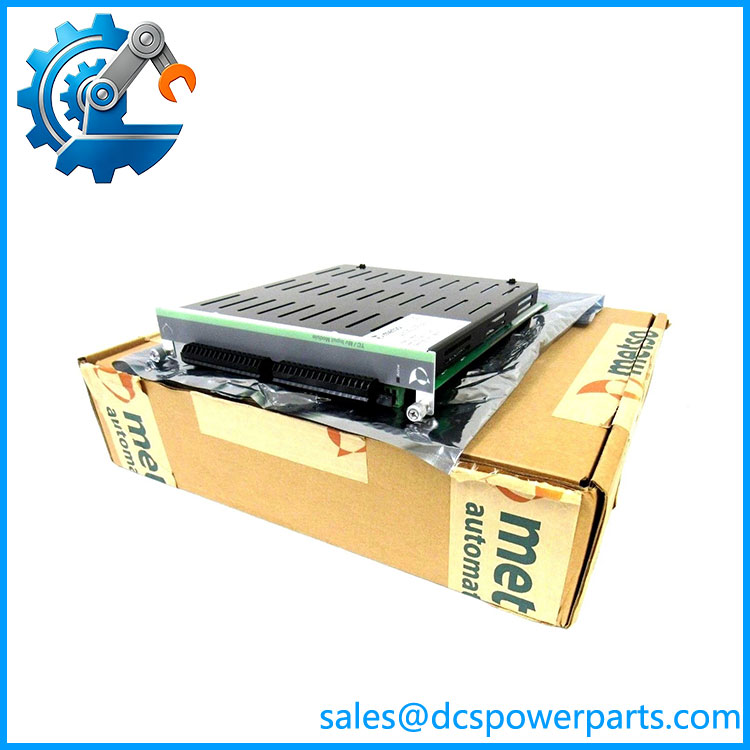
IOP304
Application Scenarios & Field Considerations
Engineering Pain Point
Typical problems involving modules include:
- Incorrect temperature readings
- Open thermocouple alarms
- Temperature channel failures
- Process measurement instability
- Signal noise interference
The module may be involved, but engineers should also inspect:
- Thermocouple condition
- Extension cable quality
- Terminal connections
- Grounding arrangement
- Process sensor installation
Recommended troubleshooting steps:
- Check module diagnostic LED status
- Verify thermocouple wiring polarity
- Compare measured mV signal with expected value
- Inspect cold junction compensation setup
- Review DCS channel configuration
- Check sensor calibration history
The is only one part of the temperature measurement chain. Accurate process control depends on the sensor, wiring, input module, controller configuration, and DCS database working together.
Typical Applications
Power Generation
Used for:
- Boiler temperature monitoring
- Turbine exhaust measurement
- Heat exchanger monitoring
- Combustion temperature supervision
Pulp and Paper Industry
Applied for:
- Recovery boiler temperature measurement
- Dryer temperature control
- Process heating systems
Chemical Processing
Used for:
- Reactor temperature monitoring
- Furnace measurement
- Process safety monitoring
Metallurgy and Heavy Industry
Applied for:
- Furnace temperature control
- Smelting process monitoring
- High-temperature equipment supervision
Technical Pitfalls to Avoid
1. Verify Thermocouple Type
Confirm:
- Sensor type (J/K/T/E/R/S/B/N)
- Extension wire type
- Input channel configuration
Incorrect thermocouple settings can create measurement errors.
2. Check Cold Junction Compensation
Verify:
- Thermistor installation
- Terminal arrangement
- CJC configuration
Poor CJC setup can cause temperature offset errors.
3. Inspect Field Wiring
Check:
- Polarity
- Shield grounding
- Cable routing
- Terminal tightness
Low-level mV signals are sensitive to wiring conditions.
4. Preserve Existing Configuration
Before replacement:
- Record channel assignments
- Backup DCS configuration
- Document sensor types
- Save diagnostic information
Related Products
- Metso IOP303
8-channel RTD input module for resistance temperature measurement applications. - Metso IOP302
16-channel analog input module for 4–20 mA process signals. - Metso IOP301
16-channel isolated analog input module. - Metso IOP305
16-channel voltage input module within the maxPAC analog input family. - Metso maxPAC DCS System
Distributed control platform supporting IOP-series field interface modules.