Description
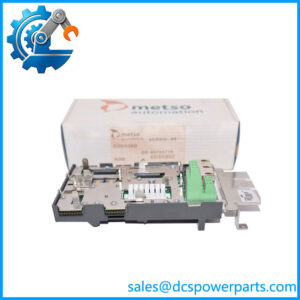
Metso Automation A413143
Product Overview
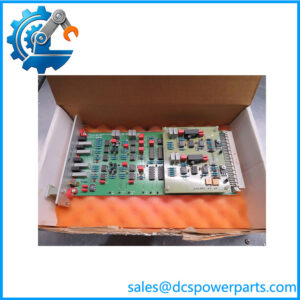
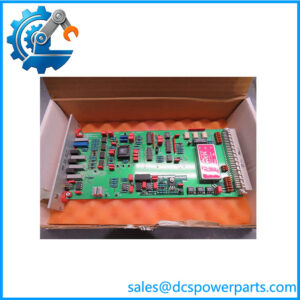
The Metso Automation A413143 belongs to the legacy Valmet Automation BIU family and is identified in available equipment records as a BIU-84 / BIU 8-4 binary I/O board. The board is associated with Valmet automation PLC/control-system hardware and is normally encountered as a circuit-board-level replacement rather than as a modern standalone DIN-rail I/O module. Multiple records identify the A413143 with the BIU-84 designation and the 421895-1A board reference.
For maintenance engineers, the important point is that A413143 should be treated as a system-specific legacy interface board, not as a generic digital I/O card. Publicly available records are inconsistent about whether BIU-84 represents binary input or binary output functionality. Several independent records identify A413143 specifically as a binary input module, while other listings describe the same board as binary output. Because of that conflict, assigning an input voltage, output current, channel count, isolation specification, or relay configuration from reseller data would be poor engineering practice.
In a legacy Valmet installation, the more important compatibility questions are the host controller generation, rack or backplane position, board revision, field termination arrangement, and the actual signal function expected by the application. A replacement Metso Automation A413143 should therefore be matched by complete board markings and revision, rather than by the number alone. This is especially relevant when maintaining older process plants where the original engineering database may contain configuration information that is no longer represented by current product documentation.
Product Introduction
Legacy Valmet control systems create a familiar maintenance problem: the board number may still be known, while the original engineering documentation is much harder to locate. Metso Automation is one of those replacement-sensitive boards. Available records associate it with the BIU-84 / BIU 8-4 assembly and Valmet Automation PLC hardware.
For a DCS system upgrade or legacy replacement, the practical requirement is not simply finding a board with the same connector footprint. Confirm the board revision, host system, field termination, and intended binary signal function before installation.
Key Technical Specifications
| Parameter | Value |
|---|---|
| Product Model | |
| Brand / Manufacturer | Metso Automation / Valmet Automation |
| Product Family | BIU-84 / BIU 8-4 |
| Product Type | Legacy binary I/O circuit-board assembly |
| Board Reference | 421895-1A is associated with BIU 8-4 records |
| System Association | Valmet Automation PLC / industrial control systems |
| Known Revisions | Rev. 07 and Rev. 09 examples documented |
| Physical Form | PCB / plug-in automation module |
| Lifecycle | Legacy / discontinued |
| Input Voltage | Not reliably verified from primary documentation |
| Output Rating | Not reliably verified from primary documentation |
| Channel Count | Not reliably verified from primary documentation |
| Communication Protocol | Not verified; do not assume Modbus |
| Operating Temperature | Not reliably verified |
| Firmware | Not applicable as a freely inferable specification; verify installed system configuration |
Engineering identification note: Some commercial listings describe as a binary input module, while others describe the same BIU-84 assembly as binary output. The conflicting descriptions are significant enough that the actual board label and system documentation should take precedence over catalog text.
Major Features / Practical Advantages
Legacy Valmet system compatibility
The primary value of is its role in maintaining older Valmet Automation equipment. Records consistently associate the part with the / BIU 8-4 designation and Valmet PLC hardware.
That makes this type of board relevant during maintenance of installed systems where replacing the entire controller architecture would require a much larger engineering project.
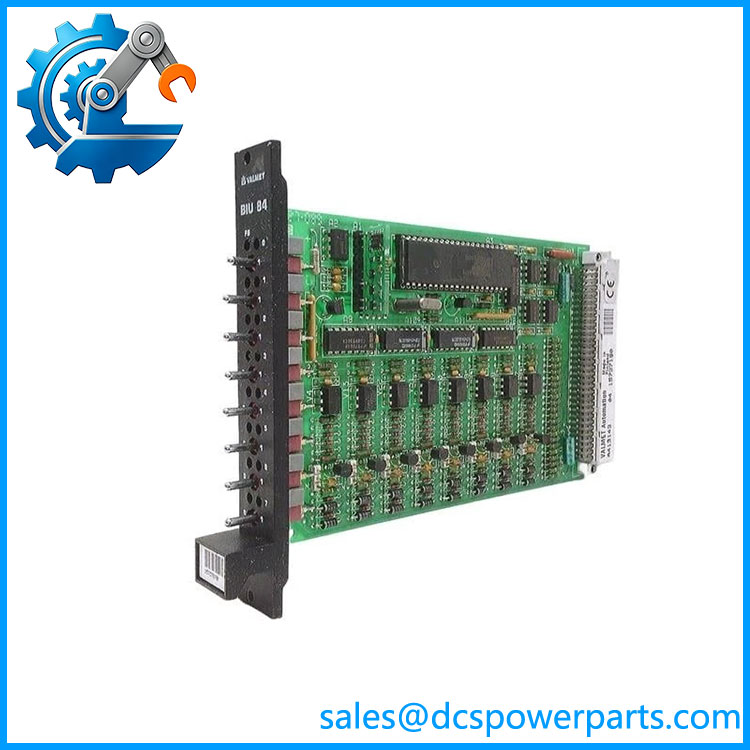
A413143
Board-level replacement
is encountered as a PCB-level automation component. That matters during procurement because a visually similar board is not necessarily electrically equivalent. Connector arrangement, board revision, firmware/configuration dependencies, and host-system compatibility can all affect whether a replacement can actually be commissioned.
Revision control matters
Field records show examples identified as and . Do not assume every revision has identical hardware behavior simply because the base part number is unchanged. For a plant shutdown replacement, photograph the existing board label before ordering and compare revision markings against the proposed spare.
Useful for legacy replacement planning
can be particularly useful when an installed Valmet system remains operational but the original spare inventory has become difficult to maintain. Keeping the exact board reference in the maintenance BOM gives procurement a much clearer target than searching only for a generic “binary I/O module.”
Procurement transparency
The public technical record for this part is incomplete. That is worth stating plainly. Do not use unverified claims such as 220 VAC input, 10 A relay capacity, Modbus RTU, 1 ms switching, or a specific operating-temperature range merely because they appear on generic automation websites. Those specifications were not sufficiently corroborated for .
Related Products
- A413125 — Valmet AIU-8 analog input board; used for analog measurement applications and should not be treated as an equivalent to .
- A413135 — Valmet AOU-4 analog output module; intended for analog output functions rather than the BIU family.
- A413150 — Valmet/Metso BOU-8 binary output module; potentially relevant when determining whether a legacy application requires binary output rather than .
- A413005 — Valmet Automation CPU module; a controller-level component rather than a field I/O board.
- A413016 — Valmet Automation NCU2 PLC board; relevant to legacy controller architecture and system compatibility.
- A413177 — Valmet Automation ESA board; another legacy control-system PCB requiring system-level identification before substitution.
- BIU 8-4 / 421895-1A — Associated board designation found with and useful when comparing physical nameplate information.
FAQ
What is the Metso Automation used for?
is associated with the Valmet Automation / BIU 8-4 family and is documented primarily as a legacy binary I/O board. Several sources specifically identify it as a binary input module.
Is a digital input or digital output module?
This is one specification that should not be guessed. Multiple records identify as a binary input module, but other records describe the same / 421895-1A assembly as binary output. Verify the actual board markings and the original Valmet system documentation before assigning field wiring.
Can I replace with A413150?
Not automatically. A413150 is identified as a BOU-8 binary output module, while belongs to the family. Their functional roles should not be assumed equivalent simply because both are binary I/O boards.
Can I hot-swap the ?
Do not assume hot-swapping is permitted. This is a legacy board-level component, and the safe replacement procedure depends on the specific Valmet rack and system architecture. Follow the plant maintenance procedure and place the affected control function into the required safe state before removing the board.
Does support firmware v3.1?
There is no reliable evidence that a generic “firmware v3.1” specification applies to . Firmware or system software compatibility should be checked against the host Valmet controller and the installed board revision rather than inferred from the part number.
What should I verify before purchasing a replacement ?
At minimum, verify:
- Complete part number:
- / BIU 8-4 marking
- Board reference such as 421895-1A
- Revision number
- Existing host PLC/control-system model
- Rack and slot position
- Field termination arrangement
- Actual binary input/output function
- Connector condition
- Functional test evidence for used or refurbished stock
Is a New Surplus equivalent to a factory-new current product?
Not necessarily. A legacy surplus board can be unused yet have substantial storage age. For procurement, “new surplus” should be treated as a condition description, not proof of current OEM production status. Ask for photographs of the actual board, label/revision information, and any available test record.
Procurement Note
For Metso Automation , the part number alone is not enough to establish electrical interchangeability. The available technical record confirms the / association, but public documentation is too inconsistent to responsibly publish detailed electrical ratings.
For a shutdown-critical replacement, request actual nameplate photographs showing the , revision, and / 421895-1A markings. Match the board against the installed Valmet controller, rack position, field termination, and engineering documentation. If the supplier cannot establish whether the board is being supplied as the required binary-input or binary-output configuration, stop the purchase until that point is resolved.
The practical procurement rule is simple: match the complete installed board and system context, not just the base number.