Description
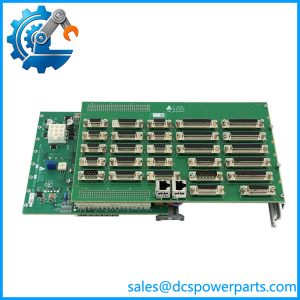
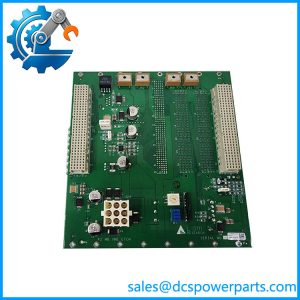
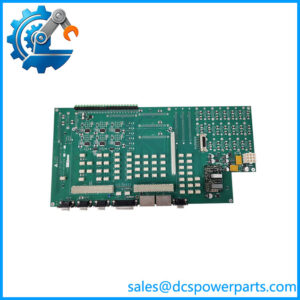
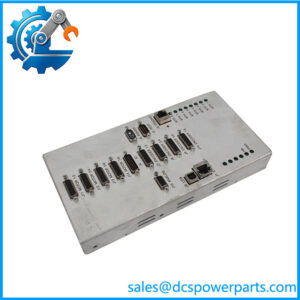
LAM Research 810-099175-012 | VME VIOP III PCB | Semiconductor Equipment Spare
Key Technical Specifications
| Parameter | Specification |
|---|---|
| Manufacturer | LAM Research |
| Part Number | 810-099175-012 |
| Product Type | VME-based I/O / control PCB |
| Architecture | VIOP / VIOP III family reported |
| Bus | VMEbus, based on secondary documentation |
| Application | Semiconductor processing equipment |
| Board Function | Equipment I/O and process-control interface |
| Installation | VME-based control chassis |
| Exact Channel Count | Not sufficiently verified |
| Exact Analog Resolution | Not sufficiently verified |
| Input/Output Voltage | Configuration dependent / not verified |
| Communication Protocol | Not sufficiently verified |
Public listings consistently associate 810-099175-012 with LAM Research semiconductor equipment and VIOP/VME hardware, while one technical listing specifically identifies it as a VMEbus analog I/O board.
Product Introduction
The LAM Research 810-099175-012 is a legacy semiconductor-equipment PCB associated with LAM Research VIOP/VME control hardware. Available technical references describe the board as part of a VME-based I/O architecture used in semiconductor manufacturing equipment, where the board participates in acquisition and processing of equipment-level signals rather than acting as a conventional PLC CPU.
For maintenance teams, LAM Research 810-099175-012 should be treated as an equipment-specific spare rather than a generic industrial I/O card. Public information about the exact channel configuration, conversion resolution, electrical ratings, and supported interfaces is inconsistent. That makes the complete part number, board revision, chassis type, and existing equipment configuration more important than a generic description such as “analog I/O module.”
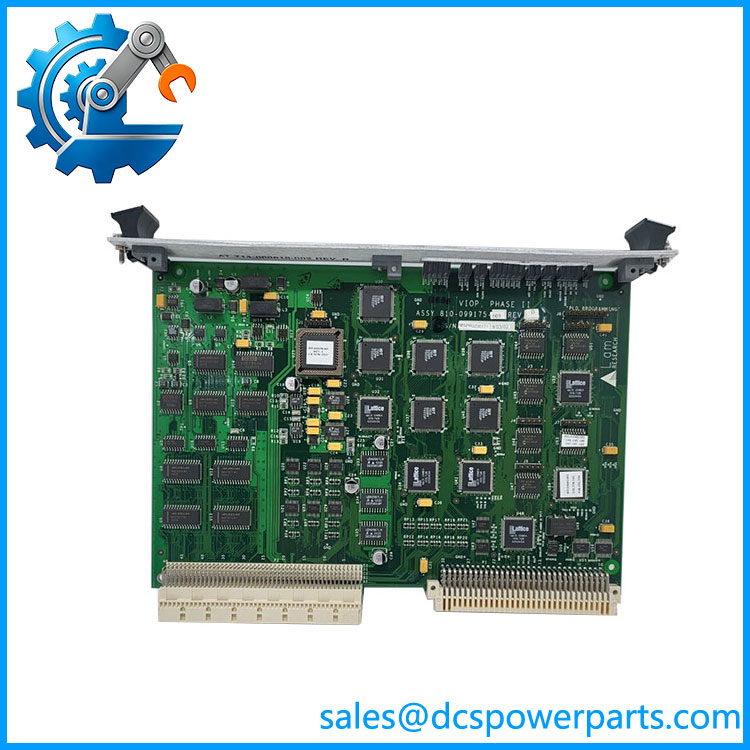
810-099175-012
Application Scenarios & Field Pitfalls — The Engineer’s Perspective
Engineering Pain Point
Legacy semiconductor tools can remain in production long after their original control hardware has become difficult to source. A failed VME I/O board may appear to cause a simple sensor or actuator problem, but the actual fault can involve the board itself, its VME backplane connection, field wiring, power rails, or the equipment software configuration. Replacing the PCB without checking these interfaces can result in a board that powers up but does not restore machine operation.
Typical Applications
Semiconductor process equipment
The board is associated with LAM Research semiconductor manufacturing platforms and legacy equipment control systems.
VME-based equipment control
The reported VMEbus architecture allows the PCB to operate as part of a larger embedded control chassis rather than as a standalone PLC module.
Process signal acquisition
Secondary technical references describe the board as an analog I/O device, suggesting use for measurement and control signals within the equipment. This should be confirmed against the machine-specific electrical drawings before assigning a particular channel count or signal range.
Legacy equipment maintenance
Its main procurement value is maintaining existing semiconductor tools where migration to a newer controller would require substantial machine-level engineering.
Technical Pitfalls
- Do not assume the published electrical specifications are accurate.
Several secondary websites describe 810-099175-012 with radically different functions and ratings. Claims involving high-voltage IGBT power conversion, 600–1200 VDC input, 1000 A current, EtherCAT, or IP67 are not sufficiently supported and should not be used as purchasing specifications. - Verify the VME chassis and slot configuration.
If the board belongs to a VME-based VIOP architecture, backplane compatibility and slot assignment can matter as much as the PCB number. - Match the complete part number.
Do not substitute 810-099175-001, -005, -010, or -011 simply because they share the same 810-099175 family. Different revisions may have hardware or firmware differences. - Check the equipment software configuration.
I/O scaling, channel assignments, calibration data, and machine-specific configuration can reside outside the PCB. - Inspect connectors and edge contacts carefully.
Older VME equipment can develop intermittent faults from oxidation, mechanical wear, contaminated contacts, or poor seating. - Test the complete signal path.
For a suspected analog I/O fault, verify field wiring and the connected sensor/actuator before condemning the board. A replacement PCB should be tested under the actual equipment configuration whenever possible.
Related Products
- LAM Research 810-099175-011 — Related 810-099175-series PCB; revision compatibility must be confirmed.
- LAM Research 810-099175-010 — Earlier/related board designation reported within the same family.
- LAM Research 810-099175-005 — Earlier family variant; do not assume direct interchangeability.
- LAM Research 810-099175-001 — Earlier family designation reported in secondary references.
- LAM Research 810-046015-010 — VIOP III-related PCB listed alongside 810-099175-series boards.
- LAM Research 810-046015-009 — Related VIOP Phase III PCB.
- LAM Research 810-234640-311 — LAM Research VIOP board/PCBA in the same general equipment-control category.
- LAM Research 810-066590-004 — VME backplane/interface expansion board used in semiconductor equipment architectures.
- LAM Research 605-109114-001 — Another LAM Research equipment PCB designation requiring machine-specific verification.
Procurement Note
For 810-099175-012, the safest purchasing method is to provide the complete part number exactly as printed on the PCB, together with the equipment model, board revision, serial/ML information when available, and photographs of the board connectors and identification labels.
Because public technical descriptions conflict, I would not approve a replacement solely from a generic specification sheet. For a used or surplus board, inspect the VME edge connector, PCB condition, component damage, corrosion, previous repair work, and configuration data, then perform a functional test in the target equipment or an appropriate test fixture.