Description
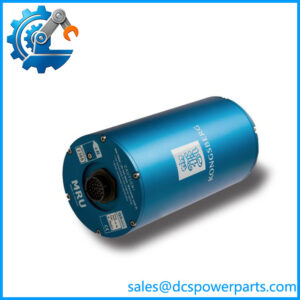
Kongsberg Seatex MRU-M-MB3 Motion Reference Unit
Key Technical Specifications
| Parameter | Specification |
|---|---|
| Manufacturer | Kongsberg / Seatex |
| Model | MRU-M-MB3 |
| Product Type | Motion Reference Unit |
| Sensor Technology | Inertial motion measurement |
| Primary Measurements | Roll, pitch, heave |
| Additional Motion Data | Acceleration / angular-rate information depending on system configuration |
| Typical Integration | Dynamic positioning and marine motion-compensation systems |
| Application Environment | Marine / offshore |
| Mounting | MB3 mounting configuration |
| System Integration | Seatex/Kongsberg marine positioning architecture |
| Typical Equipment | DP vessels, offshore survey and subsea systems |
Kongsberg’s own MRU upgrade documentation confirms MRU-M-MB3 as an existing mounting-bracket designation in the MRU product architecture. Independent vessel documentation also identifies Seatex MRU-M-MB3 as a motion reference unit used onboard offshore vessels.
Product Introduction
The Kongsberg Seatex MRU-M-MB3 is associated with marine Motion Reference Unit (MRU) equipment used to determine vessel motion for navigation, dynamic positioning and motion-compensation applications. An MRU supplies attitude and motion information such as roll, pitch and heave to systems that need to distinguish actual vessel movement from the motion of the equipment being operated.
This type of sensor is particularly important on vessels performing subsea inspection, hydrographic survey, offshore lifting or DP operations. Motion data can be used to compensate sonar measurements, stabilize equipment, support positioning calculations and control heave-compensation systems.
Application Scenarios & Field Pitfalls — The Engineer’s Perspective
Engineering Pain Point
A motion-reference sensor can fail without producing an obvious hardware alarm. Incorrect mounting orientation, vibration, cable problems, configuration errors or degraded sensor performance may instead appear as unstable heading, incorrect roll/pitch data, poor heave compensation or abnormal DP behavior.
For that reason, an MRU replacement should be treated as part of the complete sensor → communication → DP/navigation system rather than as a simple plug-in electronics replacement.
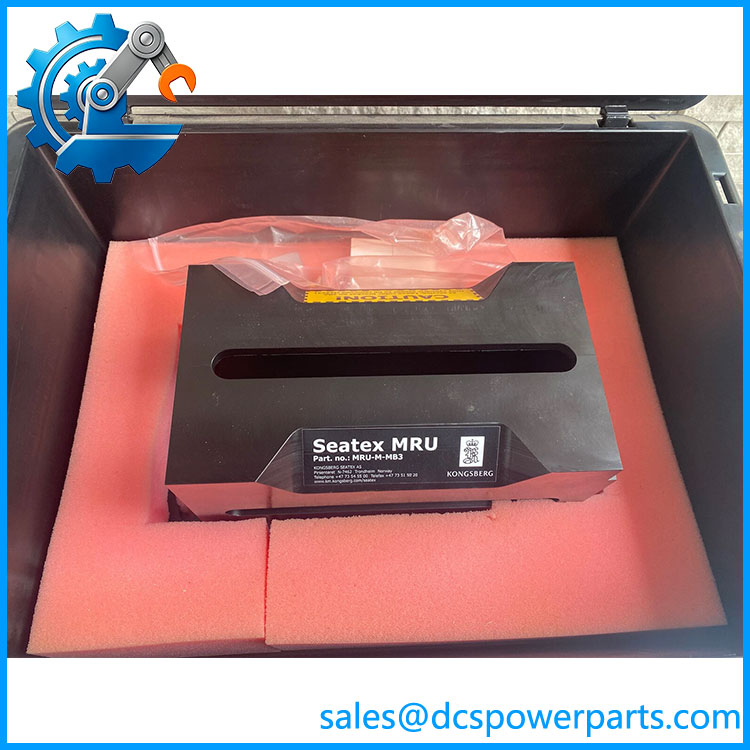
MRU-M-MB3
Typical Applications
- Dynamic Positioning (DP) systems
- Offshore construction and crane operations
- Subsea ROV and acoustic positioning
- Hydrographic and multibeam survey systems
- Marine motion compensation
Vessel documentation confirms MRU-M-MB3 installations in offshore equipment configurations that also include Kongsberg DP and acoustic positioning systems.
Technical Pitfalls
1. Do not confuse the MRU with a conventional gyrocompass.
An MRU primarily provides motion and attitude reference data. A gyrocompass has a different navigation role. The two can work together but are not interchangeable.
2. Mounting orientation matters.
Roll, pitch and other axes are referenced to the physical installation orientation. Incorrect mounting can produce apparently plausible but systematically incorrect motion data.
3. Treat MB3 carefully during procurement.
Kongsberg documentation lists in the mounting-bracket section of its MRU upgrade documentation. Therefore, confirm whether the required spare is the complete MRU assembly or specifically the MB3 mounting hardware before placing an order.
4. Check the communication path.
The MRU is only useful if its motion data reaches the DP, navigation, survey or motion-compensation system correctly. When troubleshooting, inspect the serial/network interface, configuration and receiving-system scaling rather than replacing the sensor immediately.
5. Verify the exact MRU generation.
Kongsberg’s upgrade documentation distinguishes fourth- and fifth-generation MRU hardware and associated cables/junction boxes. Existing MRU installations can therefore contain hardware that looks similar but belongs to a different generation.
6. Do not use generic accuracy figures as acceptance criteria.
Secondary listings publish specific roll/pitch accuracy figures for , but these should not automatically be treated as the acceptance specification for every installation. The actual MRU model, firmware, calibration and application configuration should be checked against the vessel’s documentation.
Related Products
- Kongsberg Seatex MRU2 — Related marine Motion Reference Unit used for attitude and motion measurement.
- Kongsberg Seatex MRU5+ — Later-generation MRU equipment found in marine positioning applications.
- Kongsberg MRU-M-MB1 — Related MRU mounting bracket.
- Kongsberg MRU-M-MB4 — Later mounting-bracket configuration.
- Kongsberg MRU-M-MB5 — Related newer-generation mounting hardware.
- Kongsberg MRU-M-MB6 — Mounting hardware associated with later MRU configurations.
- Kongsberg MRU-M-JB3 — MRU junction-box hardware associated with newer MRU installations.
- Kongsberg Seapath — Marine positioning and inertial navigation equipment commonly integrated with MRU data.
Kongsberg’s upgrade documentation specifically distinguishes MRU generations, mounting hardware, junction boxes and cable families, so these related items should be matched by the actual installed configuration rather than by appearance.
Procurement Note
For , first determine whether the required item is the complete Seatex Motion Reference Unit or the MB3 mounting component. This distinction is important because Kongsberg documentation uses in the mounting-hardware nomenclature, while vessel equipment records also identify as the installed Seatex MRU designation.
For a vessel already in service, record the existing MRU generation, serial number, mounting orientation, cable/junction-box arrangement, communication interface and calibration status before ordering a replacement. A mechanically compatible unit is not automatically a configuration-compatible unit.