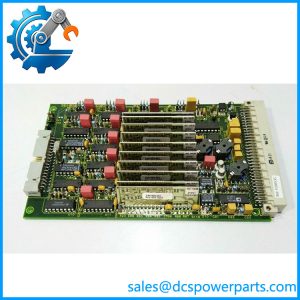
Description
Kongsberg Seatex DPS 112
Product Overview
The Kongsberg Seatex DPS 112 is a marine DGNSS position sensor designed for vessel navigation, dynamic positioning, and offshore applications where a dependable geographic position reference is required. Kongsberg identifies it as a discontinued member of the DPS product family, with combined GPS L1/L2, GLONASS L1/L2, and SBAS reception, together with IALA beacon capability and an integrated L-band receiver supporting Fugro Seastar services.
The architecture is more than a basic GPS receiver. The DPS 112 processing unit accepts correction information, calculates the vessel position, and provides navigation data to external systems through serial and Ethernet interfaces. Kongsberg specifies three serial ports, with two NMEA outputs and one RTCM input, using RS-232 or RS-422 with galvanic isolation. One Ethernet/LAN interface and three USB ports are also provided.
For a DP engineer, the important distinction is that the DPS 112 is a position-reference sensor, not a complete dynamic-positioning controller. It supplies position information to a vessel’s wider navigation or DP architecture. Vessel documentation demonstrates DPS 112 installations as a DGPS/DGLONASS reference within Kongsberg K-Pos systems.
Kongsberg now lists the DPS 112 as no longer sold and states that it has been replaced by the DPS i1. That makes exact hardware identification, antenna configuration, correction-service requirements, software state, and interface configuration important when sourcing a legacy replacement.
Product Introduction
A position sensor failure in a DP installation is not simply a navigation-equipment nuisance. The quality and availability of position references directly affect the information available to the DP system. The Kongsberg Seatex DPS 112 was designed as a marine DGNSS reference for workboats, offshore support vessels, and other vessels requiring a reliable position solution.
Its practical value comes from combining GPS, GLONASS, SBAS, IALA correction capability, and optional satellite correction services in one processing unit. For a legacy replacement, however, the receiver, antennas, correction source, configuration, and DP-system interface all need to be checked together.
Key Technical Specifications
| Parameter | Specification |
|---|---|
| Product Model | DPS 112 |
| Manufacturer | Kongsberg Seatex |
| Product Type | Marine DGNSS position sensor |
| GNSS Reception | GPS L1/L2, GLONASS L1/L2, SBAS |
| Correction Sources | Seastar G2, SBAS, IALA DGPS, optional RTCM input |
| Seastar G2 Accuracy | 10 cm, 95% CEP |
| DGPS/DGLONASS Accuracy | <1 m, 95% CEP |
| SBAS Accuracy | <1 m, 95% CEP |
| Velocity Accuracy | <0.05 m/s, 95% CEP |
| Output Rate | 1 Hz |
| Position Output | NMEA 0183 v3.0 |
| NMEA Messages | GGA, GLL, GSA, GST, GSV, VER, VTG, ZDA |
| Serial Interfaces | 3; 2 NMEA outputs + 1 RTCM input |
| Serial Electrical Interface | RS-232 or RS-422, galvanically isolated |
| Ethernet | 1 × Ethernet/LAN |
| USB | 3 × USB |
| Processing Unit Supply | 100–240 VAC, 50/60 Hz |
| Maximum Processing Unit Power | 60 W |
| Processing Unit Weight | 5.8 kg |
| Processing Unit Dimensions | 89 × 444 × 357 mm |
| Processing Unit Operating Temperature | -15 to +55°C |
| Recommended Operating Temperature | +5 to +40°C |
| Processing Unit Humidity | Up to 95% non-condensing |
| Output Alarm Status | SNMP v2.0 |
| Lifecycle | Discontinued |
| Replacement Identified by Kongsberg | DPS i1 |
The specifications above are from Kongsberg’s published DPS 112 datasheet.
Major Features / Practical Advantages
Dual-constellation GNSS architecture
The DPS 112 combines GPS L1/L2 and GLONASS L1/L2 reception with SBAS capability. Using both GPS and GLONASS increases the available satellite population compared with a GPS-only receiver, which is particularly useful around structures, offshore installations, and other environments where satellite visibility can be restricted.

DPS112
Marine DGNSS correction capability
Correction sources are a major part of the system. Kongsberg documents IALA beacon capability, optional RTCM correction input, and Fugro Seastar G2 support. With Seastar G2, the published position accuracy is 10 cm at 95% CEP; the standard DGPS/DGLONASS specification is better than 1 m at 95% CEP.
That difference matters during procurement. A receiver capable of a particular correction service does not mean the vessel automatically has that service available. The correction source, subscription, antenna installation, and configuration all influence the delivered position solution.
Built-in operator interface
The processing unit includes an embedded keypad and display for configuration and status monitoring. Kongsberg also offered an optional external DPS display unit intended for DP operations.
For field maintenance, this is useful because the receiver can provide local diagnostic and configuration access without relying entirely on an external navigation workstation.
Galvanically isolated serial interfaces
The DPS 112 provides three serial ports, including two NMEA outputs and one RTCM input. Kongsberg specifies RS-232 or RS-422 interfaces with galvanic isolation.
This is particularly relevant when integrating the receiver into a vessel’s navigation and DP equipment. Interface type and isolation should be confirmed against the existing cable and port assignment rather than assuming that every vessel installation uses the same configuration.
Ethernet and USB connectivity
One Ethernet/LAN interface and three USB ports are documented. USB is also used for software updates.
Kongsberg’s support information currently provides a DPS 11x firmware package, revision 2.02.03, but that should not be interpreted as proof that every installed DPS 112 currently carries that revision. Firmware should be read from the actual receiver before performing any upgrade.
Designed for marine DP support applications
Kongsberg describes the DPS 112 as suitable for marine applications and specifically identifies workboats and platform support vessels among its applications.
In actual vessel installations, DPS 112 units have been used as DGPS/DGLONASS position references within Kongsberg K-Pos DP systems.
Legacy replacement considerations
Kongsberg now marks the DPS 112 as discontinued and states that the product has been replaced by DPS i1.
That does not mean DPS i1 should automatically be treated as a drop-in replacement. A migration can involve antenna compatibility, correction services, serial port assignments, NMEA configuration, DP-system acceptance testing, and vessel-class or project documentation.
Related Products
- DPS i1 — Kongsberg’s identified replacement for DPS 112. It belongs to the newer DPS generation and should be evaluated as an engineered migration rather than assumed to be a direct hardware substitute.
- DPS 114 — Later DPS-family position sensor with expanded GNSS constellation support including GPS, GLONASS, Galileo, Beidou, and SBAS.
- DPS 110 — Related DPS-family DGNSS receiver used for marine positioning applications; firmware/support documentation groups DPS 110, DPS 112, and DPS 114 together.
- DPS 5D — Higher-level DPS-family positioning product listed by Kongsberg alongside DPS 112 and DPS i1.
- DPS Display Unit — Optional external operator display for DPS-family installations and DP-oriented operation.
- Seatex MRU-D — Marine motion-reference equipment commonly found alongside DPS position references in vessel DP architectures; it provides a different measurement function from the GNSS position sensor.
- K-Pos — Kongsberg DP system architecture in which DPS position references can provide position input; DPS 112 itself is not the DP controller.
FAQ
What is the Kongsberg Seatex DPS 112?
The DPS 112 is a marine DGNSS position sensor from Kongsberg Seatex. It combines GPS, GLONASS, and SBAS reception with correction-source capabilities for marine navigation and DP applications.
Is DPS 112 a PLC or DCS I/O module?
No. It is a marine navigation/position-reference sensor, not a PLC, DCS I/O card, or generic industrial analog module.
What accuracy can DPS 112 provide?
Kongsberg specifies 10 cm at 95% CEP with the Seastar G2 service and less than 1 m at 95% CEP for DGPS/DGLONASS and SBAS under the stated conditions. Actual field performance depends on satellite visibility, correction availability, antenna installation, and environmental conditions.
Can I hot-swap the DPS 112?
Do not treat it like a hot-swappable PLC I/O module. The receiver can be an active position reference for a DP or navigation system, so removing it while operational can affect the vessel’s available position-reference set. Kongsberg’s support documentation also cautions that firmware upgrades must be performed only during a safe period when the vessel is not operationally reliant on the DPS equipment.
Does DPS 112 support firmware v3.1?
Do not assume that firmware version from the model number. Kongsberg’s current support material provides a DPS 11x firmware package identified as revision 2.02.03, while the actual installed receiver may have a different revision. Read and record the receiver’s current firmware before planning an update.
What communication interfaces are available?
The published specification provides three serial ports, with two NMEA outputs and one RTCM input, using RS-232 or RS-422 with galvanic isolation. It also provides one Ethernet/LAN port and three USB ports.
What NMEA messages does DPS 112 provide?
Kongsberg lists GGA, GLL, GSA, GST, GSV, VER, VTG, and ZDA under NMEA 0183 v3.0.
Is DPS 112 still manufactured?
No. Kongsberg currently lists DPS 112 as no longer sold and states that it has been replaced by DPS i1.
Can DPS i1 directly replace DPS 112?
Do not assume a direct drop-in replacement. The newer product should be evaluated against the vessel’s antenna arrangement, correction service, NMEA/serial configuration, Ethernet integration, DP system, and commissioning requirements.
What should I verify before purchasing a used DPS 112?
For a vessel-critical spare, verify:
- Exact model: DPS 112
- Kongsberg Seatex nameplate
- Serial number
- Hardware revision
- Installed firmware
- GNSS antenna compatibility
- IALA antenna configuration, if used
- Spotbeam/L-band configuration, if used
- Seastar service/subscription requirements
- NMEA output configuration
- RTCM input configuration
- Serial interface type: RS-232 or RS-422
- Ethernet operation
- Display/keypad condition
- Functional positioning test
Is New Surplus DPS 112 equivalent to current Kongsberg production hardware?
No. DPS 112 is a discontinued product. New-surplus stock represents unused legacy equipment rather than newly manufactured current-generation equipment. Kongsberg’s current product information identifies DPS i1 as the replacement.
Procurement Note
The Kongsberg Seatex DPS 112 is a specialized marine DGNSS position-reference sensor, and its procurement should be handled as navigation/DP equipment rather than generic industrial automation hardware. Kongsberg’s own documentation confirms the GPS/GLONASS architecture, correction inputs, NMEA interfaces, Ethernet, USB, 100–240 VAC processing unit, and published positioning performance.
The main procurement risk with a legacy DPS 112 is system configuration rather than simple model-number matching. A replacement receiver may power up correctly while still requiring different correction-service settings, antenna configuration, NMEA port assignments, firmware, or DP-system acceptance testing.
Kongsberg has discontinued the DPS 112 and identifies DPS i1 as its replacement. For an operational vessel, however, the newer unit should be treated as a migration project rather than automatically accepted as a plug-in substitute.
For used or refurbished DPS 112 equipment, request photographs of the actual processing unit and nameplate, serial number, firmware information, antenna configuration, and a live positioning test. If the supplier cannot demonstrate that the receiver acquires satellites and outputs valid NMEA data, the unit should not be treated as a proven DP position-reference spare.