Description
Kongsberg Seatex DPS 110
Product Introduction
When a DP system loses a dependable position reference, the problem is rarely limited to the receiver itself—the antenna path, correction source, configuration, and output interface all have to work together. The Kongsberg Seatex DPS 110 was developed as a marine DGNSS position sensor for this exact type of application, combining GPS positioning with differential correction sources and an integrated L-band receiver.
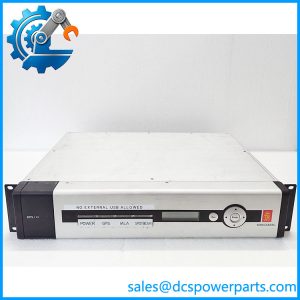
The Kongsberg DPS 110 supports IALA beacon corrections, regional SBAS services, and SeaSTAR SGG correction services, giving operators several ways to obtain a differential position solution. Its 19-inch processing unit is approximately 2U high, making it suitable for vessel navigation cabinets and DP reference equipment racks. For legacy DP system maintenance, DPS 110 can be relevant when replacing an aging DGNSS sensor or maintaining an existing Kongsberg Seatex installation.
Key Technical Specifications
| Parameter | Specification |
|---|---|
| Product Model | DPS 110 |
| Manufacturer | Kongsberg Seatex |
| Product Type | DGNSS / DGPS Position Sensor |
| Application | Marine navigation and Dynamic Positioning (DP) |
| GNSS Capability | GPS |
| Frequency Capability | GPS L1/L2 antenna configuration |
| Differential Corrections | IALA DGPS, SBAS, SeaSTAR SGG |
| L-Band Receiver | Integrated |
| Position Accuracy | Sub-meter capability with applicable correction service; performance depends on correction source and operating conditions |
| Output Rate | Application-dependent; verify installed software/configuration |
| Processing Unit Height | Approx. 88.1 mm / 2U |
| Rack Width | 485 mm / 19 in |
| Processing Unit Depth | Approx. 325–412 mm, excluding/including rear connector clearance |
| Processing Unit Weight | Approx. 5.8 kg |
| GNSS Antenna | Active L-band antenna with integral LNA |
| GNSS Antenna Connector | N-female |
| Marine Antenna Mount | 5/8 × 11 thread |
| Correction Input | IALA/DGNSS and satellite-based correction sources |
| Display | Built-in display for configuration and status monitoring |
The published installation documentation identifies the DPS 110 as a high-performance DGPS position sensor with an integrated IALA beacon receiver and DGNSS receiver. It also specifies a 19-inch, approximately 2U processing unit and a dedicated GNSS antenna arrangement.
Application Scenarios & Pain Points
A common maintenance problem on older DP vessels is not simply finding a replacement receiver. The real issue is preserving the complete position-reference chain without introducing an interface or correction-source mismatch.
- Dynamic positioning reference: The DPS 110 was developed specifically for marine position-reference applications and can provide differential position information to a DP system.
- Offshore support vessels: Existing vessel specifications show DPS 110 installations alongside other independent DP reference systems, illustrating its use as one component within a redundant position-reference architecture.
- Marine navigation: Its DGNSS architecture can combine satellite-based and local differential correction sources rather than relying exclusively on autonomous GPS positioning.
- Legacy equipment maintenance: For an older vessel, keeping the original DPS architecture may be preferable to changing the entire reference-system interface. That is where a correctly configured DPS 110 can be useful.
Field note: Before approving a replacement, check the antenna type, correction service, serial communications, firmware, and DP-system configuration as one package. A receiver that powers up and reports satellites is not automatically a valid DP reference.

DPS110
Related Products
- DPS 112 — Closely related DGNSS model that extends the DPS 110 concept with dual-frequency GLONASS capability and increased satellite availability.
- DPS 114 — Later member of the DPS 11x family; review the installed interface and firmware configuration before treating it as a direct replacement.
- DPS 116 — Older marine DGPS position-reference system with a different receiver architecture; compatibility should be verified rather than assumed.
- DPS 122 — Another legacy DPS position-reference platform used in marine DP applications.
- DPS 132 — Higher-level member of the earlier DPS family and not simply a plug-in substitute for every DPS 110 installation.
- DPS 232 — Later DPS generation intended for more advanced marine position-reference requirements.
- DPS 432 — Newer multi-GNSS DPS platform with substantially different GNSS capabilities.
- DPS i-series — Modern Kongsberg position-reference architecture combining GNSS and inertial technology; normally considered for system modernization rather than simple like-for-like replacement.
Engineer’s Guide — Field Pitfalls to Avoid
1. Do not assume any DPS 11x unit is a direct substitute
DPS 110, DPS 112, and DPS 114 belong to a closely related family, but their GNSS capabilities and configuration requirements are not identical. DPS 112, for example, adds GLONASS capability.
Avoidance tip: Match the exact installed model, firmware generation, antenna arrangement, correction source, and DP-system interface before procurement.
2. Correction-source configuration can directly affect positioning performance
The integrated satellite correction receiver must be configured for the appropriate correction service and satellite beam. Documentation for the DPS 110/112 specifically notes that an incorrect satellite selection can significantly degrade positioning accuracy.
Avoidance tip: After installation, verify the correction source, service status, satellite tracking, differential age, and reported position quality—not just the GPS satellite count.
3. Antenna installation is part of the position sensor
The DPS 110 installation documentation specifies an active GNSS antenna and provides dedicated installation requirements. Poor antenna placement, RF interference, cable problems, or an unsuitable mounting arrangement can compromise the receiver even when the processing unit is functioning normally.
Avoidance tip: Inspect the complete RF path during commissioning. Do not diagnose a positioning problem from the rack unit alone.
FAQ
Is the Kongsberg DPS 110 a GPS receiver or a complete DGNSS position sensor?
It is better described as a DGNSS/DGPS position sensor rather than a basic GPS receiver. The DPS 110 combines GNSS positioning with differential correction capability and an integrated IALA beacon receiver and L-band receiver.
Can DPS 110 be used as a DP position reference?
Yes. The DPS family was specifically developed for position-reference applications in Dynamic Positioning systems. Actual integration depends on the vessel’s DP controller, serial interface configuration, correction source, antenna installation, and system software.
What correction services does DPS 110 support?
The documented architecture supports IALA beacon corrections, regional SBAS services such as WAAS/EGNOS/MSAS/GAGAN, and the SeaSTAR SGG service. The available correction source depends on the installed configuration and service status.
Is DPS 110 a direct replacement for DPS 112?
Not automatically. DPS 112 adds dual-frequency GLONASS capability, so the two models should not be treated as electrically and functionally identical replacements. Check the vessel’s original configuration before substituting one for the other.
What should be checked when purchasing a used DPS 110?
At minimum, verify the exact model and hardware revision, firmware status, display operation, GNSS acquisition, correction reception, serial outputs, antenna condition, connectors, and operating history where available. For a DP application, a basic power-on test is not enough.
How should a DPS 110 replacement be commissioned?
Start with the antenna and RF path, then verify GNSS tracking and differential corrections. Confirm the configured correction source, position quality, output messages, serial-port parameters, and the receiving DP/navigation system. A controlled sea trial or commissioning procedure should then confirm that the position reference behaves correctly under actual operating conditions.
Is DPS 110 suitable for DCS or PLC applications?
Not as a conventional PLC/DCS I/O module. Its primary role is marine positioning. In an integrated vessel-control architecture, however, its position data can become an input to DP, navigation, or other supervisory systems through the appropriate communication interface.